

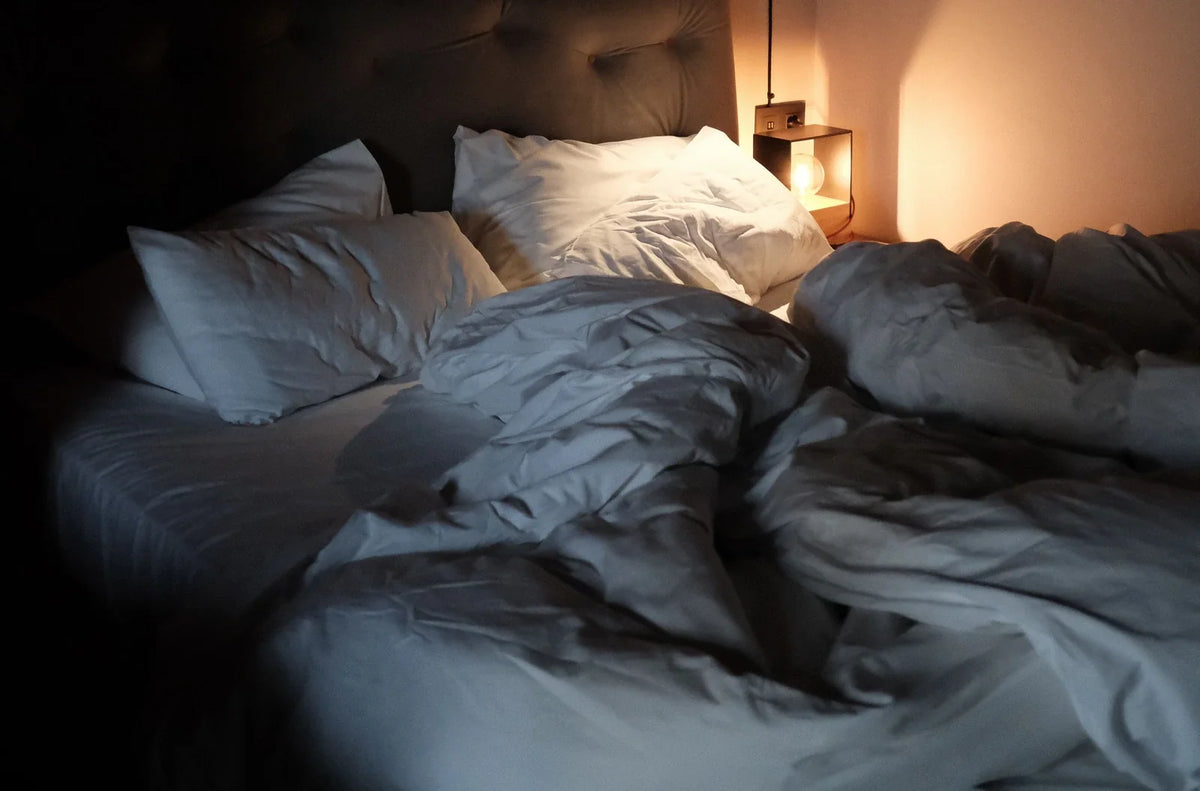
Light the route to the bathroom, not the whole bedroom. Start with a lamp you can reach from bed so you can see the floor before you stand. Then check the hallway and the bathroom doorway separately. If a light still reaches your partner's pillow, change where it points before you make the route darker.
The test is whether you can see where you're going and the person in bed can stay comfortable. If you can't safely do both with the same light, keep the light you need to walk and solve the spill separately.
Start where your feet land
If the light only comes on after you cross the bedroom, the first steps still happen in the dark. Set up a light or switch you can reach before you get up. From the edge of the bed, look at the floor where you'll put your feet. Keep the route free of trailing charging cables, bags and anything else you could trip over.
The CDC's home fall-prevention checklist for older adults checks for both a reachable bedside light and a lit path to the bathroom. A preference for a dark bedroom doesn't override either of those needs.
Walk the route while you're both awake
One person walks the usual route; the other lies where they normally sleep. First see whether the person walking can recognize the floor, turns, steps and doorway. Then ask the person in bed when the light first reaches them. You might find that the hallway is fine but the bathroom light shines straight through the open door.
Fix the point where it happens. If the bedside lamp hits the pillow, turn its shade away from the bed if it is designed to swivel, or use a more directional lamp. If the hall is what lights up the room, aim the light at the walking route rather than toward the bed. If the bathroom fixture is the problem, try an existing lower light setting if it still lets you see clearly. Don't cover a light with fabric or trail a new cord across the floor.
Then walk the route again with the doors in their usual positions. If you have to feel the wall, guess where a step ends or wait for a motion sensor before you can see the floor, change the setup. You can always turn on the brighter light when you need it.
Dark for sleep doesn't have to mean dark for walking
A 2022 expert consensus on indoor light recommends minimizing light at the eyes during sleep, but explicitly puts visibility and safety first when they conflict. It notes that older adults may need more light to walk between the bedroom and bathroom. This is not a prescription for one brightness, bulb color or gadget in every home.
If you're the one staying in bed, a wraparound sleep mask is an optional way to block some of the light reaching your eyes while leaving the route lit. It doesn't make the route safer. If you're wearing one yourself, take it off before you stand up.
Agree on what you'll do on the next trip
Try something specific: “I'll use the hall light first. If I can't see the step, I'll switch on the brighter one.” If it isn't the bathroom trip but the steady glow that bothers you, our guide to sleeping with the lights on takes up that question separately. If it's waking up to go that keeps happening, read why you might wake up to pee; fixing the light isn't meant to fix the urge.
Neither person has to manage in the dark or pretend the glare doesn't bother them. Take a few minutes together to see what actually happens in your room, and keep the first step safe.

Share:
Does Sleep Boost Your Immune System? What Research Says
How to Sleep Better During an Overnight Hospital Stay