

Written by the Mellooa Editorial Team
We write about outdoor rest: dawn through tent fabric, mesh leaks, and dirt—without turning a sleep mask into wilderness medicine.
A sleep mask for camping has to survive three problems at once: early dawn, tent light leaks, and dirt. Summer sun hits thin nylon long before your alarm. Mesh panels and vestibules pass headlamp glow from a neighbor. Trail dust, sunscreen, and sweat demand a wash path you will actually follow. Packing the lightest flat strip in the catalog only solves the gram count.
This guide is for people who sleep in tents, cars, or campground cabins—not a ranked “best of” list and not a medical recovery plan. It helps you decide what blackout job you are buying, what weight you will tolerate, and when a washable overnight wrap earns a place next to the sleeping pad.
Pack for the 5 a.m. problem, not the product photo.
If dawn through the rainfly is the whole story, prioritize nose-path coverage and a strap you can reseat half-asleep. If your kit is a 30-liter ultralight bag, weigh every option twice—and admit when clips plus a darker tent pitch beat another ounce of foam.
Camping rest is a pack problem, not a spa problem
Search results for “sleep mask for camping” often borrow language from hotel and shift-work pages: total blackout, deeper REM, recovery. Camping nights are messier. You may go to bed at dusk in June because the kids are done, then wake when the east wall turns gray. You may share a vestibule with someone who reads by headlamp. You may crawl into the tent with bug spray on your temples and trail grit on the quilt.
Those conditions change the buyer job. A mask that wins a flashlight lab demo but hates washing will fail by night three. A mask that packs to nothing but leaks at the nose will wake you at first light even if the brand shouts “100%.” Your decision should stay practical: dawn, tent geometry, dirt, and the sleep position you use on a pad—not a promise that fabric fixes fatigue.
Elevation, cold, noise, and unfamiliar ground also affect rest. A sleep mask only reduces light at your eyes. It does not replace a warmer bag, earplugs for campground generators, or an earlier caffeine cutoff. This article stays with what to pack and what to skip.
Dawn through tent fabric
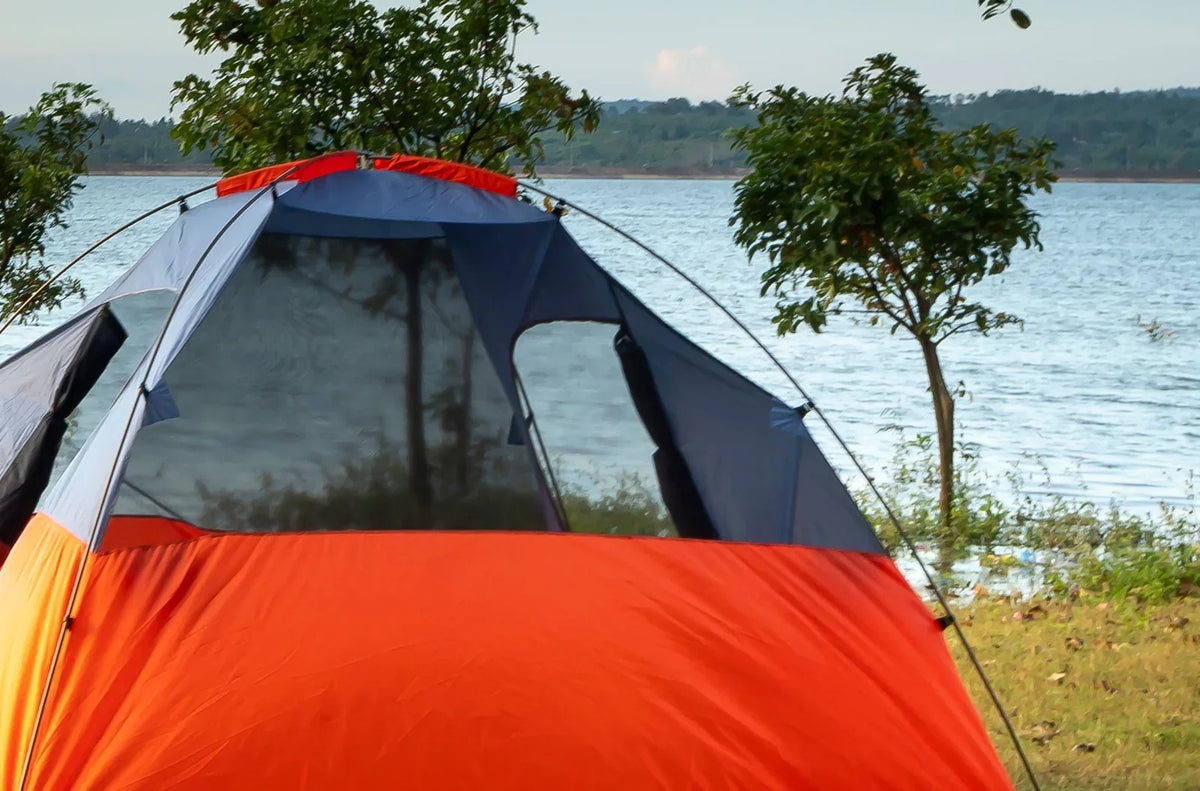
Most camping wake-ups that feel like “the sun attacked me” are really fabric transmission. Single-wall tents, light-colored flys, and worn coatings pass a surprising amount of morning brightness. Tree cover helps; alpine and desert sites do not. High-latitude summer trips stretch twilight so long that “night” is a relative word.
A sleep mask is often cheaper and lighter than buying a dedicated blackout tent—but it only works if it seals on your face while you move on a thin pad. Dawn light is usually diffuse, which means tiny gaps at the nose bridge or cheek edge are enough to register as morning. That is why nose-path design matters here: bendable bridges, deeper cups, or a padded wrap you can seat slightly lower without crushing lashes.
Before you shop, decide whether dawn is your primary enemy. If you camp mostly under dense canopy in shoulder season, a mid-tier mask may be enough. If you book solstice alpine weekends, treat blackout seal as a first-class pack item, not an afterthought thrown in with the spork.
Tent light leaks beyond the sun
Dawn is not the only light source.
Mesh, vestibules, and neighbor headlamps
Inner mesh walls are wonderful for condensation control and terrible for privacy from light. A headlamp in the next vestibule, a lantern in the group site, or a bathroom path with motion lights can strobe across your eyelids. Orient the tent when you can; ask neighbors for red-light etiquette when you cannot. Still pack a mask if you share campgrounds regularly.
Your own electronics
Phone charging LEDs, GPS units, and power-bank indicators behave like hotel clocks. Face them away, sleeve them, or cover them. The mask should not be the only discipline in a two-person tent.
Moon and snow glare
Full moons on snow or sand bounce light upward. Darker flys help; masks still earn their keep for light-sensitive sleepers. Again: reduce what you can outside the face, then cover what remains. Curious whether the moon affects sleep beyond the light itself? Here’s what we know about the full moon and sleep.
Dirt, sweat, and the wash reality
Camping masks collect sunscreen, insect-repellent residue (follow the label on whatever you used), sweat, and fine dust. If you will not wash the mask, do not buy a delicate “hand wash only, lay flat forever” object you will resent. Prefer constructions with a published care path you can execute between trips.
For Mellooa’s Single weighted sleep mask, current site guidance is: machine wash in a garment bag when appropriate, air-dry when possible, and avoid bleach, harsh detergents, and high heat. Always follow the sewn-in label and live product details. That wash story fits car-camping and frequent travelers better than a one-week alpine push where you will not see a machine. On trail, a damp wipe of the contact face and a full wash at home may be the real protocol—plan pouch storage so the mask does not live against muddy shoes.
Smell and grit also change fit. Dust on a slick face fabric can make the mask migrate. If your mask starts sliding after dusty days, clean it before you blame the strap geometry.
A short dawn field test in the tent
You do not need a lab flashlight. You need your real pad position.
Step 1 — Set the tent as you will sleep. Pad inflated, pillow or stuffed jacket in place, typical layers on. Lie on your back and both sides for a minute each with the mask off. Notice where morning light would hit if the fly were bright.
Step 2 — Seat the mask loosely. Check nose bridge and the cheek toward the tent wall. If you see a crescent of light, nudge coverage before tightening. Camp pillows are often flatter than hotel pillows; side pressure patterns differ.
Step 3 — Roll deliberately. Simulate the restless turn you do at 4 a.m. If the mask climbs to your forehead or leaves a temple gap, treat that as a geometry miss.
Step 4 — Decide keep, adjust, or change category. Keep if dawn glow disappears without a headache strap. Adjust if only one edge leaks. Change category if cups dig on a side-sleep pad, if weight feels wrong for multi-day carry, or if the care path will not survive your trip style.
Buyer decision: seal, grams, and cleanability
Most camping mask shopping collapses into three tradeoffs.
Blackout seal
Contoured cup masks and well-shaped wraps both try to kill nose leaks. Cups can excel at hollow clearance for lashes; wraps can spread contact and avoid hard bridges. Neither is universally superior. Match the design to your face and sleep position using the field test.
Pack weight and bulk
Ultralight flat masks can weigh under an ounce and disappear in a stuff sack. They often trade away seal and durability. Heavier overnight wraps—including weighted designs—cost grams and space. For backpacking, ask whether dawn comfort beats carrying those grams every mile. For car camping, grams rarely win the argument.
Cleanability
If the trip is sweaty or dusty, washability is part of performance. A mask you trust after a machine cycle (when the maker allows it) will get used more nights than a precious silk square you are afraid to clean.
Write one sentence before you buy: “I am packing this mask mainly for ___.” If the blank is “solstice alpine dawn,” prioritize seal. If the blank is “gram-count thru-hike,” prioritize weight and accept more room-level tactics (site choice, eye cover with a buff as backup). If the blank is “family campground with messy kids and dusty dogs,” prioritize wash and pouch discipline.
Where Mellooa may or may not fit camping
Mellooa’s weighted sleep mask is a wraparound rest mask: padded half-moon front, nose notch, adjustable rear overlap, bead fill for gentle distributed weight, and reversible cool-feel / softer faces. From the Mellooa product page: about 309 g (10.9 oz); approximate size 72 × 13 × 1 cm; Single path listed near $39; a quiet broad fastening area; Single machine-wash guidance with a garment bag and an air-dry preference.
This is not an ultralight backpacking specialist. At roughly 309 g it will lose gram wars against featherweight flat masks. It can still make sense for car camping, rooftop tents, cabin weekends, van nights, and mixed travel kits where you already accept a real pillow and a cooler. The wrap coverage and gentle weight are aimed at overnight wind-down and staying put—comfort preferences, not medical claims. Reversible faces help when nights swing from cold to muggy. The wash path helps after dusty weekends—if you are near laundry.
When to skip or demote Mellooa for camping: strict ultralight lists; sleepers who dislike any facial weight; trips where you need maximum hollow-cup clearance and already love a contoured cup system; situations where 309 g displaces food or water. When to keep it in the kit: you already use it at hotels and want one mask across trip types; dawn leaks bother you more than grams; you want a washable overnight wrap rather than a disposable amenity mask.
If you want a weighted wrap you will also use in hotels, confirm live details on Mellooa Weighted Sleep Mask. For use habits without duplicating a full how-to here, see how to use a weighted sleep mask. For washing after the trip, use the label plus care guide. Travelers who bounce between tents and hotels may also want the companion hotel leak map: hotel room darkness.
Packing notes that prevent unused gear
Store the mask in a dedicated pouch near the sleep system, not loose with stakes. Reseat it at home after washing so the first camp night is not a fitting experiment at midnight. If you share a tent, agree on headlamp color and direction before you rely on fabric. If condensation drips, keep the mask off the tent wall. If you use a buff or beanie, test whether the mask strap sits cleanly underneath—camping layers change closure pressure.
Leave the mask home when the trip does not need it. Short autumn weekends under heavy canopy with a dark fly may not justify the slot. Pack it when dawn or dirt actually shows up; skip it when they do not.
Frequently Asked Questions
What makes a sleep mask good for camping?
Reliable coverage against dawn and tent leaks, a strap you can adjust half-asleep, and a care path that survives dirt and sweat. Pack weight matters more for backpacking than for car camping.
Why do I still see light at dawn with a thin mask?
Diffuse morning light often sneaks at the nose bridge or cheek edge, especially through mesh or light-colored flys. Improve seating before tightening. If gaps remain, change geometry rather than pulling harder.
Should backpackers avoid weighted masks?
Often yes on strict gram budgets. A weighted wrap around 309 g is easier to justify for car camping or mixed travel kits than for ultralight thru-hikes. Choose by the miles you carry it, not by marketing.
How do I keep a camping sleep mask clean?
Pouch it away from muddy gear, wipe the contact face on trail if needed, and wash per the maker’s instructions after dusty trips. For Mellooa Single, follow garment-bag machine wash and air-dry guidance on the current product page and care label.
Can a sleep mask replace a blackout tent?
Sometimes for your eyes, never for the whole shelter. A mask does not darken the tent for a partner, control heat, or fix a fly that is falling apart. Use site choice and shelter design first when those are the real constraints.
Does Mellooa guarantee blackout in every tent?
No. Face shape, sleep position, tent brightness, and seating all change results. Treat a short dawn field test as evidence for your kit. Mellooa offers wrap coverage and gentle weight as comfort features—not a universal blackout warranty.



Share:
Sleep Mask for Hotel Rooms: Fix the Actual Light Source
Sleep Masks With Eyelash Extensions: Test Real Clearance