

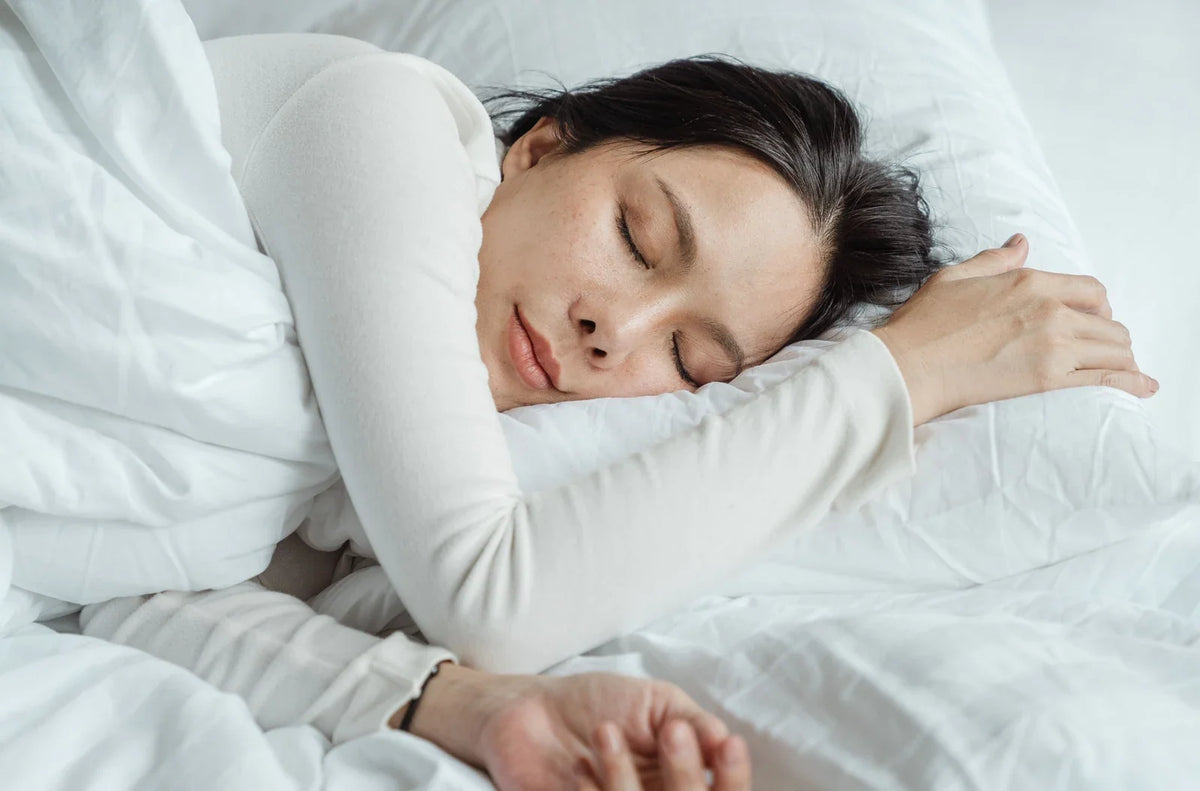
Mouth taping is simple: before bed, you put a strip of tape over your mouth so you breathe through your nose all night. Influencers promise it fixes snoring, deepens sleep, and sharpens your jawline. But a 2025 review of the actual studies found no strong evidence of benefit, and real risks for some people. Here is what the science says.
Where the trend came from
Scroll through sleep content on TikTok or Instagram and you will find the routine: a strip of tape across the lips, sometimes paired with nasal strips, a silk eye mask, and eight hours of promised perfection. The claims stacked up quickly. Tape your mouth and you will stop snoring, wake up with more energy, breathe "correctly," fix your morning breath, and over time, sharpen your jawline.
The idea taps into something true. Breathing through your nose is genuinely better than breathing through your mouth, for reasons physiologists have understood for decades. Your nose filters, warms, and humidifies the air you breathe. Nasal breathing also produces nitric oxide, a molecule that helps with oxygen exchange in the lungs. Nobody in sleep medicine disputes any of this. The dispute is about the tape.
Part of the trend's momentum is visual. A strip of tape across the mouth is simple to film, instantly recognizable, and easy to copy, which is exactly what short video rewards. It also arrived packaged with a whole aesthetic: the ten-step nighttime routine, the silk pillowcase, the morning-light wake-up. When a habit looks like self-care, it borrows credibility from everything around it.
Is "mouth tape" different from regular tape?
Once the trend took off, brands started selling purpose-made mouth tape: pre-cut strips, often porous in the center or shaped like a small X over the lips, marketed as gentler and safer than hardware-store tape. The marketing is better. The evidence is not.
None of the studies in the 2025 review tested branded mouth tape as a separate, safer category, and the researchers' safety concerns apply to the mechanism itself, not the adhesive. A porous center still assumes your nose can handle the whole night alone. An X shape still fails the same way if congestion arrives at 3 a.m., which is exactly when colds and allergies tend to announce themselves. If anything, a product designed for the purpose can make the practice feel medically endorsed when it is not. The Cleveland Clinic and the American Academy of Sleep Medicine do not recommend mouth taping in any form.
What the research actually says
In 2025, a team at Western University in Canada, led by otolaryngologist Dr. Brian Rotenberg, published a systematic review in the journal PLOS One. They screened 86 studies on mouth taping and analyzed the 10 most relevant ones, covering 213 patients in total. Their findings were blunt:
First, there is no strong evidence of benefit. Out of 10 studies, only two suggested any improvement, and both were limited to a subset of people with mild obstructive sleep apnea, measured by a small change in a standard severity score. The other eight found no meaningful effect on mouth breathing, snoring, or sleep-disordered breathing.
Second, the risks are concentrated and specific. Four of the 10 studies warned of serious risks, including asphyxiation. Here is the part that matters: every trial in which taping was tolerated excluded people with nasal congestion, allergies, a deviated septum, or enlarged tonsils. That exclusion list is effectively the safety instruction. Tape is only "tolerated" in studies where the nose can carry the entire load on its own.
Third, taping can backfire for some anatomies. A study of sleep apnea patients found that closing the mouth improved airflow for moderate mouth breathers but decreased it for people with certain types of airway collapse, particularly around the soft palate. Another study documented something researchers called "mouth puffing": participants whose lips were taped still strained to breathe through their mouths against the seal, defeating the purpose entirely.
Dr. Brian Chen, a pediatric sleep specialist at the Cleveland Clinic, summarized the clinical position plainly: mouth taping "can cause more harm than good." It is not part of standard sleep-medicine practice. And the most common real-world complaint is far less dramatic than the headlines: skin irritation and redness from the adhesive.
It is worth noting the quality problem too. The reviewers rated all 10 studies as low quality, with small sample sizes and short testing periods. That means even the two mildly positive findings should be read with caution, not treated as proof.
The good idea hiding inside the bad hack
Strip away the tape and you are left with the part worth keeping: nasal breathing is good for sleep. If you regularly wake up with a dry mouth, a sore throat, or a partner who complains about your snoring, the underlying issue is usually that your nose is not doing its job at night. Congestion from allergies, a cold, or a deviated septum pushes you toward mouth breathing, and mouth breathing is linked to the whole spectrum of sleep-disordered breathing, from snoring to sleep apnea.
So the honest version of the trend's promise is this: clear your nose, don't seal your mouth. Saline rinses, treating allergies, and keeping bedroom air from getting too dry are unglamorous, but they address the actual bottleneck. A warm shower before bed can loosen things up. If you sleep in a very dry room, a humidifier is worth trying before anything adhesive. And if your nose is chronically blocked, that is a conversation for a doctor, not a roll of tape. An ENT can tell the difference between seasonal congestion and a structural issue like a deviated septum in a single visit, and that distinction changes everything about what helps.
Who should not tape, full stop
If you are considering trying it because a video made it look easy, read this list first. Do not tape your mouth during sleep if any of the following apply:
- Your nose is blocked right now, from a cold, allergies, or anything else
- You have a deviated septum, nasal polyps, or chronically enlarged tonsils
- You have diagnosed sleep apnea, or you suspect it: loud snoring, gasping or choking during sleep, waking with headaches, or daytime sleepiness that does not match how long you slept
- You have asthma or another breathing condition
- You have had alcohol or sedatives, which relax the airway further
- You are prone to reflux or vomiting during sleep
- You are considering it for a child. Children should never have their mouths taped during sleep
When in doubt, ask a doctor first. Loud snoring and pauses in breathing are medical symptoms, not lifestyle problems, and taping over them can hide the very signs that would lead someone to get evaluated.
If snoring is the real problem
Most people arrive at mouth taping through snoring, either their own or a partner's. If it is your partner's snoring keeping you up, the practical fixes are separate from breathing technique entirely: earplugs chosen for comfort, a steady background sound to smooth out the peaks, or simply sleeping in a different room on the worst nights. We have written about that side of the problem before, including how to sleep next to a snoring partner tonight.
If it is your own snoring, the tape is not the answer, but the curiosity behind it is useful. Snoring that is loud, nightly, or paired with gasping deserves a medical conversation. Lighter, occasional snoring often tracks with the usual suspects: sleeping on your back, congestion, alcohol in the evening, or a dry bedroom. Those are addressable without sealing your lips.
What a calmer nighttime routine looks like
The mouth-taping videos are appealing partly because they look like a ritual: a deliberate sequence that tells your body the day is over. You can keep the ritual and drop the risk. A wind-down that actually helps usually has the same ingredients: dim the lights in the last hour, put the phone down, keep the room cool and dark, and give your body a consistent cue that sleep is coming. For many people that cue is as simple as a familiar object, like a gently weighted sleep mask that makes the bed feel like the bed, wherever you are.
None of this will reshape your jawline. It will, over weeks, do something better: make falling asleep feel ordinary instead of effortful.
Why it can feel like it works
Here is the uncomfortable part for skeptics: many people who try mouth taping genuinely report sleeping better. That does not contradict the research. Expectation shapes how we experience sleep, and a deliberate new routine changes behavior in ways that have nothing to do with tape. Someone who starts taping their mouth is usually also going to bed at a consistent time, putting the phone away to film or follow the routine, and paying attention to their sleep for the first time in months. Any one of those changes can improve sleep on its own.
There is also a selection effect. The people posting success videos are the ones for whom nothing went wrong. Nobody films the night they ripped the tape off at 2 a.m. because their nose clogged, or the morning they woke up with a red, irritated ring around their mouth. The feed shows the survivors, which makes a mixed practice look like a proven one.
This is worth sitting with, because it points to the real takeaway. If the ritual part is what helped, you can keep the ritual. Consistency, darkness, and a calm wind-down are doing the heavy lifting in those success stories. The tape is the least evidence-backed ingredient in the routine, and it happens to be the only one with a suffocation warning attached.
The bottom line
Mouth taping is a viral answer to a real question. Nasal breathing matters, and the instinct to fix mouth breathing is sound. But the best available evidence says taping your mouth shut does not reliably deliver the benefits influencers claim, and it introduces real danger for anyone whose nose cannot carry the full load. The researchers who reviewed the literature put it plainly: the practice is not supported as a safe intervention for the general public. Clear the nose, question the tape, and if your breathing at night worries you, bring it to a doctor. That is the unglamorous advice, and it is the one the evidence supports.
Frequently asked questions
Is mouth taping safe?
For most people, the answer from sleep-medicine researchers is no, or at least not worth the risk. A 2025 systematic review in PLOS One found no strong evidence of benefit across 10 studies, while four studies warned of serious risks including asphyxiation. The danger concentrates in one scenario: taping over a blocked nose. Everyone with congestion, a deviated septum, allergies, or sleep apnea should not do it, and children never should.
Does mouth taping stop snoring?
The evidence does not support it as a reliable snoring fix. One small study found less snoring with tape in a narrow group, but the broader review found no consistent effect. Snoring that is loud or nightly is worth discussing with a doctor rather than taping over.
Will mouth taping change my jawline or face shape?
There is no clinical evidence that taping your mouth at night reshapes the jaw or face. Those claims come from influencer content, not from any of the studies researchers reviewed.
What about nasal strips instead?
Nasal strips work differently: they physically open the nostrils from the outside rather than sealing the mouth shut. They do not carry the same suffocation risk, though their effect on snoring is modest and varies by person.
Why do some people swear they sleep better with tape?
Expectation is powerful, and so is ritual. A deliberate bedtime routine, the placebo effect, and the fact that many people try taping on nights when they are already prioritizing sleep can all make it feel effective. Feeling better and being measurably better are different things, which is why researchers ran the trials.
If I breathe through my mouth at night, what should I do?
Start with the nose: treat congestion, rinse with saline, and keep bedroom air from getting too dry. If mouth breathing is constant, or if you snore loudly, gasp, or feel unrefreshed despite enough hours in bed, talk to a doctor. Those can be signs of conditions that need proper evaluation, not a lifestyle hack.



Share:
Is It Safe to Sleep With Earplugs Every Night?
Is It Bad to Go to Bed Hungry?