

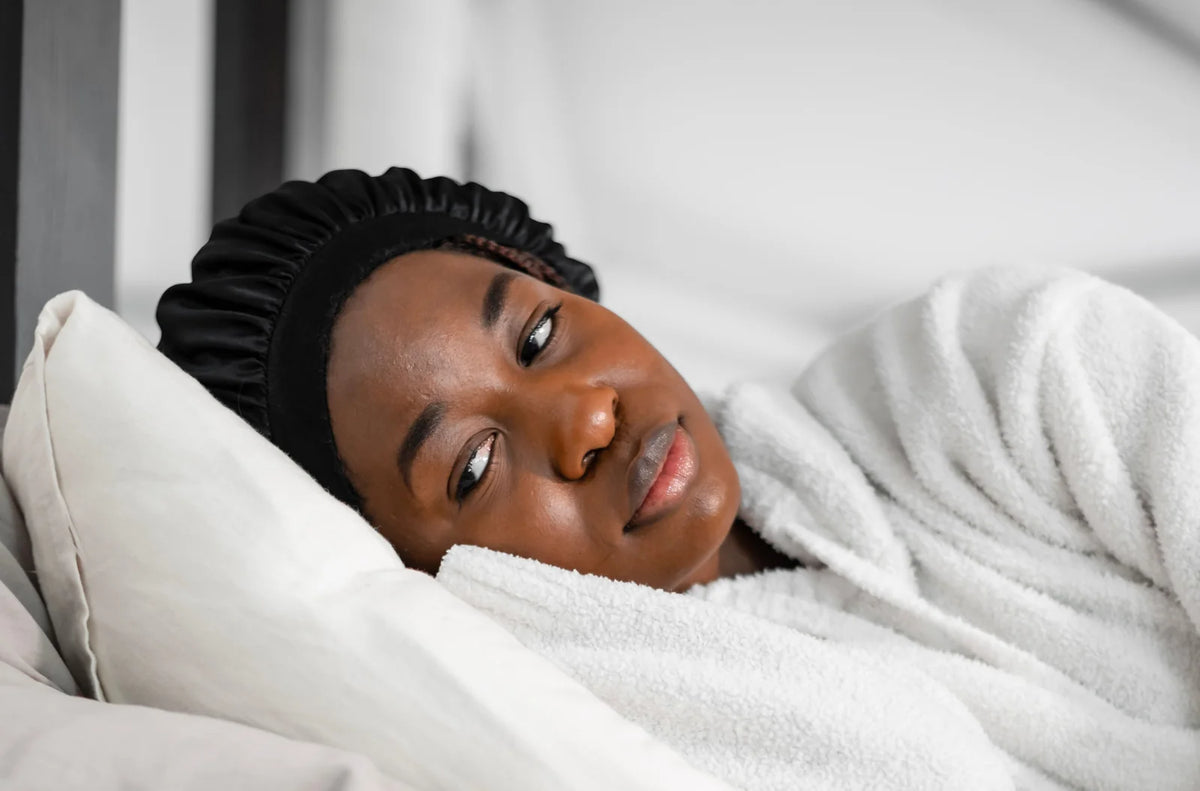
You want the bonnet on for your hair, and you still want the room dark. Stacking a fabric sleep mask on top seems simple, until the cap creeps back, the mask leaves a gap, or you tighten the strap and both layers feel worse. This article is about a fabric sleep mask, sometimes called an eye mask, that you wear to block out light. It is not about a CPAP mask, or a guide to wearing one with a bonnet.
The short answer
How to wear a sleep mask with a bonnet? Put the bonnet on first and keep the back as even as you can. Then place the sleep mask so it blocks out light, without tightening it just to hold the bonnet down. Lie in your usual sleep position and check that neither one has shifted.
You can often wear the two together when the bonnet lies fairly flat at the back and the mask can still sit evenly. A very puffy cap, a bulky tie, or a strap that lifts the bonnet can undo the fit. Not every bonnet and every mask will stack well.
Why a bonnet and a sleep mask get in each other's way
A bonnet changes the surface a sleep mask is meant to sit against. Extra fabric and hair at the back leave the strap or rear overlap with less of a flat place to rest, so the closure may not lie flush. A loose cap edge or a section of hair can get caught and leave a bump or a gap.
On your side, the pillow can push one edge of the mask or tug the bonnet out of place. Pulling the mask tighter to compensate can lift the back of the bonnet, open a gap at the nose or cheeks, or leave a sore spot — without fixing the layers underneath.
If the mask moves even without a bonnet, see our fuller check of why a sleep mask keeps slipping off.
How to wear a sleep mask with a bonnet
Put the bonnet on first, and keep the back as flat as you reasonably can
The bonnet usually goes on first, so it can cover the hair you want it to cover. Smooth the back of the bonnet, and spread the hair inside the cap so it isn't piled where the mask will close. Move a tie, gathered knot, or long tail off the closing point, or flatten it as much as the cap allows. Don't use the mask as a second cap to pin the bonnet in place.
Place the mask for light, not tightness
Set the front of the mask so it covers the eye area evenly. The mask is there to block out light, not to clamp the bonnet down. If you have to cinch the strap or overlap to keep either layer from moving, loosen it and fix the layers underneath first. To test tightness, see our guide to how tight a sleep mask should be. If the band starts to hurt, loosen it. If your eyes feel sore, see why eyes can hurt after wearing a sleep mask.
Route the strap or rear overlap so it doesn't lift the bonnet
A thin elastic strap can ride up and catch the bonnet's back edge, lifting the cap and shifting the front of the mask. A wraparound mask usually closes with a rear overlap or crossed ends, not a thin elastic strap; our comparison of wraparound vs. eye cup sleep masks explains the two shapes. Guide the strap or overlap over the flattest part of the bonnet, and don't trap a loose edge, a tie, or a folded hem under the closure. If the back feels lumpy, take the mask off, reseat the bonnet, and try a slightly different path before you pull anything tighter.
Lie in the position you actually sleep in, on your usual pillow
A fit that feels fine while you're sitting can change once you lie down. Use your usual pillow, in the position you actually sleep in: your back, your side, or a mix of both. Check whether the bonnet has crept backward, whether the mask has left a gap at the nose or cheeks, and whether a knot, tie, or overlap sits under the side you lie on. If you sleep on your side, the pillow can move either layer; our guide to sleep masks for side sleepers focuses on that pillow contact.
If it still slips or lets light in
If something still feels off, start with the bonnet and the path of the strap, not with a tighter pull.
| What's going on | Try this first |
|---|---|
| The bonnet creeps backward | Take the mask off, reseat the bonnet so the back is flatter, then put the mask on again. Don't tighten the mask to pin the bonnet. |
| The mask rides up, or light gets in at the edges | Reposition the mask and change the path of the strap or overlap so it isn't lifting the bonnet. |
| The back of your head feels too bulky | Spread the hair inside the bonnet, and move a thick tie or gather off the closing point. |
| Side sleeping presses on a knot or strap | Move the knot, tie, or overlap away from the side you lie on, and check the pillow. |
If the mask still slides after you've reseated the bonnet and changed the strap path, see our guide to why a sleep mask keeps slipping off. For light at the edges, see how to stop light leaking around a sleep mask. For a basic put-on sequence when you aren't stacking a bonnet, see how to use a weighted sleep mask.
If the two layers still fight each other after those adjustments, these particular pieces may not work well together.
If you have long hair but no bonnet
If you have long hair and no bonnet, settle the hair first, then put the mask on. If you use a low, loose braid or bun, keep it away from the strap or rear overlap and the part of your head that rests on the pillow. If the mask still moves, see the earlier guides on slipping and on using a weighted sleep mask.
Where Mellooa fits
If you want a wraparound sleep mask for nights when light is the issue, our Weighted Sleep Mask is a gently weighted wraparound sleep mask made to create a quieter space for rest. Its wraparound shape blocks out light.
Check the fit with your own bonnet before settling down. If you need to pull the mask tighter to hold the cap in place, take it off and adjust the bonnet first.
If the bonnet leaves oil or loose fibers on the mask, check the care instructions before cleaning it. Our guide to how to wash a weighted sleep mask covers the mask's care routine.
Frequently Asked Questions
How to wear a sleep mask with a bonnet?
Put the bonnet on first and keep the back as even as you can. Then place the sleep mask so it blocks out light, without tightening it just to hold the bonnet down. Lie in your usual sleep position and check that neither one has shifted.
Can you wear a sleep mask with a bonnet?
Often yes, if the bonnet lies fairly flat at the back and the mask can still sit evenly. A very puffy cap, a bulky tie, or a mask strap that lifts the bonnet can undo the fit. If light leaks or either layer keeps sliding, reseat the bonnet and change the path of the strap before you pull anything tighter.
Do I put the bonnet or the sleep mask on first?
The bonnet usually goes on first, so it can cover the hair you want it to cover. The sleep mask goes on second, over the bonnet, and should be adjusted for light — not used as a second cap to pin the bonnet in place.
How to wear an eye mask with a bonnet?
The same way as a sleep mask. In this article, both names mean a fabric mask you wear to block out light, not a CPAP mask. Put the bonnet on first, place the mask for light rather than tightness, and check the fit in your usual sleep position.
Why does my sleep mask slip off when I wear a bonnet?
The bonnet adds bulk at the back of your head, so the strap or overlap has a less even surface, and a pillow can nudge one side loose. Reseat the bonnet and change the path of the strap before you tighten anything. See our guide to why a sleep mask keeps slipping off for a fuller check.
How to wear a sleep mask with long hair?
Settle the hair first, then put the mask on. If you use a low, loose braid or bun, keep it clear of the strap or overlap and where your head rests on the pillow. If you also wear a bonnet, follow the bonnet-first steps above; if the mask still moves, see the earlier guides on slipping and on using a weighted sleep mask.



Share:
Why Do Dreams Feel So Real?
Splitting Night Duty With a Newborn: A Fair Plan for Both Parents