

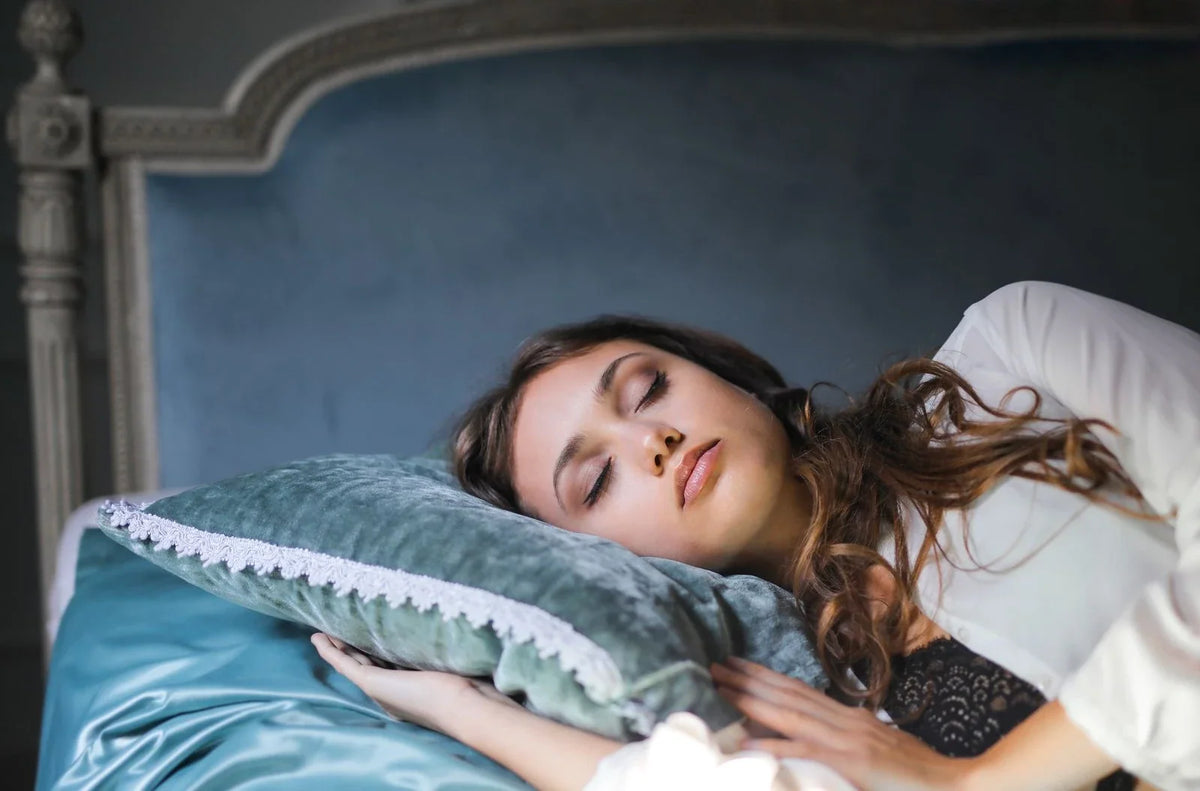
Yes, in the ways that matter. Strangers rate sleep-deprived faces as less healthy and less attractive, and studies link good sleep to slower skin aging and faster barrier repair. But sleep won't erase wrinkles or replace sunscreen. Think of it as the foundation your skin repairs itself on, not a treatment.
"Beauty sleep" sounds like something a grandmother would prescribe alongside chicken soup. The phrase is centuries old. Shakespeare wrote of "sleep that knits up the ravel'd sleave of care," and for most of that time, the beauty part was taken on faith. Then, about fifteen years ago, researchers started doing something no one had bothered to do before: photographing tired faces and asking strangers what they saw.
Strangers Can See Your Bad Night
In 2010, a team at Stockholm's Karolinska Institutet ran a simple experiment. They photographed 23 healthy adults twice: once after a full eight hours of sleep, and once after 31 hours awake. Then 65 people who knew nothing about the setup rated the photos for health, attractiveness, and tiredness.
The sleep-deprived faces were rated less healthy, more tired, and less attractive, every difference statistically significant. It wasn't close, and it wasn't subtle enough to hide. The researchers' conclusion was careful but clear: humans are sensitive to sleep-related facial cues.
A 2013 follow-up by the same group mapped exactly which cues gave it away. Compared with their rested selves, sleep-deprived faces showed more hanging eyelids, redder and more swollen eyes, darker circles under the eyes, paler skin, and droopier corners of the mouth. In other words, the mirror wasn't lying. The signs you see after a bad night are the same signs everyone else sees.
What makes these studies persuasive is how carefully they removed the usual excuses. The participants wore no makeup, kept neutral expressions, and were photographed under identical lighting. The raters knew nothing about the experiment. There was no room for "maybe they were just frowning." Tiredness has a visual signature, and untrained eyes read it fluently.
The most human finding came in 2017. Another Stockholm team restricted 25 people to four hours of sleep for two nights, a much more ordinary kind of tiredness than 31 hours awake, and had 122 members of the public rate their photos. The sleep-restricted faces were again rated less attractive, less healthy, and sleepier. But the raters also said they were less willing to socialize with those people. Looking tired doesn't just change how you look. It changes how others respond to you, at least at first glance. One small mercy: perceived trustworthiness didn't change.
What Your Skin Is Actually Doing Overnight
The visible part is only half the story. While you sleep, your skin is on the night shift.
Deep, slow-wave sleep dominates the first half of the night, and that is when the body releases growth hormone in its largest pulses. Growth hormone drives tissue repair and supports the collagen production that keeps skin firm. At the same time, cortisol, the stress hormone that breaks collagen down when it runs high, falls to its lowest point of the day. Blood flow to the skin increases, delivering oxygen and nutrients. And melatonin, the hormone your brain makes in response to darkness, acts as an antioxidant, helping neutralize some of the free-radical damage picked up from daylight and city air.
None of this requires a cream. It requires sleep, and specifically the deep kind.
There is another layer worth knowing. Your skin keeps its own time. Skin cells run on circadian clock genes, the same kind of molecular timekeeping found in the brain, and many repair processes are scheduled for the night: DNA repair activity rises, cell division peaks in the late night and early morning, and the skin's permeability shifts so that it loses more water overnight. This is why dermatologists talk about the skin being more receptive at night, and also more vulnerable. A disrupted schedule doesn't just cut the repair short. It scrambles the timetable the repair runs on.
Overnight water loss is also the unglamorous reason a simple moisturizer before bed earns its place. The skin gives up more moisture through the barrier at night than during the day, so a basic cream is mostly plumbing, holding water in while the repair crew works. It isn't anti-aging. It's maintenance.
The most direct evidence comes from a 2015 study at University Hospitals Case Medical Center in Cleveland. Researchers compared 60 women between 30 and 49: 30 good sleepers who regularly got seven to nine hours of quality sleep, and 30 poor sleepers who got five or fewer hours of poor-quality sleep. The good sleepers had significantly lower scores for intrinsic skin aging, the kind that comes with time rather than sun. When the researchers mildly disrupted the women's skin barrier, the good sleepers recovered about 30 percent better after three days. They also bounced back faster from UV-induced redness, and they rated their own appearance more highly.
Two honest caveats belong here, because the study's press coverage mostly skipped them. First, the work was funded by Estée Lauder, a company with an obvious interest in the answer. Second, the design was observational: it shows that good sleep and better skin go together, not that one caused the other. People who sleep well also tend to do other things that help their skin. The findings are suggestive, not a verdict.
What Beauty Sleep Can't Do
Honesty cuts both ways, so here is the other half.
Sleep will not erase wrinkles that are already there. The deep lines etched by decades of sun and expression are structural, and no sleep schedule remodels them. If you buy one anti-aging intervention in your life, sunscreen still does more than any bedtime.
Sleeping on your back to avoid "sleep wrinkles" is a popular claim with thin evidence. Side sleeping has never been shown to cause wrinkles in any meaningful study, and contorting yourself into an unfamiliar position usually costs you the very sleep you're trying to optimize. Sleep in whatever position lets you actually sleep.
Silk pillowcases sit in the same category. They feel lovely, and less friction against cotton is a reasonable theory, but there is no good evidence that a pillowcase changes skin aging. Buy one for comfort if you like it. Don't buy it as skincare.
And no night cream replaces sleep itself. The cosmetics industry sells "sleep in a jar" because jars are easier to sell than bedtimes. A good moisturizer supports the barrier while you sleep. It does not do the sleeping for you.
One more piece of honesty, because it saves people years of frustration: not all dark circles are about sleep. Some are genetic pigmentation, some are thin skin showing blood vessels underneath, some are shadows cast by the shape of the eye socket. If your dark circles never change no matter how well you sleep, they probably weren't sleep's doing in the first place, and no sleep schedule will erase them. That is not a failure of your routine. It is just anatomy.
The Hours That Count Most
Not all sleep hours do equal work for your skin. Deep sleep is front-loaded: the longest stretches happen in the first half of the night. That means an earlier bedtime does more for the repair window than sleeping in late to compensate. Someone asleep by 11 may get more deep sleep than someone who goes to bed at 2 a.m. and sleeps until 10, because late bedtimes often cut sleep short or fall out of step with your body clock.
Consistency matters as much as duration. The American Academy of Sleep Medicine recommends seven or more hours a night for adults, and keeping roughly the same schedule trains your body to fall into deep sleep faster. A regular wake time, anchored by morning light, is the simplest lever most people underuse.
There is an old saying that an hour of sleep before midnight is worth two after. It isn't literally true, but it survives because it points at something real: the deep-sleep front-loading described above. Going to bed earlier does buy you more of the repair window. What the saying gets wrong is the deadline. Midnight is not a magic cutoff; a consistent 11:30 bedtime beats a chaotic one that sometimes lands at 10. Regularity first, earliness second.
The room matters too. Deep sleep is fragile, and it does its best work in a cool, dark, quiet bedroom. If you want one environmental change with the most evidence behind it, start with temperature and light: a cool room protects the deep sleep your skin uses most.
A short daytime nap won't cover for a short night, by the way. A twenty-minute nap refreshes alertness, which is genuinely useful, but it contains almost no deep sleep, so it doesn't run the repair program described above. Naps are a supplement, not a substitute. If you nap, keep it to twenty minutes or go for a full ninety, and don't let it steal from the night.
A Quiet Evening That Serves Both
You don't need a ten-step routine. An evening that is kind to your skin is the same evening that is kind to your sleep:
Keep the last hour dim. Bright overhead light tells your brain it's still daytime and delays the melatonin your skin's overnight antioxidant work relies on. Lamps instead of ceiling lights is enough.
Keep the bedroom cool, dark, and quiet. If early light cuts your night short before you're done sleeping, a gently weighted wraparound sleep mask softens the morning light around your eyes so the last sleep cycle finishes undisturbed.
Wash the day off, moisturize simply, and stop there. A gentle cleanser and a basic moisturizer support the barrier; a fifteen-product routine mostly supports the industry.
And keep the schedule even on weekends. The occasional late night shows on your face the next day and fades. A permanently shifting schedule never lets the repair window settle.
FAQ
Is beauty sleep actually real? The visible part is well supported: strangers reliably rate sleep-deprived faces as less healthy and less attractive, and the cues are specific, eyes, skin tone, mouth. The deeper claim, that good sleep slows skin aging, has suggestive evidence from a 2015 clinical study but isn't settled science. Treat the first as fact and the second as promising.
How much sleep do you need for it? Seven or more hours, per the American Academy of Sleep Medicine's consensus recommendation, kept on a consistent schedule. Regularity matters as much as duration: the same bedtime trains your body to reach deep sleep faster.
Can one bad night age your skin? One bad night shows on your face the next day. That much the photo studies prove. Lasting skin aging is about patterns across months and years, not single nights, so don't panic over one rough night. Worry about the pattern, not the exception.
Does sleeping on your back prevent wrinkles? There is little evidence either way. The "sleep wrinkle" idea comes mostly from marketing, not research. Choose your sleep position for comfort and for breathing well through the night, and let your skin take care of itself.
Will sleeping more fix my dark circles? Sometimes. If your circles deepen after bad nights and fade after good ones, sleep is likely the lever. But persistent dark circles that never change are often genetic pigmentation, thin under-eye skin, or the natural shadow of your eye shape. Sleep fixes the sleep-caused kind. It can't fix anatomy.
Do I need special nighttime skincare for beauty sleep? No. A gentle cleanser and a simple moisturizer are plenty. Expensive "overnight repair" products can't substitute for the repair your body already does for free. Spend the money on blackout curtains instead, or better, on nothing at all.
The cheapest glow treatment ever sold is the one you already own: a dark room, a regular bedtime, and seven-plus hours. Your skin works the night shift either way. Your only job is to show up for it.



Share:
How to Sleep Before an Early Flight
Should You Drink Water Before Bed?