

Written by the Mellooa Editorial Team
We write about sleeping in real homes: thin ceilings, honest limits, and fixes you can try tonight.
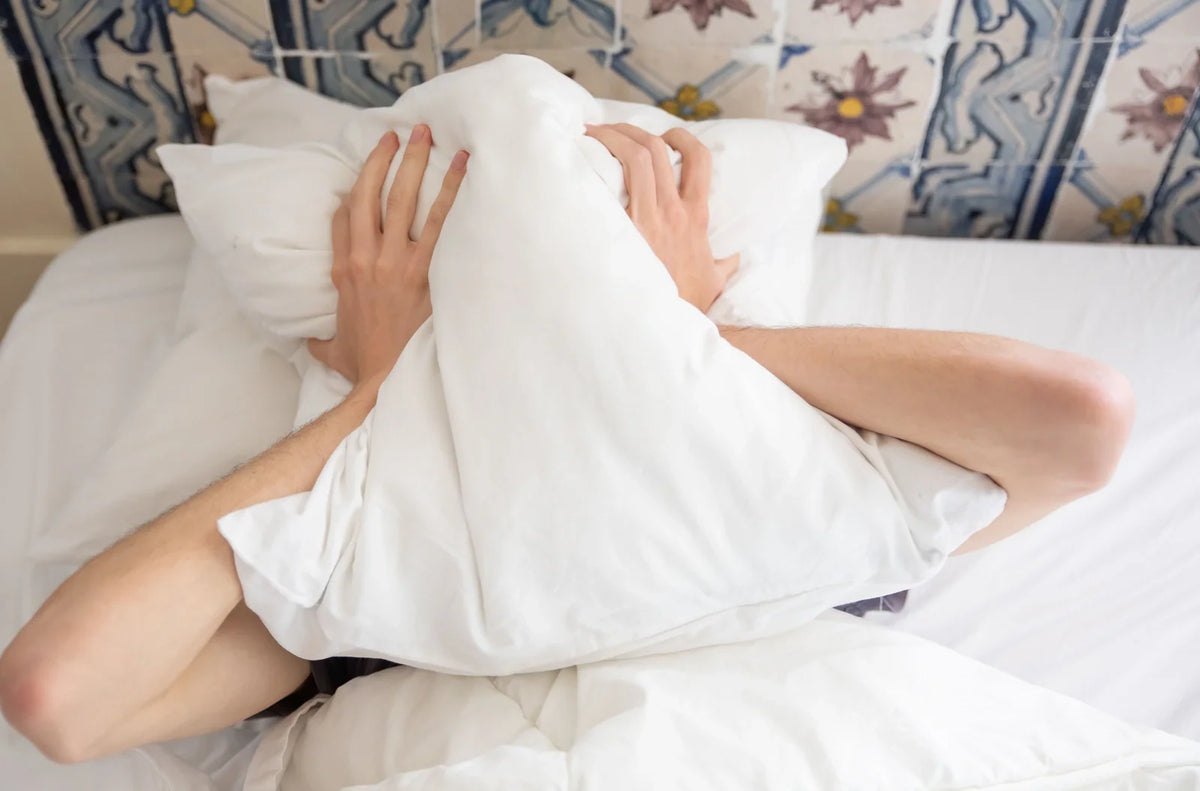
If you're wondering how to sleep with noisy upstairs neighbors, turn the noise down where you can and accept that the heaviest thuds may still come through. Well-fitted earplugs, a better spot for the bed and a softer room all help. But footsteps partly travel through the building as vibration, so nothing on your side of the ceiling makes them vanish. If you sleep on your side, whatever you use also has to be comfortable. That's where most earplug advice falls short.
Maybe you've just moved into a new flat. The people above you are loud, and there's no sign of that changing anytime soon. Chairs scrape. Someone walks heel-first to the kitchen at midnight. A door slams, then nothing for twenty minutes, then another. You've tried earplugs, but you sleep on your side, and by morning the ear that was on the pillow aches. You don't need a renovation plan. You need something that works tonight, and an honest idea of what it can't fix.
This guide covers why upstairs noise is so hard to ignore and why footsteps get through when voices don't. Then it walks through wearing earplugs on your side without waking up sore, a few free changes to your room, and raising it with the neighbors without starting a feud.
Why noise from upstairs neighbors is so hard to sleep through
Most steady sounds fade after a while. A fridge hum or distant traffic becomes background, and your brain stops reporting it. Upstairs noise doesn't work that way. It comes in bursts: footsteps across the living room, a cupboard closing, a chair dragged back from the table, a group of friends who stay later than you'd like. Then nothing. Then another thud.
That unpredictability is the real problem. When you can't tell when the next sound is coming, part of you stays on alert, waiting for it. Even a quiet stretch doesn't feel restful, because you're braced for what comes next.
There's also a sense of having no control. You can close a window on street noise. You can ask a partner to roll over. The flat above belongs to someone else, and they may have no idea how much you can hear. That mix of alertness and frustration is what keeps you awake, often more than the volume itself.
Footsteps from upstairs neighbors: why the thuds get through
Not all noise from above is the same kind of noise. Voices, music and a TV are mostly airborne sound. They travel through the air and find their way through gaps, vents and thin spots in the ceiling.
Footsteps are different. So is stomping, a dropped pan or a chair leg scraping the floor. These are impact noises. Something hits the floor above you, and the floor, ceiling and joists carry that energy down into your room. The result is a deep, low thud, and part of it arrives as vibration through the structure itself. That's why you can sometimes feel footsteps as much as hear them, through the bed frame, the headboard or the wall behind you.
This matters because earplugs work mainly on sound that reaches your ear canal through the air. They can do a lot for voices and clatter. They do less for a low, heavy thud that partly travels through the building and into your bed. So here's the honest version: earplugs reduce noise, but thuds may still come through. They turn the thud down. They don't stop the floor above from moving.
So if you put in earplugs and still notice footsteps, it doesn't mean they're useless or that you're doing it wrong. It means the deepest part of the noise is taking a route earplugs can't fully cover. That's where the room changes later in this guide come in.
What earplugs can and can't do against upstairs noise
Earplugs are still the most useful single tool here. They can take the edge off voices through the ceiling, music, doors, the clink of dishes and general clatter. That alone often makes the noise feel less intrusive, and it can make the thuds feel more distant too, even if they don't disappear.
What they're weaker at is the deep stuff: heavy footsteps, bass and vibration. If you go in expecting the ceiling to go quiet, you'll be disappointed. If you go in expecting the noise to be turned down a notch, you'll probably find them worth it.
Fit matters more than the number on the box. A well-seated earplug helps far more than a higher rating that sits loosely. Soft silicone earplugs like Mellooa QuietFit reduce noise by up to about 27 dB, depending on fit, and they don't block every sound. Treat that as a ceiling you get closer to with a good seal, not a promise about how the night will go. If you're still choosing a pair, our guide to reusable earplugs for sleeping covers fit, reuse and how much you still want to hear.
And if the noise is actually a partner in the same bed rather than the flat above, the approach is a little different. Our guide on how to sleep with a snoring partner covers that.
How to wear earplugs as a side sleeper without ear pain
This is a common complaint. You sleep on your side, you put earplugs in, and you wake up with an ear that hurts. Some people give up on earplugs entirely at this point. Usually the earplug isn't the only problem. It's the earplug plus a pillow pressing on it for hours.
A few changes make a real difference:
- Start with something soft. A hard or bulky earplug is more likely to press when your head is on it. Soft, flexible silicone gives a little under pressure instead of pushing back into your ear.
- Watch how far it sticks out. If an earplug sits well out of the ear, the pillow pushes it deeper every time you settle. If it feels too big for your ear, it presses the canal even before you lie down. Either way, switch to a different shape rather than forcing it.
- Insert and rotate gently. Hold the loop with the soft end facing your ear, ease it in and rotate until it sits comfortably. Don't force it or push it deep. Pushing deeper won't make it quieter, only sorer by morning.
- Check the loop against your pillow. QuietFit has a flexible loop for handling. Lie down and check that it feels comfortable against your pillow. If it presses, turn the earplug slightly so the loop sits at a different angle.
- Give your ear somewhere to go. Rest your ear on a softer part of the pillow, or shape a small hollow under it so there's less direct pressure on the earplug. Then lie on your side for two or three minutes before lights out. If it's uncomfortable now, it'll be worse in the small hours.
- Try one earplug. Some side sleepers wear an earplug only in the ear facing up, since the pillow already covers the other one. It won't be as quiet as two, but it can be a lot more comfortable, and it's easier to hear your alarm.
Give yourself a few nights to adjust. The first night with earplugs often feels strange even when the fit is right. If you wake with a sore ear, take them out and give your ears a break for a night or two. If soreness keeps coming back, stop using them and ask a pharmacist or doctor.
Clean earplugs feel better too, since grit and residue make any pressure worse. Our guide on how to clean reusable earplugs covers rinsing, drying and storing them.
Move the bed and soften the room (free fixes for ceiling noise)
Earplugs work on your ears. These changes work on the room, and most of them cost nothing.
Find where the noise lands. Spend a couple of evenings noticing where the footsteps are loudest. It's often under the neighbors' hallway, kitchen or living room, the spots where they walk most. If your layout allows, move the bed away from that area. Even shifting it to the other side of the room can help.
Get off the shared wall. If your headboard is against a wall that the flat above also connects to, try another wall. If you can't move it, pull the bed out so there's a small gap, a finger or two wide, between the headboard and the wall. When the bed isn't touching the wall, less of the vibration travels straight into your pillow.
Soften your space. Rugs, heavy curtains, a fabric headboard and a few cushions make a hard room feel less echoey, so sounds don't bounce around as much. Be realistic here. Soft furnishings won't stop impact noise coming down from above. They just make your own room a calmer place to hear it in.
Try pads under the bed legs. Rubber or felt pads under the legs of the bed may help a little with vibration that travels through the floor. They're cheap, and easy to undo if they make no difference.
Consider the other room. If you have a spare room or a sofa bed somewhere quieter, try sleeping there for a few nights. It's not a forever answer, but it tells you quickly whether the bedroom itself is the problem.
Steady background sound as an optional extra layer
Some people find that a steady sound, like a fan or white noise, makes sudden thuds feel less jarring, because each one lands on top of a constant sound instead of a quiet room. It doesn't make the thuds any quieter, and the evidence is mixed. If you want to decide whether it's worth trying alongside earplugs, our comparison of earplugs vs white noise walks through the choice.
If apartment light is keeping you up too
Flats often come with light you didn't choose: a hallway light under the bedroom door, a streetlight, early morning sun. If that's part of it, a sleep mask handles the light. The Mellooa Weighted Sleep Mask is a wraparound, side-sleeper friendly design without a narrow strap or ear loops. It's for light only and does nothing for noise, so keep the earplugs for that.
How to talk to noisy upstairs neighbors (or building management)
Some people upstairs don't realize how much you can hear. A calm, friendly conversation usually goes further than a complaint, and it helps to mention that floors carry sound, so they don't feel accused. One thing to skip: banging on the ceiling in return. It tends to make things tense fast.
Pick a neutral time. Not at midnight, when you're angry and the noise is still going. A weekend afternoon or a quick knock in the early evening works better.
Be specific. "We can hear footsteps in the room above our bedroom late at night" is easier to act on than "you're really loud." Mention what you hear, where, and roughly when.
Make one small ask. A rug with a thick pad in the hallway, felt pads on chair legs, or soft slippers late in the evening. One doable request lands better than a list.
Not sure how to start? Try something like: "Hi, I live in the apartment below you. Sound travels through these floors more than you'd think, and late at night I can hear footsteps over my bedroom. Would a rug or some felt pads on the chairs be possible?"
Keep brief notes. If the noise continues, jot down dates, times and what you heard. It keeps things factual if you need to take it further.
A simple noise log you can copy
Fill it in the same night, while it's fresh. Write down what you heard, not what you think of your neighbors.
| Date | Time | How long | What you heard | Effect on your sleep |
|---|---|---|---|---|
A clear log is easier for building management to act on than a general complaint.
If that doesn't work, contact building management or your landlord. And check the quiet hours in your lease or local rules so you know what's expected on both sides.
A realistic plan for tonight
You can't rebuild the ceiling tonight, but you can make the night easier. Put your earplugs in the side-sleeper way: a gentle fit, a hollow in the pillow and a quick comfort check before lights out. Move the bed away from the noisiest spot and off the shared wall if you can. Add a steady sound if it helps you, and a mask if light is part of the problem.
Give this setup a few nights before you judge it, since fit and pillow position often take a couple of tries. The thuds may still come through now and then. The goal is fewer wake-ups and an easier time drifting back.
If you want a simple product layer, Mellooa QuietFit Earplugs ($9) are soft, flexible silicone earplugs you can wash and reuse, and they come with a storage bag. They reduce noise by up to about 27 dB, depending on fit, and don't block every sound, so treat them as a way to turn things down, not a fix for the ceiling. As the QuietFit FAQ notes, you can wear them on their own or pair them with a Mellooa sleep mask when you want a darker, quieter rest routine.
Frequently Asked Questions
Why can I still hear footsteps with earplugs in?
Footsteps are low, heavy impact noise, and part of that energy travels through the floor, ceiling and walls as vibration. Earplugs reduce noise, but thuds may still come through, and you may partly feel them through the bed or wall. Check your fit first, then try moving the bed away from the noisiest spot.
Can side sleepers wear earplugs without ear pain?
Often, yes. Choose a soft, flexible earplug, insert it gently without forcing it, and rest your ear in a softer part of the pillow. Lie on your side for a couple of minutes before sleep to check. If it still hurts, take it out rather than pushing through.
Should I wear an earplug in both ears when I sleep on my side?
Not necessarily. The pillow already covers the ear you're lying on, so some side sleepers wear an earplug only in the ear facing up. It's usually more comfortable and makes your alarm easier to hear. Try both ways and see which you sleep through better.
Is there a mask that covers your eyes and ears to help with noise?
Wraparound masks do cover the ears, but a sleep mask isn't hearing protection. The Mellooa Weighted Sleep Mask is made for blocking light, not sound. If you want both, wear earplugs for the sound and the mask for the light.
Does white noise help with upstairs neighbor noise?
For some people, a steady sound makes sudden thuds feel less jarring. The evidence is mixed, so our guide to earplugs vs white noise can help you decide whether it's worth adding.
What can I do if my upstairs neighbors are loud after quiet hours?
Start with a calm, specific conversation at a neutral time. If that doesn't help, keep brief notes and contact building management or your landlord. Check the quiet hours in your lease or local rules so you know where you stand.
What if my upstairs neighbor snores loudly?
In some buildings, snoring can carry through floors and vents. A friendly mention may help, since they may not know it carries. Still, snoring isn't easy to change overnight. On your side, soft earplugs reduce noise by up to about 27 dB, depending on fit, so some sound may still come through. Moving your bed away from the spot under their bedroom can help too.
Can I make my ceiling quieter as a renter?
Usually not without your landlord's permission. Ceiling work also tends to help less with footsteps than people expect, because much of the thud travels through the building itself. Renter-friendly steps include moving your bed, adding rugs and curtains, and asking upstairs about a rug with a thick pad.


Share:
How to Sleep With a Snoring Partner: Earplugs and a Mask, Tonight
Earplugs vs Noise-Cancelling Headphones for Sleep