

Written by the Mellooa Editorial Team
We write for the person who is still awake: honest fit, honest limits, and small changes you can make tonight.
If you are wondering how to sleep with a snoring partner, there are two small things you can add on your side of the bed. Earplugs that fit well turn the snoring down a notch, and a sleep mask blocks the lamp, phone screen and mismatched bedtime that usually come with it. Neither one makes the bedroom quiet or dark on command. Together they can take the edge off tonight.
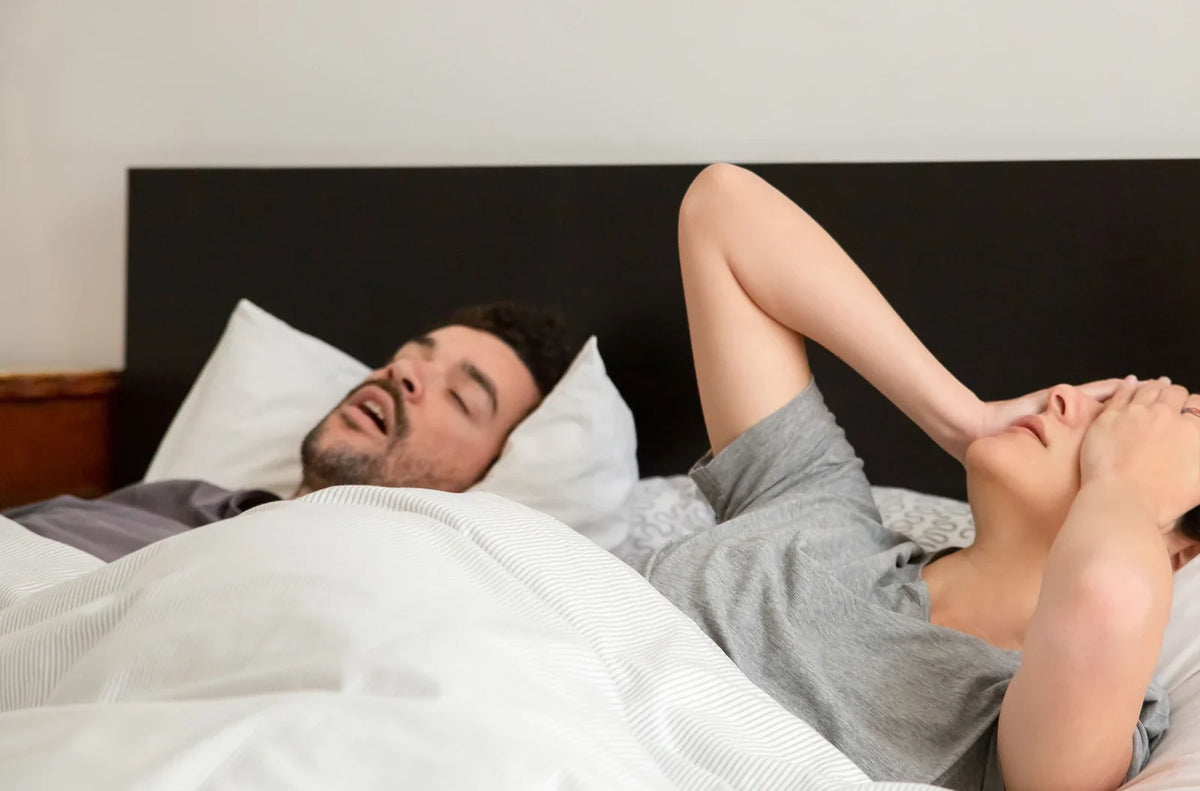
They fell asleep ten minutes after lying down. You did not. Now there is a rumble a foot from your ear. It stops just long enough for you to relax, then starts again. Maybe their phone is still glowing on the nightstand, or they came to bed an hour after you and switched on the lamp. You can't change how they breathe by 2 a.m. You can change what reaches your ears and your eyes.
Most of this guide is about you: a better earplug fit, a mask for the light side of the problem, wearing both comfortably, and keeping the sounds you still need to hear. Near the end there is a short section for your partner and a word on when separate beds are the kinder call.
Why a snoring partner is so hard to sleep through
Snoring isn't like a fan or rain on the window. Steady sounds tend to fade into the background after a while. Snoring does the opposite. It rises and falls, changes rhythm, pauses, then comes back louder. Every change is a small cue for your brain to check what's going on, and that is often enough to pull you back from the edge of sleep. A partner who grinds their teeth can wake you the same way; our guide to why people grind their teeth at night covers what helps.
Distance makes it worse. A noisy neighbor is behind a wall. Your partner is on the next pillow, sometimes facing you, so the sound arrives close and undiluted. It also tends to peak at the worst moments: right as you're drifting off, or in the early hours after you've already woken once. If you often wake in those early hours even on quiet nights, common 3 a.m. wake-up triggers are worth checking too. If you're a light sleeper, you may have already tried earplugs to drown it out and found that really loud snoring still gets through. That doesn't mean earplugs are useless. It means the fit and the rest of the setup matter.
There is an emotional layer too. Lying awake next to someone who is sleeping soundly feels lonely and a little unfair. Then the frustration itself keeps you alert. Having a concrete plan takes some of that away.
Sharing a bed also brings a second problem that has nothing to do with sound, because you and your partner may not keep the same hours. That is where the second layer comes in. First, the noise.
Layer one: earplugs that turn the snoring down
Earplugs come first because they deal with the sound directly. But the number on the box matters less than how well they sit in your ear. A soft silicone earplug like QuietFit reduces noise by up to about 27 dB, depending on fit. A poor seal gets you far less, and loud snoring can still come through a good one. The goal is to turn it down a notch, not make it disappear.
A few fit habits matter most when the noise is a person a foot away:
- Insert and rotate, don't force. Gently pull the top of your outer ear up and back, slide the earplug in, and rotate it into place. Pushing it deeper won't buy you more quiet. It just hurts sooner.
- Reseat before you blame the earplug. Still hearing the snoring clearly? Take the earplug out and put it back at a slightly different angle. A small gap is the usual culprit.
- Do a side-sleeper check. Lie on each side for two or three minutes with the earplugs in. Notice any spot where the pillow presses. Pressure that builds now will be worse at 3 a.m.
- Put them in before the snoring starts. Keep the storage bag on your nightstand. Fumbling in the dark while annoyed rarely ends in a good fit.
If you haven't picked a pair yet, our guide to choosing reusable earplugs for sleeping covers fit, reuse and awareness. For nightly care, how to clean reusable earplugs walks through rinsing, drying and storing.
Layer two: a sleep mask for their lights, screen and schedule
Here is the half of the problem most snoring advice skips. A snoring partner often comes with light. They read on their side of the bed with the lamp on. They scroll, and the screen lights up the ceiling every time they refresh. They get up at 2 a.m. for the bathroom and flip on the hall light. Or they leave for work at six, and the closet light and a phone flashlight become your wake-up call.
None of that is loud. It still keeps pulling you out of the drowsy state you need to fall asleep. A sleep mask lets you go to bed on your own schedule without asking your partner to sit in the dark. That alone takes some tension out of the evening.
The mask also helps with the part of snoring you can't fully solve: the moments it wakes you anyway. Earplugs lower the volume, but a sudden snort can still get through. When it does, what you see next matters. If you open your eyes to a glowing phone or a bright strip around the curtain, you wake up a little more. If there's nothing to look at, it's easier to take a slow breath, reseat an earplug and drift back. A dark view won't make you sleep, but it does remove one more reason to stay awake.
Shape matters when you share a bed. A narrow mask with a thin elastic strap can slide when you turn over, or let light in at the sides, which is exactly when your partner's lamp is on. The Mellooa Weighted Sleep Mask uses a wraparound design with full eye-to-ear coverage and no narrow strap, so there isn't a tight band pulling across the back of your head. It's side-sleeper friendly, which helps if you sleep turned away from your partner. The gentle weight rests over your eyes, and some people find that settling at the end of a long day.
Be clear about what a mask can't do. It works on light, not sound. It won't lower the volume of snoring, and it won't turn every room pitch dark. A very bright room or a gap near your nose can still let some light in. If you notice light creeping in at the edges, our guide to fixing sleep mask light leaks has simple adjustments.
Two small habits make it work. Put the mask on when you get into bed, even if your partner is still reading. And agree on one thing out loud: if they need light after you've dozed off, they can use it, and you don't have to police it. The mask is doing that job for you.
How to wear earplugs and a sleep mask together
Order matters a little. Put your earplugs in first and seat them properly. Then put the mask on. Do it the other way round and you'll end up pushing the mask aside to fix an earplug, which usually knocks the fit loose.
A wraparound mask covers the ears as well as the eyes, so it sits over your earplugs. For most people that's fine, but side sleepers should check. Lie on your usual side for a few minutes with both on. If the mask presses an earplug into a sore spot, seat the earplug a little shallower, or smooth the mask so the fabric lies evenly instead of bunching over that ear.
Soft, low-profile silicone earplugs usually sit more comfortably under a mask than bulky ones. If you mostly sleep on your side, our guide to choosing a sleep mask for side sleepers goes deeper on pillow pressure and fit.
Keep the routine short: earplugs in, mask on, lamp off on your side. After a few nights you won't have to think about it.
Free tweaks that make both layers work better
These cost nothing, and each one helps the earplugs and mask do their job.
Try to fall asleep first. If you drift off before the snoring settles into its rhythm, you're more likely to stay asleep through it. Some couples simply agree that the lighter sleeper goes to bed 20 or 30 minutes earlier.
Make some space. A few inches matter. Move toward the edge of the bed, sleep facing away from your partner, or use separate blankets so their tossing doesn't wake you as well. If you're replacing the bed anyway, a wider one is worth it.
Add sound only if it helps you. Some people like a fan or white noise as a third layer, so the snoring sits on top of a steady sound instead of a quiet room. The evidence is mixed, and some people find it just adds more noise. Our comparison of earplugs vs white noise can help you decide whether it's worth trying.
Don't rely on alcohol to knock yourself out. It isn't a plan you want to repeat every night.
Sounds you still need to hear
Earplugs turn everything down, not just the snoring. Before you settle in, think about what you can't afford to miss: your alarm, a smoke alarm, a child calling out.
This is a real worry for new parents. You want the snoring quieter, but you still need to hear the baby. A plan beats guessing:
- Separate fire and carbon monoxide alerts from your morning alarm. If you're unsure a smoke or carbon monoxide alarm will wake you, leave the earplugs out and arrange appropriate emergency alerting. Don't rely on one earplug, a louder wake-up alarm, or a vibrating phone or watch for emergency alerts. See the U.S. Fire Administration guidance.
- Use a morning alarm for your morning routine. A vibrating wake-up alarm or watch may be useful for that purpose, but don't rely on it to tell you about an emergency or a monitor alert.
- Agree who is on duty before bed. If you're the person on duty for a child or someone who needs overnight care, leave the earplugs out unless an appropriate independent alert setup is in place or another designated caregiver has explicitly taken over and can respond. Follow the care team's plan and the manufacturer's instructions for any prescribed monitor (FDA guidance for home medical devices).
- Check ordinary wake-up sounds while awake. Play your morning alarm with earplugs in from your usual sleeping position. Hearing it while awake doesn't establish that it will wake you from sleep. Don't use a trial night to find out whether you'll wake for an emergency or a care alert.
What your snoring partner can try (just three things)
Everything so far works without your partner changing anything. If they're willing, three things are easy to suggest.
1. Sleep on their side. Snoring is often worse on the back. A pillow tucked behind them can make it easier to stay on their side.
2. Raise the head of the bed a little. An extra pillow or a slightly raised headboard end helps some people. It costs almost nothing to try.
3. Have one calm conversation. Pick a neutral moment, not the morning after a rough night. Talk about how you're sleeping rather than what they're doing wrong. Most people who snore have no idea how loud it gets, and "I want us both to sleep well" lands better than "you kept me up again."
If the snoring is loud and comes with pauses in breathing, choking or gasping, or heavy daytime sleepiness, suggest your partner see a doctor.
When sleeping apart is the kinder option
Sometimes the kindest option is two rooms, at least on some nights. That's a practical choice, and it says nothing bad about your relationship. Our guide to sleep divorce and how to bring it up kindly covers when it helps and how to talk about it. Plenty of couples fall asleep together and one of them moves later. Others sleep apart on work nights and together on weekends. If you've tried both layers and you're still exhausted, it's okay to say so. Being rested makes you a better partner than lying awake beside them out of principle.
On the nights you do share a bed, keep the two-layer kit on the nightstand.
A simple two-layer kit for tonight
If you want to set this up tonight, you only need two things. Mellooa QuietFit Earplugs ($9) are soft, flexible silicone earplugs that you can wash and reuse. You get one pair and a storage bag, in five colors. They reduce noise by up to about 27 dB, depending on fit, and they don't block every sound. The Weighted Sleep Mask ($39, or $47 personalized) takes care of the light with a wraparound, eye-to-ear design and no tight strap.
As the QuietFit FAQ puts it, you can wear the earplugs on their own or pair them with a Mellooa sleep mask when you want a darker, quieter rest routine. If you both end up wanting a mask, the Weighted Sleep Mask Duo comes as two masks chosen together.
You won't get a perfect night every night. But a better-fitting earplug and nothing to look at give you something to do tonight besides lying there, listening, and waiting for the next snore.
Frequently Asked Questions
Can earplugs completely block out snoring?
No. Earplugs turn snoring down, but they don't erase it. QuietFit reduces noise by up to about 27 dB, depending on fit, and how much you still hear depends on your seal, your ear shape and how loud the snoring is. If you hear a lot, reseat the earplug before giving up on it.
Will I still hear my alarm or my kid with earplugs in?
You may hear your morning alarm while awake and still sleep through it. If you're responsible for a child overnight, leave the earplugs out unless an appropriate independent alert setup is in place or another designated caregiver has explicitly taken over and can respond. One earplug, a louder morning alarm or a vibrating phone or watch isn't a substitute for that plan.
Why wear a sleep mask if the problem is noise?
Because noise usually isn't the only problem. Partners read, scroll and get up at different times, and that light keeps you awake too. A dark field of view also makes it easier to settle back down after a snore wakes you. The mask doesn't reduce sound, which is why it's paired with earplugs.
Is it uncomfortable to wear earplugs and a wraparound mask on your side?
For many people it's fine, but check for yourself. Put the earplugs in first, then the mask, and lie on your side for a few minutes. If the mask pushes an earplug into a sore spot, seat it slightly shallower or smooth the mask over that ear.
When should I suggest my partner see a doctor about snoring?
Use the same rule as above: loud snoring together with pauses in breathing, choking or gasping, or heavy daytime sleepiness. Beyond that, it's a conversation for your partner and a professional, not something to work out from the other side of the bed.
Is sleeping in separate rooms a better fix?
It can be, and it's a fair choice. If you'd rather share a bed, try the two layers first. If you're still not sleeping, separate rooms on some or all nights is a practical decision, not a sign that something is wrong between you.



Share:
How to Clean Reusable Earplugs Without Damaging Them
How to Sleep With Noisy Upstairs Neighbors (Even on Your Side)