

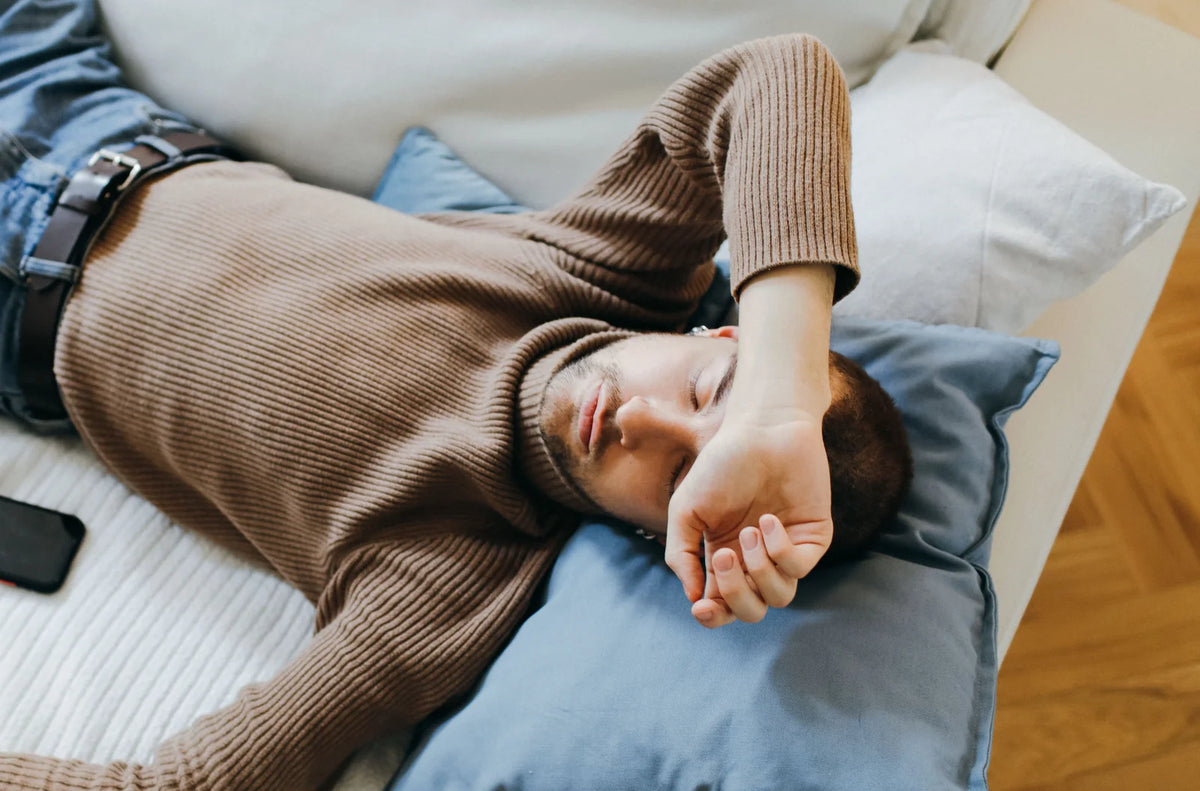
If you fall asleep on the couch but feel awake in bed, the difference may be what happened between the two. An evening doze can reduce your drive to sleep; lights and last-minute tasks can leave you more alert. For some people, bed itself has also become a place of trying, waiting and worrying. The pattern alone does not tell you which explanation fits.
Before replacing the mattress or deciding you can only sleep on the sofa, look at the short journey from the living room to bed. That is often the part of the evening worth changing first.
Were you sleepy, or had you already been asleep?
There is a difference between heavy eyelids during a show and waking up to find that another episode has started. A CQUniversity explanation by sleep researchers describes how an evening nap can reduce sleep pressure: the drive that builds while you are awake. A longer sofa sleep may therefore leave you less ready to fall asleep again when you move.
You do not need to reconstruct the evening minute by minute. Ask one ordinary question the next morning: “Did I go to bed when I started feeling sleepy, or did I wake up somewhere else first?” That distinction is more useful than blaming the bedroom immediately.
If television is part of the pattern, separate the sofa doze from the question of leaving a screen running all night. Our guide to sleeping with the TV on covers that second issue.
Make the trip to bed shorter, not more elaborate
Imagine this familiar sequence: you notice yourself drifting off, stand up, turn on the kitchen light, put dishes away, check tomorrow's messages and then wash up. By the time you reach bed, the quiet part of the evening is a while behind you.
The National Heart, Lung, and Blood Institute recommends a quiet period before bed and avoiding bright artificial light. A practical way to apply that advice is to finish the necessary preparation before settling down to relax.
- Wash up and change into nightwear before the last quiet activity, if that suits your evening.
- Set tomorrow's alarm and leave anything you need within reach.
- Decide which household jobs can wait until morning.
- When sleepiness arrives, let going to bed be the next step rather than the start of another checklist.
Keep enough light to move safely. Do not skip necessary care or negotiate stairs in darkness to preserve a drowsy feeling. The aim is fewer optional interruptions, not a perfect ritual you have to perform correctly.
If bed feels different even without a sofa nap
Sometimes you are clearly sleepy until you lie down. Then the calculations begin: how soon you must sleep, how early the alarm will ring, whether tonight will be another difficult night.
The Veterans Health Library explains that repeated wakefulness and frustration can build an association between bed and being awake. That is one possible explanation, not a diagnosis based on where you last nodded off.
If you are lying awake and becoming frustrated, a calm break outside the bed, where feasible, can be preferable to turning sleep into a test. Return when sleepy rather than timing yourself. Our explanation of why sleep clinicians sometimes recommend getting out of bed goes into the approach. Persistent problems deserve individual guidance; this is not a do-it-yourself sleep-restriction plan.
Compare the rooms before buying anything
Perhaps the couch is not the important difference. The living room may be quieter than the bedroom, or the bedroom may have a bright hallway outside it. Make a short comparison: light, noise, temperature and physical comfort. Choose one obvious difference to address, rather than rebuilding the whole room.
Closing a door, adjusting an existing blind or changing uncomfortable bedding may be enough to test a practical concern. If unwanted light remains and you like wearing a mask, a gently weighted wraparound sleep mask is one optional tool. It is not a treatment for the reason you feel awake in bed, and there is no need to buy one to try a simpler evening transition.
Notice the pattern without monitoring every night
For a few mornings, jot down whether you dozed before bed, what you did after getting up from the couch and how the night felt. Keep the note brief. “Fell asleep during the film; answered work messages before bed” is useful. A guess presented as an exact sleep duration is not.
If you want a clearer record to discuss with a clinician, our guide to keeping a sleep diary without watching the clock explains how to use estimates. A note can help you describe the pattern; it cannot prove its cause.
When to ask for help
The NHS advises seeking medical help when sleep problems have lasted for months, habit changes have not helped, or poor sleep is making daily life difficult to cope with. Mention frequent unintended daytime sleep, loud snoring or breathing interruptions rather than assuming every episode is just a comfortable sofa. Do not drive when sleepy.
You do not have to solve the whole night tonight. Start by making the move from relaxing to bed less busy, and leave yourself permission to ask for help if the pattern persists.



Share:
Protecting Your Sleep While Caring for an Adult
Can You Sleep Too Much?