

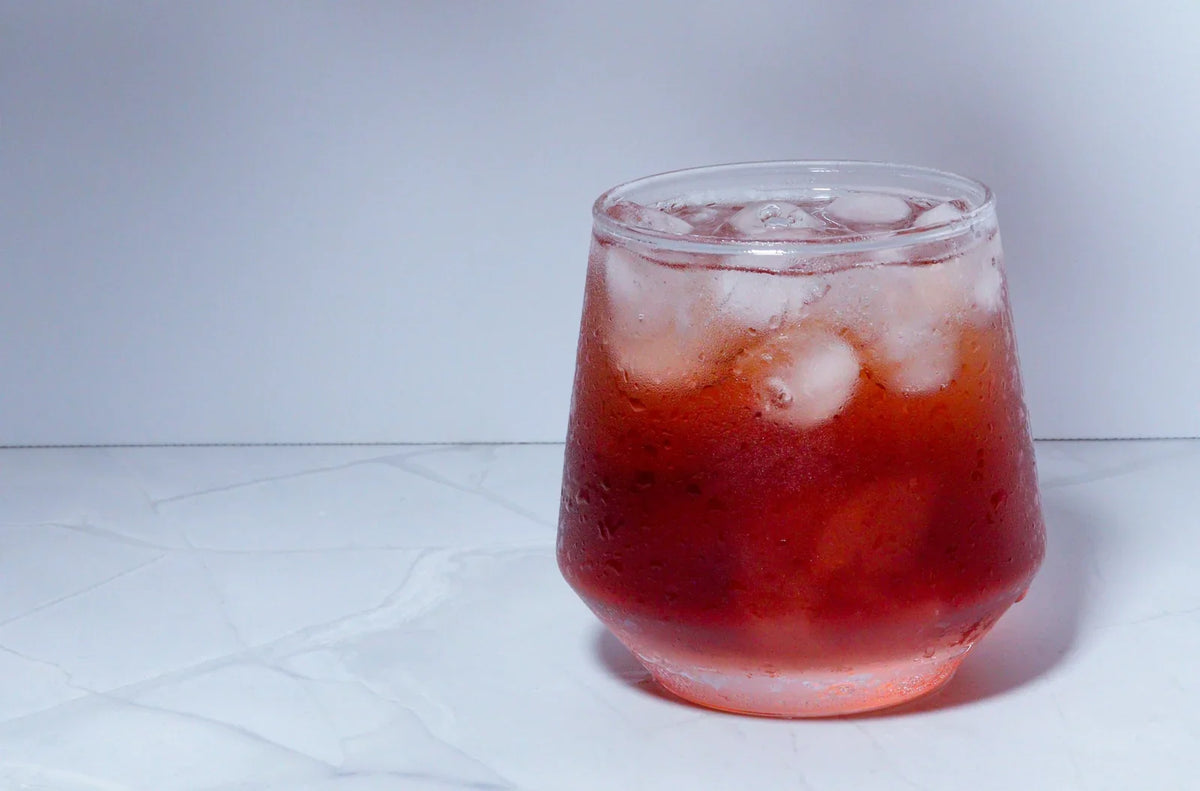
Small trials suggest tart cherry juice may add a modest amount of sleep, roughly 20 to 35 minutes a night in healthy adults, with bigger gains seen only in very small insomnia pilots. The evidence is promising but thin, samples are tiny, one 2024 trial found no effect at all, and no single glass works overnight.
Why Everyone Is Suddenly Drinking It
If your feed has felt like a juice bar lately, you are not imagining it. The "sleepy girl mocktail", a mix of tart cherry juice, magnesium powder, and sparkling water poured over ice, has been all over social media for a couple of years now, and it is still going strong. Recent recipe videos from this month show the same ritual: a tall glass, dark red juice, a scoop of white powder, a fizzy topper, lifted toward the camera in a dim kitchen at night. One popular version from early October pulled in tens of thousands of likes and thousands of comments, with viewers trading notes on whether it actually did anything.
The promise is big and the recipe is simple, which is exactly why it travels. Drink something that looks like a cocktail, an hour or two before bed, and fall asleep faster. But a viral video is not evidence, and the science behind this one is more interesting, and more limited, than the videos suggest.
What the Trials Actually Found
Unlike many wellness trends, tart cherry juice does have real human trials behind it. They are small, but they are randomized and placebo controlled, which is more than most sleep trends can say. Here they are, roughly in order.
2010, older adults with insomnia. The earliest pilot, published in the Journal of Medicinal Food, gave a tart cherry juice beverage to older adults with insomnia. Sleep improved modestly compared with placebo. Small group, gentle effect, and the first hint that there might be something here.
2012, healthy adults. The most cited study, published in the European Journal of Nutrition, tested Montmorency tart cherry juice concentrate in 20 healthy adults aged 18 to 40. Participants took 30 milliliters of concentrate twice a day for seven days. Compared with placebo, total sleep time rose by about 34 minutes, time in bed rose by about 25 minutes, and sleep efficiency, the share of time in bed actually spent asleep, improved by 5 to 6 percent. The researchers also found higher levels of a melatonin metabolite in urine, suggesting the body was making slightly more of its own melatonin signal.
2018, the 84-minute study. This is the number every article quotes, so it deserves a closer look. Researchers at Louisiana State University ran a pilot with eight adults over 50 who had chronic insomnia. Each drank about 240 milliliters, roughly 8 ounces, of Montmorency tart cherry juice twice a day for two weeks. Compared with placebo, total sleep time rose by an average of 84 minutes a night. Published in the American Journal of Therapeutics, it is the largest effect ever reported for cherry juice and sleep. It is also, as we will see, the least generalizable.
2023, sixteen adults. A smaller trial in 16 participants found a 22-minute increase in total sleep time, a 24-minute reduction in the time it took to drift off, and a 2.4 percent improvement in sleep efficiency. Same direction as the earlier work, smaller numbers.
November 2024, the null result. Not every trial found something. A randomized crossover trial gave Montmorency tart cherry powder to adults who were overweight or obese and measured sleep for 14 days. Total sleep time, deep sleep, REM sleep, and nighttime awakenings: none of them improved compared with placebo. Most positive trials were in healthy people or people with mild insomnia, so this one is a useful reminder that a modest nudge in one group does not guarantee anything in another.
September 2025, the first systematic review. A review published in Food Science and Nutrition pulled together seven human trials, with sample sizes between 11 and 20 participants. Across the studies, tart cherry juice or concentrate improved sleep quality, shortened the time it took to fall asleep, and increased total sleep time. The authors called the evidence promising but cautioned that the trials are small and varied, and that tart cherry is not a treatment for clinical insomnia.
Where the Honest Caveats Are
Now the part the viral videos skip.
The famous 84-minute result came from eight people. Eight. A result that dramatic in a group that small is a signal worth following up, not a fact about what will happen to you.
When researchers pooled the data across trials, the picture got quieter. Skeptical reviewers note that across about ten trials, tart cherry showed no meaningful advantage over placebo at helping people in general fall asleep faster. The gains that do show up cluster around staying asleep longer and waking less during the night, mostly in older adults, rather than drifting off quicker.
Then there is the 2024 null result, a clean no-difference finding in a metabolically different population. It does not cancel the positive trials, but it puts a boundary around them: what works a little for healthy or mildly sleepless adults may not work at all for everyone.
And the field is still waiting. A 20-person insomnia trial finished in August 2025, and as of this writing its results have not appeared in the trial registry. Nobody has yet run the large trial that would settle the question. Until someone does, "promising but unproven" is the honest label.
Why It Might Work at All
Tart cherries, especially the Montmorency variety used in the trials, naturally contain small amounts of melatonin, the hormone that signals to the body that nighttime has arrived. Analyses have found Montmorency cherries carry several times more melatonin per gram than sweet cherry varieties. They also contain tryptophan, a building block of serotonin and melatonin, plus anthocyanin pigments with anti-inflammatory properties.
That sounds like a lot until you look at the doses. The melatonin in a glass of juice is a small fraction of what a melatonin supplement delivers. Researchers think the effect, if real, probably comes from the combination, nudging tryptophan availability and calming low-grade inflammation, gradually, rather than from one ingredient hitting hard.
This also explains an important distinction. In the trials, cherry juice seemed to support sleep duration and efficiency. It did not appear to shift the timing of the body's melatonin rhythm. That makes it different from melatonin supplements, which are mainly useful for timing problems like jet lag or shift work. If your issue is a body clock running late, cherry juice is aiming at the wrong target. We break down what melatonin supplements actually do, and when they make sense, in our guide to whether melatonin really helps you sleep, and timing strategies for travel in our jet lag guide.
How to Try It the Way the Studies Did
If you want to test it on yourself, it helps to copy the protocol instead of the video.
Twice a day, not a nightcap. Every positive trial dosed twice daily, morning and evening, for 7 to 14 days. The single dramatic glass before bed is a social media invention. In the trials, the evening serving landed one to two hours before bed, which also spares you a middle-of-the-night bathroom trip that could erase a modest gain.
Give it one to two weeks. Nobody in the studies fell asleep faster after a single glass, and nothing in the proposed mechanisms suggests an instant effect. Judge it after consistent daily use, not after one night.
Match the variety. The trials used Montmorency tart cherry juice or concentrate. Sweet cherry products were not tested, so the results do not automatically transfer.
Read the label like a skeptic. If you buy juice, look for 100 percent tart cherry with no added sugar, and check that Montmorency is named on the label rather than a vague "cherry blend." Concentrates are cheaper per serving and easier to dose like the trials did, but they are also easier to over-pour, so measure the 30 milliliters instead of eyeballing it. Skip anything marketed with sleep promises on the front of the bottle; the brands making the loudest claims are rarely the ones used in research.
Keep the rest of the routine. A glass of juice will not outrun a bedroom that is too warm, a phone glowing at midnight, or caffeine at 4 p.m. Treat it as one small lever among the bigger ones.
The Mocktail Question: What About the Magnesium?
The viral recipe has three ingredients, and it is worth asking which one is doing the work. Tart cherry juice has the small-trials evidence described above. Magnesium, the white powder in the videos, is the other serious ingredient, with its own long, complicated evidence base around muscle relaxation and sleep quality. We looked at that separately in our piece on whether magnesium really helps you sleep.
The sparkling water is theater. Lovely theater, a glass that feels like a cocktail is part of any good wind-down ritual, but it is not doing anything for your sleep architecture. If you try the mocktail and sleep better, be honest with yourself about which ingredient deserves the credit, or whether the credit belongs to the ritual itself: a calm, screen-free twenty minutes before bed would help almost anyone.
Who Should Think Twice
Two glasses of juice a day is a meaningful amount of natural sugar. If you watch your blood sugar, have diabetes, or care about your teeth, that matters, and the sugar-free concentrate mixed with water is the gentler version of the experiment. Anyone who is pregnant or breastfeeding, takes regular medication, or is considering this for a child should check with a pharmacist or clinician first, since cherry compounds can interact with some drugs.
And the line that matters most: tart cherry juice is not a treatment for insomnia. If poor sleep has lasted more than a few weeks, or you are falling asleep during the day, that deserves a real conversation with a doctor, not a grocery run.
FAQ
Does tart cherry juice help you fall asleep faster? Probably not much, based on current evidence. The pooled trials show little advantage over placebo for falling asleep quicker. Where benefits appear, they are in sleeping longer and waking less during the night, mostly in older adults or people with mild sleep trouble.
How long before bed should I drink tart cherry juice? In the trials, the evening serving was taken one to two hours before bedtime, with a second serving in the morning. That timing gives the drink time to digest and avoids a bathroom trip in the middle of the night.
How much tart cherry juice should I drink for sleep? The published protocols used either 240 milliliters of juice twice a day for two weeks, or 30 milliliters of concentrate twice a day for seven days. There is no tested "right" amount beyond what the trials used.
Is tart cherry concentrate the same as the juice? For the purposes of the research, roughly yes. Trials used both forms and found similar directions of effect. What matters more is the variety: the evidence sits with Montmorency tart cherries, not sweet cherries.
Can tart cherry juice replace melatonin supplements? They do different jobs. Cherry juice may modestly support sleep duration; melatonin supplements are mainly useful for shifting sleep timing, like jet lag. One is not a substitute for the other, and neither is a cure for chronic insomnia.
One Last Honest Note
No drink fixes a bedroom that is working against you. Light leaking past thin curtains, a screen glowing on the nightstand, a room that runs warm: these matter more for your night than any beverage. If you are building a better wind-down, pair the small experiments with the big, boring wins: a dark, cool, quiet room. A gently weighted sleep mask will not add minutes to your sleep the way a trial measures them, but on a bright evening it removes one of the most common reasons people wake up in the first place.



Share:
How to Rest Without Feeling Guilty
Is It Bad to Sleep With the Lights On?