

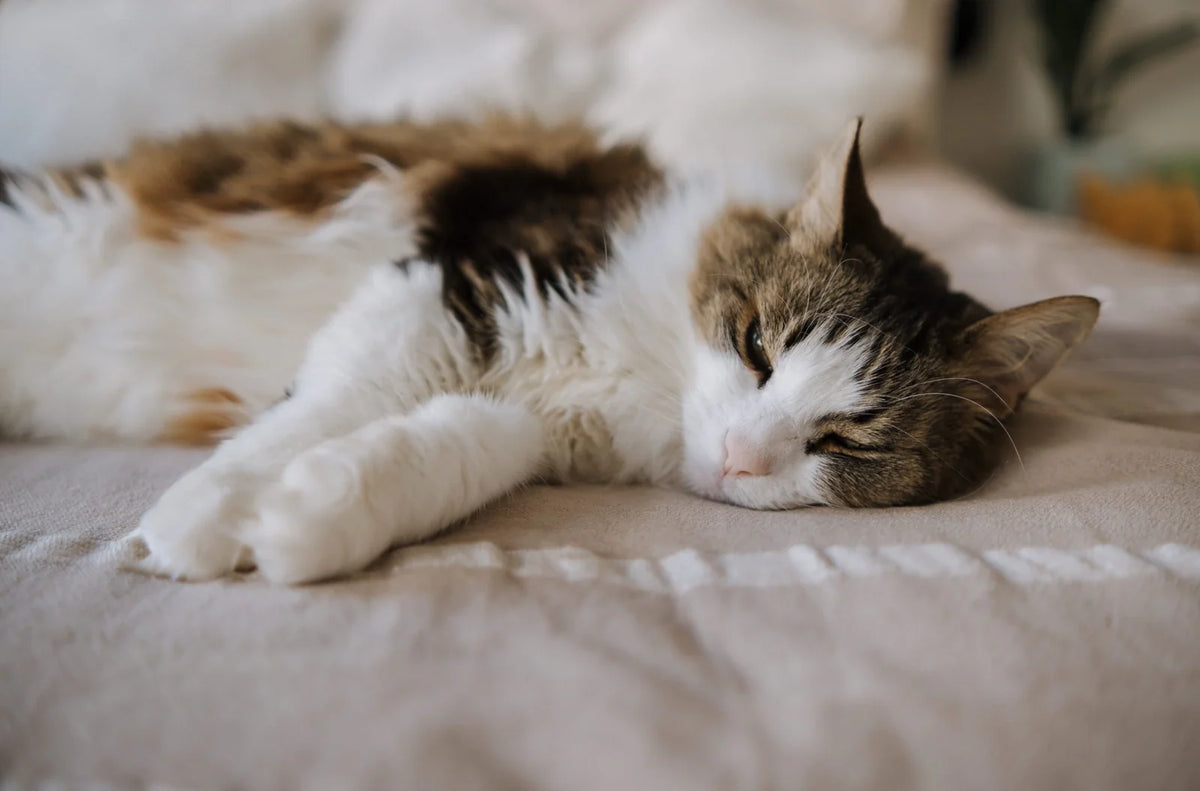
If your cat wakes you up at night, start by checking whether something has changed in their health or routine. Then match the response to what is waking you: a breakfast request, play, noise, or movement on the bed. A predictable routine and a comfortable separate sleeping space may help without punishing your cat.
There is a particular kind of tiredness that comes from being woken by a small, well-rested animal. You can love the company and still need the early morning back. The useful question is not whether your cat belongs in the bedroom forever. It is what needs to change so both of you can settle.
When the wake-ups are new, check before changing the routine
A cat who has always asked for breakfast early is different from one who suddenly starts calling through the night. New or increased vocalizing, changes in appetite or drinking, weight loss, and signs of discomfort deserve a veterinary conversation. Woodgreen's advice on nighttime meowing explains why health concerns need to be considered before treating the behavior as a habit.
Do not try to sleep through an unfamiliar cry or obvious distress. Advice about not rewarding an established breakfast demand is not advice to ignore pain, fear, or a cat who needs help.
Work out what happens just before you wake
You do not need a camera or a minute-by-minute record. In the morning, jot down what you remember: calling at the bedroom door, jumping onto the bed, batting an object around, or walking toward the food bowl. Note what you did next and whether the same sequence keeps happening.
A full food bowl does not rule out a request for company. As Tufts veterinary behavior guidance points out, a cat may be seeking interaction or play as well as breakfast. Feeding every time may not address the reason for the wake-up.
If you want to track your own sleep, use a short morning sleep diary rather than checking the clock each time. Write down whether you feel rested and what disturbed you. You are looking for a workable household pattern, not a perfect sleep score.
Give the evening a little more structure
Cats are often more active around dusk and dawn. That does not mean your only choices are a nightly chase around the bedroom or keeping your cat awake all day. Cats Protection cautions against preventing daytime sleep.
Instead, offer interaction when your cat is naturally awake and interested. A short play session in the afternoon or evening can become part of the household routine. Let the cat set the pace; an older cat and an energetic young cat may want very different amounts of activity.
RSPCA guidance also suggests reviewing meal timing and providing suitable activities. Keep string toys and anything with easily swallowed parts for supervised play. A quiet, safe activity outside the bedroom is more useful at bedtime than a noisy toy under your bed.
Change a manageable part of the routine and observe what happens. There is no reliable promise that a particular play session will buy eight uninterrupted hours.
If breakfast is the issue, separate it from waking you
For a healthy cat whose familiar pattern is an early food request, a timed feeder may help separate breakfast from your getting out of bed. Cats Protection's nighttime guidance includes regular small meals and automatic feeders among the options to consider.
This is a change in timing, not a reason to add unlimited extra food. Keep the day's food allowance appropriate, and check with your vet before changing a prescribed diet or feeding schedule. A feeder also will not solve a need for interaction, discomfort, or trouble between pets.
Agree on the plan with everyone at home. If one person waits for the planned breakfast and another gives a snack whenever the cat calls, the routine will be harder to understand.
Make sleeping apart comfortable, not a punishment
If jumping, kneading, or movement wakes you, a separate resting place may be worth trying. Begin by making it familiar during the day. Provide a comfortable bed or resting spot, somewhere to hide, and access to water and a clean litter tray. Choose a safe indoor area rather than simply putting the cat outside for the night.
If you intend to close the bedroom door, allow time for the cat to get used to the arrangement. Do not suddenly confine them in an unsuitable space and assume the problem is solved. Persistent distress is a reason to get individualized advice.
The San Francisco SPCA recommends a consistent, nonpunitive approach. Shouting, spraying water, or frightening a cat is not a sleep plan. Reward calm behavior and seek help from your veterinarian or a qualified feline behavior professional when you cannot find an arrangement that works.
For a household with dogs as well, our guide to dogs sleeping in the bed looks at the separate question of sharing a mattress versus a room. It is not a reason to expect cats and dogs to follow the same routine.
Protect your sleep without overlooking another problem
Noise is only one possible disturbance. If your nose, eyes, or breathing worsen around the cat, discuss allergies with a healthcare professional. The National Institute of Environmental Health Sciences recommends keeping pets out of the bedroom of someone with pet allergies. An eye mask or earplugs cannot deal with that exposure.
Likewise, do not use earplugs to avoid checking a new or distressed cry. If you later choose them for ordinary household noise, make sure important alarms and calls remain audible; our guide to hearing your alarm with earplugs explains the practical checks.
If your sleep stays poor after the interruptions change, or tiredness is affecting your days, get advice about your own sleep too. The cat may not be the whole explanation.
A small plan for tonight
- Check any new or unusual behavior rather than treating it as mischief.
- Offer calm interaction or suitable play while your cat is awake and interested.
- Set up food, water, litter access, and a comfortable safe resting place before you go to bed.
- Agree on who handles a genuine nighttime need, and what the breakfast routine will be.
- In the morning, note what actually woke you and adjust one practical thing.
You can enjoy an evening cuddle without sharing every hour of the night. A good arrangement leaves room for your cat's needs and for your own sleep.



Share:
Why Are My Feet So Cold at Night? Causes and What Helps
Can't Sleep? Try Staying Awake: Paradoxical Intention, Explained