

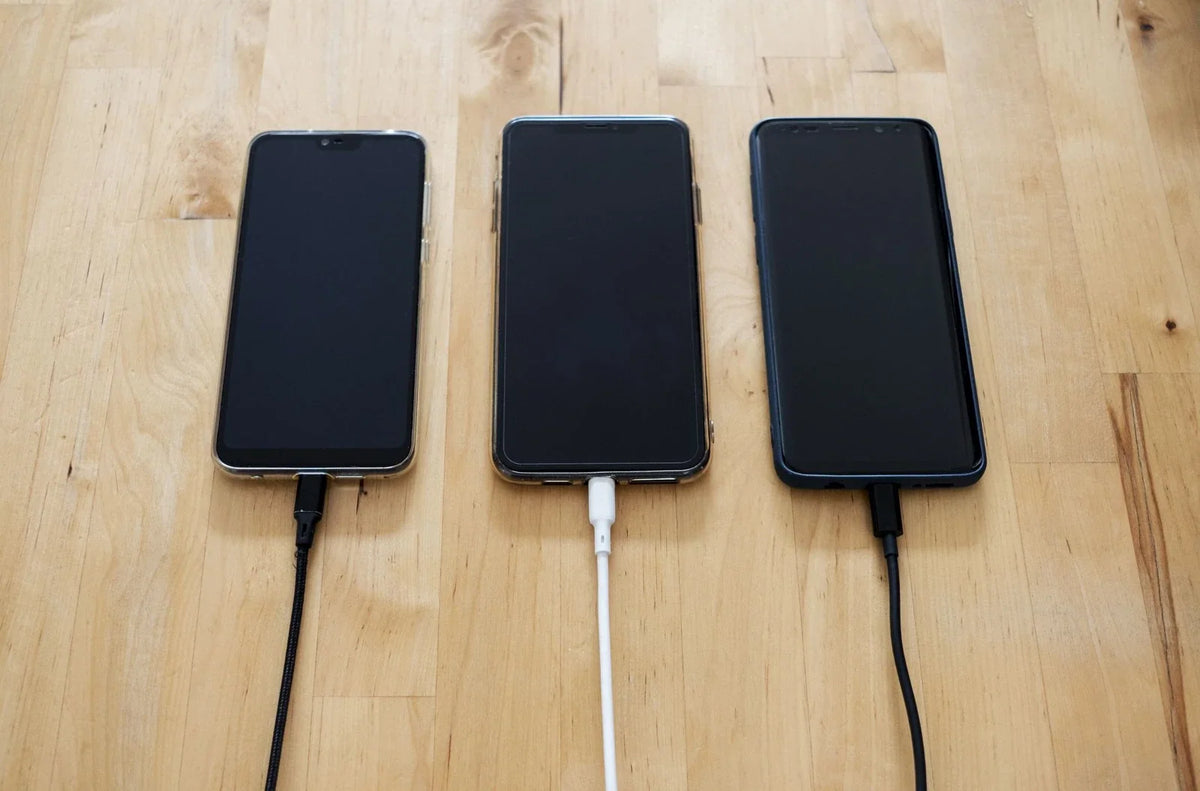
Yes, for most people it helps. When the phone charges outside the bedroom, it stops being the last thing you touch at night and the first thing you reach for in the morning. You still need an alarm and a way for urgent calls to reach you, but neither requires keeping the whole phone beside the bed.
The phone is not just another object in the room
A book on the nightstand does one thing. A glass of water does one thing. A phone does everything, and that is the problem. It is a messenger, a newsroom, a shop, a game, and a work inbox, all waiting behind one bright rectangle. Even when you are not using it, you know what it can do. That knowledge alone keeps part of your attention on standby.
Think about the last time you went to bed later than planned. It rarely starts with a decision to stay up late. It starts with one more message, one more video, one more headline. Each one is small and each one resets the feeling of being done for the day. The bed stops being a place where the day ends and becomes a place where the day continues in a smaller, brighter form.
The same thing happens in the middle of the night. You wake for a moment, as everyone does several times a night, and the phone is right there. In the dark, with your eyes half open, checking it feels harmless. But a lit screen and a piece of news or a message can turn a two minute waking into a twenty minute one. By the time you put it down, your mind is awake in a way it was not when you first opened your eyes.
Morning works the same way in reverse. If the first thing you touch is the phone, the day starts with other people's demands: messages that arrived overnight, headlines you did not ask for, a feed that has already decided what matters. None of that is urgent at 6:30 in the morning, but it feels urgent because it is the first thing you see.
None of this means the phone is evil or that screens alone ruin sleep. It means the phone is a poor bedside companion. It is designed to hold attention, and attention is exactly what sleep needs you to let go of.
What actually changes when the charger moves
Moving the charger changes three things, and it helps to be clear about which one matters most to you.
First, it protects your bedtime. Public health guidance commonly suggests turning off screens at least 30 minutes before bed, but a cutoff time is hard to keep when the device is still in your hand. Distance does the work that a rule cannot. When the phone is already charging in the kitchen or the hallway, there is nothing to negotiate with yourself at 10:45 p.m. The decision was made hours earlier, when you were fully awake.
Second, it shortens night wakings. A waking without a phone has very little to do. You lie still, you notice the room, you drift off again. A waking with a phone has options, and options keep you awake. This is also why the old advice to get out of bed when you cannot sleep still holds: the bed should stay linked to sleep, not to scrolling. Our earlier piece on why sleep experts tell you to get out of bed when you cannot sleep explains that link in more detail.
Third, it changes the first hour of the morning. People who move the phone out often report the same surprise: the morning feels quieter, not because anything dramatic changed, but because nothing demanded their attention before breakfast. You still check messages. You just check them after you have woken up properly, had water, opened the curtains, and decided what the day actually needs.
What moving the charger does not do matters too. It does not fix loud snoring next to you, a room that is too hot, or pain that wakes you. It does not replace sleep itself. If you are sleeping five hours a night because your schedule allows nothing more, a phone-free bedroom will not make five hours feel like eight. It removes one obstacle, not every obstacle. That is still worth doing, as long as you do not expect it to solve everything.
Set it up so the morning still works
Most people who try this fail at the same point: the alarm. The phone has been the alarm for years, so removing the phone feels like removing the way to wake up. Solve that first, before the first phone-free night.
Buy a separate alarm clock. It does not need to be fancy. A basic clock with a loud enough alarm and a dim display does the job. If you hate being jolted awake, a clock with a gradually brightening light is a gentler option, but the simple version works fine. Put it where you can reach it to silence it, but not where you can start scrolling on it, because an alarm clock cannot scroll.
Next, handle urgent calls. This is the objection that stops most people, and it is a fair one. Parents, caregivers, and anyone on call need a way to be reached. The answer is not to keep the whole phone by the bed. It is to keep one channel open and close the rest.
One option is to let the phone charge outside the room but leave its ringer on for a short list of contacts, with everything else silenced. Most phones have a focus or do-not-disturb mode that allows repeat callers or starred contacts through. Check that the people who might truly need you at night are on that list, then test it once during the day so you trust it at night.
If your job genuinely requires you to answer messages at night, be honest about that too. A nurse on call, a parent waiting on a hospital update, or someone covering an overnight system is not failing at a sleep habit by keeping a phone close. The habit is meant for the rest of us, whose overnight messages can almost always wait until morning.
Small homes and shared rooms
Not everyone has a hallway or a spare room to charge in. If you live in a studio or share a room, "outside the bedroom" may mean across the room, on top of a wardrobe, or in a drawer by the door. That still counts, as long as it takes real effort to reach. The point is friction, not distance measured in meters. A phone on the far side of the room, face down, with notifications silenced, is much harder to grab half asleep than one on the pillow next to you.
For shared rooms, agree the rule with the other person rather than imposing it silently. If one person's phone stays on the nightstand buzzing, the other person's phone-free night does not work well. A shared charging spot by the door, used by both, is easier to keep than a rule only one person follows. If your partner keeps their phone in bed, our piece on sleeping when your partner is on their phone in bed covers the light and the conversation separately.
One safety note belongs here: never charge a phone under a pillow or under bedding. Phones give off heat while charging, and bedding traps it. Charge on a hard, open surface, wherever that surface is.
The first week: what it feels like
The first two or three nights can feel odd. You will reach for something that is not there. You may feel a small itch of worry, as if you are missing something. That feeling is the habit talking, not a real emergency, and it usually fades within a few days as the new routine settles.
Night wakings may feel longer at first, because you have nothing to distract yourself with. That is uncomfortable, but it is also the point. Lying still in the dark is boring, and boredom is what lets sleep return. If you are still awake after about twenty minutes, get up, go to another room, do something quiet and dimly lit, and return when you feel sleepy. Do not use that time to check the phone you just moved.
Mornings may feel stranger than nights. Without the phone, you have to decide what to do with the first ten minutes. That emptiness is useful. Open the curtains, drink water, stretch, or just sit for a minute. Morning light in particular helps set the day's rhythm, as our piece on how much morning sunlight you actually need explains. The phone can wait until after that.
By the end of a week, most people can tell whether the change is doing anything. The test is not whether you feel transformed. It is smaller than that: did you go to bed closer to the time you planned, did night wakings stay shorter, and did the morning start calmer? If two of those three moved in the right direction, the habit is earning its place.
If nothing changed after a week, that is useful information too. It suggests the phone was not your main obstacle, and the real one is elsewhere: timing, temperature, noise, or a schedule that leaves too little room for sleep. Our piece on working back from your wake-up time to set a bedtime is a good next place to look, because a phone-free room cannot fix a bedtime that was never realistic.
When the phone should stay close
There are nights when the rule should bend. A child is ill. A parent is in hospital. You are waiting for a call that could genuinely come at 3 a.m. On those nights, keep the phone close, silence everything except the person you are waiting for, and return to the rule when the situation passes. A habit that cannot bend for a real emergency will break entirely, and a broken habit helps no one.
What does not count as a reason to bend the rule is the feeling that you might miss something interesting. That feeling is constant, and it is the reason the rule exists. If you bend it every night for that reason, you do not have a rule at all. You have a suggestion you ignore.
The same honesty applies to the middle ground. Keeping the phone in the room but face down, or in a drawer, or on do-not-disturb, is better than nothing. It is not the same as moving it out, because the option to reach for it is still there at the weakest moment of the night. Treat the middle ground as a step toward the full change, not as a replacement for it.
What to put where the phone was
An empty nightstand can feel like a missing piece, so give the space a different job. A paper book is the obvious replacement, and it works because it ends: a chapter finishes, the book closes, and there is nothing new waiting underneath. If reading before bed is your wind-down, our piece on whether reading before bed helps you sleep covers which kinds of reading help and which ones keep you up.
A small paper notepad is the other useful replacement. Many night wakings are really a thought that refuses to wait until morning: something to remember, something to worry about, something left unfinished. Writing it down on paper parks it without opening a screen. You can deal with it in the morning, and the act of writing it down is often enough to let it go for the night. This is a different tool from a full evening routine, and it pairs well with the phone-free room rather than replacing it.
Light from outside the room is the last thing to handle. If the hallway light or a partner's late return wakes you, a mask can help, but be clear about what it does. A gently weighted wraparound mask like the Mellooa weighted sleep mask handles light only. It does not silence a phone, set a bedtime, or fix a habit. It is useful after the phone has moved, for the light that remains, not instead of moving the phone.
Frequently asked questions
Will I miss an emergency if my phone is outside the room?
Not if you set it up properly. Allow starred contacts or repeat callers through do-not-disturb, keep the ringer loud enough to hear from the next room, and test it once during the day. What you will miss is everything that is not an emergency, which is the point.
What if I use my phone as my alarm?
Get a separate alarm clock before the first phone-free night. This is the step people skip, and skipping it is why most attempts fail on day one. A basic clock costs little and removes the phone's last real job in the bedroom.
Is across the room good enough, or does it have to be another room?
Another room is best, because it removes the option entirely. Across the room is a good second choice, especially in a studio or shared room, as long as reaching it takes real effort and the screen is face down with notifications silenced. On the pillow or on the nightstand is not a version of this habit at all.
Does this help if my problem is racing thoughts, not scrolling?
Partly. Removing the phone removes one way thoughts turn into activity, but it does not quiet the thoughts themselves. If your mind runs at night, keep a paper notepad by the bed, write the thought down, and return to it in the morning. Our piece on quieting racing thoughts before sleep covers that side in more detail.
How long should I try it before deciding?
Give it a full week, including a weekend. The first two or three nights feel strange because the habit is new, not because it is failing. Judge it on bedtime drift, night waking length, and how the morning starts, not on whether you feel different on night one.
Charging the phone outside the bedroom is a small, slightly inconvenient change, and that is why it works. It does not ask you to become a different person. It asks you to move one object to another room, and then let the room do what rooms are supposed to do at night: stay dark, stay quiet, and stay boring enough for sleep to arrive.



Share:
What Time Should You Go to Bed? Work Back From Your Wake-Up Time
How to Sleep When You’re Grieving