

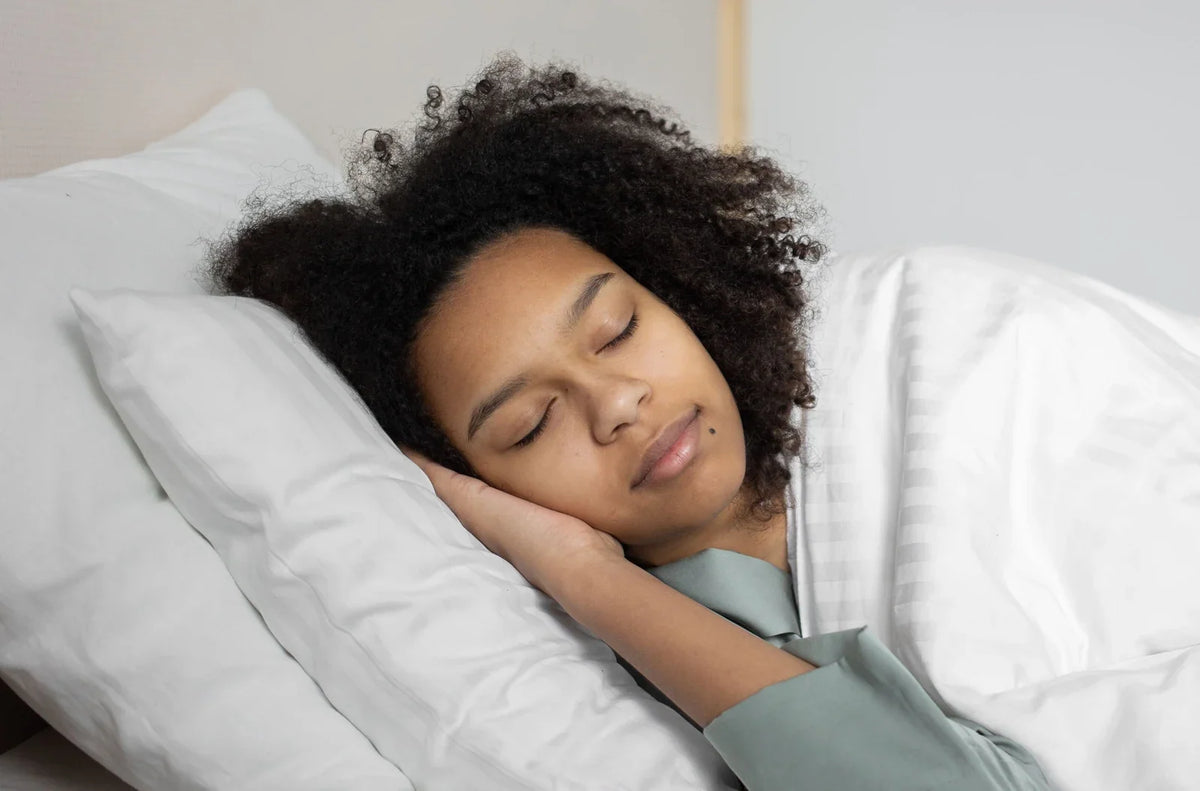
When it comes to foam vs silicone earplugs for sleeping, foam usually turns down more noise when you roll it thin and insert it deeply, but it is single-use and can feel tight by morning. Silicone earplugs are easier to fit, gentler for side sleepers, and washable. For sleep, the best pair is the one you can actually wear all night.
This article is general information, not medical advice.
The short answer: foam vs silicone earplugs for sleeping
Most comparisons ask one question: which one is quieter? That matters. But a pair that comes out at 2 a.m. does nothing for the rest of your night. So here is how the two types compare on the things that decide whether they stay in.
| Foam | Silicone (pre-shaped) | |
|---|---|---|
| How it fits | Rolled thin, then expands to fill the ear canal | Holds its shape; you slide it in and adjust the angle |
| Noise reduction | Typically higher when inserted deeply | Usually a little lower, depends a lot on fit |
| Side sleeping | Can press on the ear once it expands | Soft, low-profile designs tend to press less |
| Learning curve | Takes practice to roll and seat well | Simpler to put in and take out |
| Reuse | Mostly single-use | Washable and reusable |
| Long-term cost | Cheap per pair, but you keep buying | Costs more up front, lasts longer |
| Plugged-up feeling | More common | Often reported as milder |
None of this is a rule for every ear. It is a starting point. If you want a wider look at what to weigh beyond material, see how light sleepers should choose earplugs.
Where foam earplugs win
Foam is good at one thing in particular: filling the ear canal. Once you roll it into a thin tube and let it expand inside, it seals closely. That seal is what turns sound down.
In a study comparing earplug types, foam plugs typically measured higher attenuation than pre-molded plugs (The study of attenuation levels and the comfort of earplugs, PMC). In plain terms, foam often does better with steady, low sounds like a partner's snoring or the rumble of traffic outside, as long as it goes in deep enough.
Foam is also cheap and easy to find. If you only need earplugs now and then, a box of disposables can make sense.
The tradeoffs are real, though:
- It takes technique. Foam only works well when you roll it tight and insert it far enough. A loose fit loses much of the benefit.
- It can feel like pressure. As foam expands, some people feel a tight, full sensation that builds through the night.
- It wears out. Foam is porous. It picks up oil and dirt, and it loses its spring. Most foam pairs are meant to be replaced often.
Where silicone earplugs win
Silicone earplugs are usually pre-shaped. You don't roll or squeeze them. You hold them, slide them in, and adjust until they sit right. For a lot of people that is the whole difference between using earplugs and giving up on them.
The same study found pre-molded plugs scored better on ease of placement, simplicity, and the plugged-up feeling, even though foam measured higher on noise (PMC). That is a useful way to think about it. Foam may win on paper. Silicone often wins at 3 a.m.
Silicone also handles nightly use well. It doesn't soak up sweat the way foam does, which makes it easier to clean, as Which? points out in its guide to earplugs for sleeping. You rinse it, let it dry, and wear it again. Less waste, fewer boxes.
Side sleepers tend to notice the biggest change. A soft, low-profile plug sits closer to the ear and presses less against the pillow than foam that has expanded outward.
If that sounds like your night, soft reusable silicone earplugs like QuietFit are one option. They are made of soft, flexible silicone, washable and reusable, with a flexible loop for simple handling and adjustment. They offer up to about 27 dB of noise reduction, depending on fit. Actual noise reduction varies with fit, ear shape and surroundings. Each pair comes with a small storage bag, and they cost $9.
Which type fits your night?
The right pick depends less on the material and more on what keeps you up, how you sleep, and how often you'll wear them.
Partner snoring or loud traffic rumble
Low, steady noise is where foam's deeper seal can help most. If snoring is the main problem, foam is worth a try. It is also fair to start with silicone and see if it turns the noise down enough. Many people find that taking the edge off is all they need. Give each type a few nights before you decide. One night is rarely enough to tell.
Side sleeper
Choose soft, low-profile silicone. Anything that sticks out will meet the pillow all night long. Lie on each side while you're still awake and notice how it feels. We cover this in more detail in earplugs for side sleepers.
Nightly use or travel
If you wear earplugs every night, or pack them for planes and hotels, reusable silicone usually makes more sense. One pair, a case, and a quick rinse. No running out on the road. A pair you trust also makes a strange hotel room feel a little more like your own bed.
You need to hear an alarm or a child
Don't chase the highest number. For an ordinary morning alarm, listen from bed while you're awake with the earplugs in. Hearing it while awake doesn't establish that it will wake you from sleep. If you're unsure a smoke or carbon monoxide alarm will wake you, leave the earplugs out and arrange appropriate emergency alerting. Don't rely on one earplug, a louder wake-up alarm, or a vibrating phone or watch for emergency alerts. See the U.S. Fire Administration guidance. If you're the person on duty for a child or someone who needs overnight care, leave the earplugs out unless an appropriate independent alert setup is in place or another designated caregiver has explicitly taken over and can respond. Follow the care team's plan and the manufacturer's instructions for any prescribed monitor (FDA guidance for home medical devices).
Fit matters more than material
A great earplug in the wrong size feels worse than an average one that fits. Consumer Reports makes a similar point: comfort and size matter more for sleep than the maximum rating on the box.
That box rating has a specific job, by the way. In the US, the Noise Reduction Rating label is set by federal rules for hearing protection (40 CFR Part 211, Subpart B). It was written for loud workplaces, not for bedrooms. It doesn't tell you how a plug feels at hour six.
A few things help with any material:
- Use the size that sits comfortably, not the one that goes in deepest.
- Adjust the angle until it feels snug and steady. Don't force it.
- If it aches, try a smaller size or a softer tip.
- Give a new pair a few nights. Most ears need time to get used to them.
For step-by-step fitting, read how to insert reusable earplugs.
Care, cost and how long each lasts
Foam is built to be replaced. Once a pair looks dirty, feels stiff, or stops expanding back to shape, it is time for a fresh one. If you wear foam every night, that adds up over a year.
Silicone takes a little care and lasts much longer. For QuietFit, the routine is simple: rinse with clean water as needed, allow to dry completely before storing, and keep them in the included bag between uses. A clean, dry pair is more pleasant to put in at night. Our guide to cleaning reusable earplugs has the full routine.
Noise is often only half of it. If a streetlight or a partner's lamp keeps you awake too, you might pair your earplugs with a weighted sleep mask for the light side of the problem.
FAQ
Are silicone earplugs better than foam for sleeping?
Not always. Foam usually turns down more noise when it is rolled and inserted deeply, but it is single-use and can feel tight. Silicone is easier to fit, gentler for side sleepers, and washable. For sleep, choose the one you can wear all night.
Are silicone earplugs good for side sleepers?
Often, yes. Soft, low-profile silicone tends to press less against a pillow than expanded foam. Test both sides while you're awake before you decide.
Can you sleep in earplugs every night?
Many people do. Keep them clean, let reusable pairs dry fully, and replace foam often. If you notice pain, discharge, or any change in your hearing, stop using them and see a doctor. The NIDCD has useful background on hearing and noise.
Do earplugs stop snoring noise completely?
No. Earplugs turn noise down. They don't take it away. How much they help depends on the fit, your ears, and how loud the snoring is.
Do earplugs make a room totally quiet?
No. They make it quieter, and how much quieter depends on fit. Some sound can still come through, but that doesn't tell you whether an alarm will wake you.



Share:
Do Bedroom Plants Help You Sleep? What They Can and Can't Do
Is It Safe to Sleep With Earplugs Every Night?