

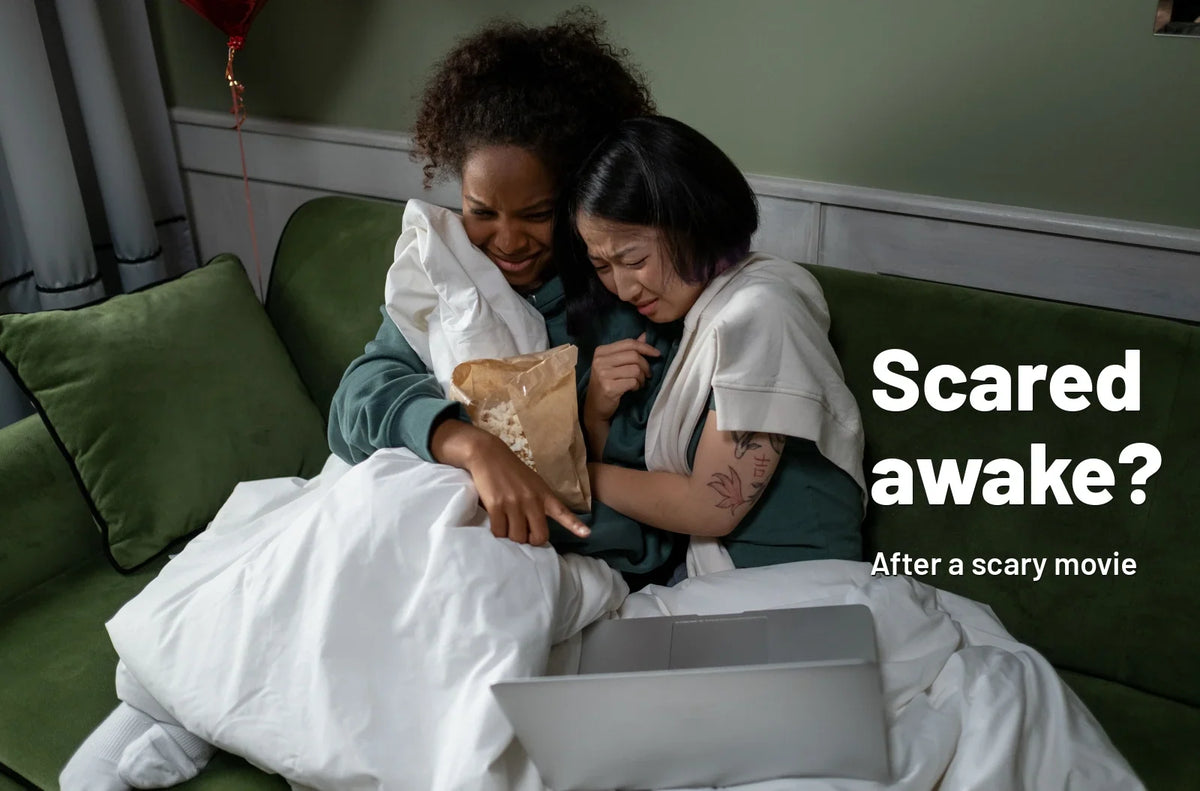
If you cannot sleep after watching a scary movie, start by ending the movie night—not by demanding that you stop feeling scared. Close the film, skip the scene-by-scene recap, and choose a quiet, familiar activity before bed. You do not have to prove you can handle one more clip.
The awkward part is that you already know it was fiction. Knowing that and feeling ready to sleep are not always the same thing. Here is a practical way to make the rest of the evening less frightening, without turning bedtime into another challenge.
Why the credits do not always end the scare
Fear can make you more alert, even when the experience is entertainment. Cleveland Clinic notes that people respond differently to frightening activities; difficulty sleeping and trouble relaxing are signs to notice, not a test of bravery. Its advice is to know your own limits.
A scary film can also be one trigger for nightmares, according to the NHS. That is a possibility, not a prediction about tonight. Being awake and unsettled after a movie does not mean you will have a nightmare, and a restless evening alone is not a diagnosis.
Finish the viewing, including everything around it
Turn off autoplay. Leave the discussion thread. Save the ending explanation for daylight. The main film may be over while trailers, reaction videos and screenshots keep bringing its most disturbing moments back into the room.
You do not need to force yourself to finish a film either. Stopping halfway through is an ordinary viewing choice. If someone else wants to continue, agree on headphones or another room rather than staying for their sake.
Put the remote down and do one normal closing task: rinse the mugs, put the blanket away, or brush your teeth. These are not treatments or a special sleep technique. They are simple ways to stop organizing the evening around the film.
Choose familiar, not endlessly distracting
Pick something you already know will not surprise you: a few pages of a gentle book, quiet music, or a brief conversation about an ordinary part of tomorrow. Avoid spending the next hour searching for the perfect video to cancel out the first one.
The NHS recommends a calm wind-down before bed. For this particular evening, the useful detail is predictability. A story with no cliffhanger may suit you better than another screen full of choices. If late scrolling has become its own problem, see our guide to winding down after scrolling.
If a scene pops back into your mind, you can label it plainly: “That is the scene from the film.” Then bring your attention to what you are doing now. You do not have to argue every image out of existence before you are allowed to rest.
Let your breathing be easy
If you feel tense, sit comfortably and let your shoulders loosen. Try a few minutes of gentle breathing, without trying to take the biggest possible breath or hold it for a difficult count.
The NHS breathing exercise suggests breathing in through the nose and out through the mouth, as comfortably as you can, without forcing it. Counting slowly can help, but reaching a particular number is not the goal.
If concentrating on your breathing makes you less comfortable, leave the exercise and return to a simple activity you enjoy. This is an option for settling down, not an assignment you have to complete before sleep.
Make the room comfortable, not a courage test
You do not have to switch every light off while you still feel unsettled. Use a low light if that makes moving around and getting ready easier. When you feel ready to sleep, make the space as dim and comfortable as suits you; a television playing in the background need not be the compromise.
If you share a home, ask for something specific: “Could we talk about something else for a few minutes?” or “Please do not replay that scene.” If you are the less-frightened partner, take that request seriously. A joke or another jump scare is not a helpful goodnight.
If unwanted light is the remaining problem later, a Mellooa Weighted Sleep Mask is one optional light-management choice. It is not a remedy for fear or nightmares. Skip it if covering your eyes feels uncomfortable tonight; buying something is not part of this plan.
If sleep still does not come
Try not to turn the time into a countdown. If you are lying awake and becoming frustrated, get up for a quiet activity somewhere comfortable and return when you feel sleepy. This follows the NHS advice not to force sleep; it does not require you to watch the clock.
Already fell asleep and woke from a bad dream? That is a different starting point. Our article on falling back asleep after a nightmare addresses that situation.
Make the next movie night work for you
Notice your own pattern rather than copying a friend's tolerance. You might prefer horror earlier in the day, less graphic stories, or watching with company. Check content information before choosing, and leave room afterward for your usual bedtime routine. There is no single waiting time that guarantees a peaceful night.
If you regularly lose sleep after frightening entertainment, choosing another genre is a reasonable adjustment. You can enjoy a film night without enjoying every kind of film.
Seek professional advice if sleep difficulties keep recurring, affect your daytime life, or fear continues well beyond the viewing. The NHS also recommends medical advice for regular nightmares that disrupt sleep and everyday life. You do not need to wait until things feel unbearable to ask.
Tonight's aim is modest: no more frightening content, a familiar ending to the evening, and permission to let sleep take its own time.



Share:
How to Sleep in a Hotel When You Can't Settle In
Why Do I Wake Up With a Sore Throat? Causes and What Helps