

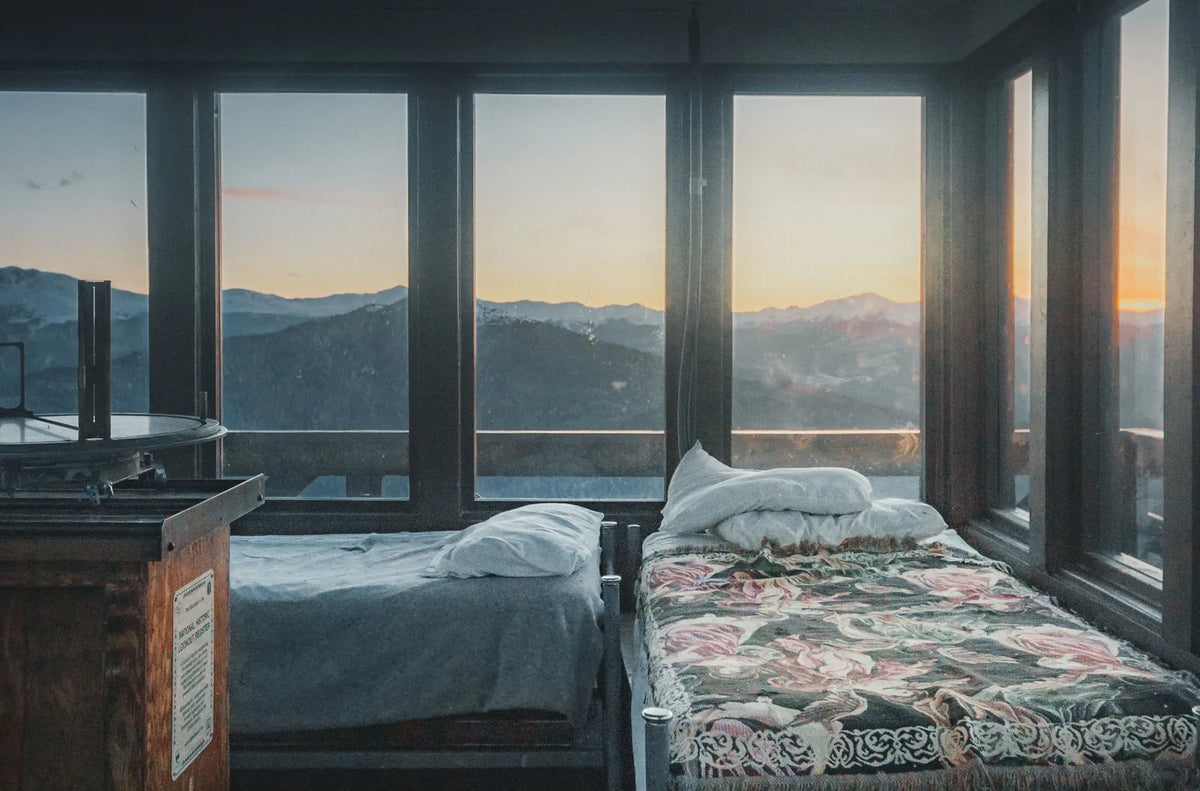
You arrive in the mountains tired enough to fall asleep over dinner, then spend the night waking up. Difficulty sleeping at high altitude can reflect the body's response to lower oxygen pressure, not just an unfamiliar bed. The useful question is whether you are simply sleeping poorly or also feeling ill. A quieter room can help with noise; it cannot replace an altitude-safety plan.
Why mountain nights can feel different
At altitude, lower air pressure means less oxygen is available with each breath. Your body has to adjust. This can affect a night in a mountain town as well as a night in a tent; the room's comfort does not change its elevation. The Government of Canada's altitude guidance also cautions that age and fitness do not make someone immune to altitude illness.
The CDC Yellow Book describes disturbed sleep as a common high-altitude complaint. Above roughly 2,700 metres (9,000 feet), periodic breathing is very common: breathing waxes and wanes during sleep, sometimes with pauses. Sleep may become lighter or more interrupted. These changes often improve with acclimatization, but not for everyone.
That is an explanation, not a diagnosis to give yourself after waking short of breath. Breathing trouble while awake or at rest, or other new symptoms, needs attention rather than reassurance from a sleep article.
A bad night alone does not tell the whole story
Poor sleep by itself does not establish acute mountain sickness. The Wilderness Medical Society's 2024 guidance places more weight on the whole symptom picture and ability to function. If you feel unwell after ascending, do not keep going higher while trying to solve the problem with bedtime tricks.
Headache with nausea, dizziness, unusual fatigue or loss of appetite after ascent deserves attention. Tell a companion or your guide, stop ascending and seek medical advice. If symptoms worsen, descend safely rather than waiting for a better night's sleep.
Get urgent medical help for breathlessness at rest, confusion, trouble walking normally, marked drowsiness, or a cough bringing up frothy or blood-stained sputum. These can signal serious altitude illness. The NHS advises immediate help and descent when it is safe. Do not leave an unwell person alone or treat a sleeping tablet as a way to get through the night.
Before travelling, agree on a simple plan with the people going with you: who you will tell, where help is available, and how you could move lower. It is much easier to discuss changing tomorrow's plans at home than when everyone is tired and committed to a booking.
Does sleep improve after a few nights?
It can, but a fixed deadline would be misleading. In a 2012 observational study, researchers recorded sleep in 16 healthy mountaineers at 490 metres and on their first and third nights at 4,559 metres. Sleep was initially disrupted and improved during acclimatization, even though periodic breathing persisted.
This was a small study at a very high mountain hut, not a promise that every resort visitor will sleep normally on night three. It also shows why counting breathing pauses and judging sleep quality are not quite the same thing. A person's overall condition matters more than whether one night matches an expected timetable.
For your itinerary, leave room for adjustment. A tightly packed arrival, early start and higher overnight stop gives you fewer choices if you feel unwell. A slower first stretch is easier to change than a plan in which every night depends on completing the previous day's climb.
Plan where you sleep, not only where you visit
A lookout you visit during the day and the place you sleep are different parts of an altitude plan. Ask for the actual elevation of your accommodation or campsite, not just the name of the nearest town. Canada's travel guidance emphasizes sleeping lower when possible and allowing time to adapt.
For travel above 3,000 metres, the Wilderness Medical Society recommends limiting increases in sleeping elevation to about 500 metres per day and including a rest day every three to four days. Individual routes and medical needs can require a more cautious plan. A travel-health clinician or qualified guide can help you judge the trip you are actually taking.
When comparing two stays, write down the first night's elevation, the next overnight elevation and the option to remain lower. A lovely view is still lovely in the morning after a lower overnight stop. You do not have to make the highest room part of the experience.
Make the room easier without confusing comfort with treatment
Once altitude safety is addressed, ordinary travel discomfort still deserves attention. A bright hallway, unfamiliar pillow or noisy heater can add another reason to wake. Our guide to sleeping in a hotel covers the room itself; why sleep changes in a new place explores unfamiliar surroundings.
Use a familiar wind-down routine, arrange suitable bedding and deal with stray light before getting into bed. If light is the specific problem, the wraparound Mellooa Weighted Sleep Mask is one option for blocking it. It does not improve oxygen availability, prevent altitude illness or make an unsafe ascent safe.
Do not use alcohol as a sleep aid at altitude. Before the trip, ask a clinician about any sleep medicine you already take, preventive medication or existing breathing conditions. The CDC discusses treatments that can be appropriate for particular travellers, but choosing or changing medication is not a packing-list decision. Do not stop prescribed treatment or improvise a new combination on arrival.
For someone travelling with you, care may look less like finding the perfect accessory and more like leaving tomorrow flexible. Listen if they say they feel worse. A night together does not have to include a test of who adapts fastest.
What to ask before the trip
Bring your route and overnight elevations to a travel-health appointment, especially if you have a heart or lung condition, sleep apnea, or a history of altitude illness. Ask which symptoms should change your plans, how existing treatment should be managed, and what local medical or evacuation arrangements you need. General advice cannot answer those questions for an individual.
The aim is not to guarantee deep sleep in the mountains. It is to make room for adaptation, reduce avoidable discomfort and recognize when the right response is help or a lower elevation, not another attempt to fall asleep.
This article is general education, not personal medical advice, diagnosis or treatment.



Share:
Why Do I Wake Up Feeling Anxious? Causes and What Helps
How Long Is a Sleep Cycle? What Happens in Each Stage