

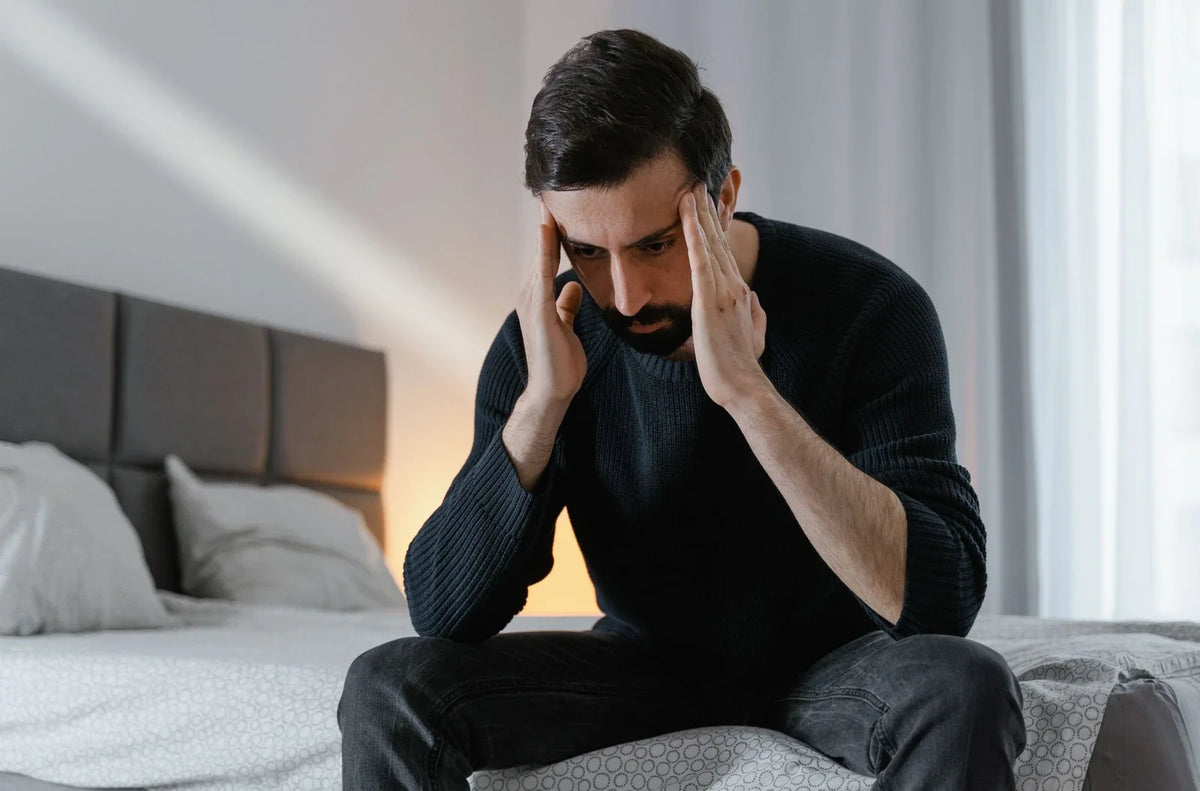
Waking up anxious is common, and mornings have a biological reason for it. In the first 30 to 45 minutes after you wake, cortisol rises sharply in a normal surge called the cortisol awakening response. That rise can feel like dread or a racing heart, especially after short sleep. It usually eases as the morning goes on.
You open your eyes and the worry is already there, before your feet touch the floor. Your heart is beating faster than it should, your chest feels tight, and your thoughts jump straight to the worst part of the day ahead. You have not checked your phone, you have not spoken to anyone, and nothing has gone wrong yet. The day has barely started, and it already feels like too much.
If that sounds familiar, you are far from alone. In a 2023 survey of 6,000 adults in the UK, 73 percent said they had felt anxious at least some of the time in the previous two weeks (Mental Health Foundation). For many people that anxiety is worst in the morning, then fades by late morning or lunch, which is a pattern worth understanding, because the reason sits in how the body wakes up. This article is general information only, not medical advice.
Why mornings are wired for it
Cortisol is often called the stress hormone, but its daily job is wider than stress. It helps the body wake up, raise blood sugar, and get moving. It follows a daily rhythm: lowest around midnight, climbing through the early hours, and peaking in the morning.
On top of that slow climb, waking itself adds a sharp surge. Researchers call it the cortisol awakening response, and it is one of the most reliable patterns in human biology. In the first 30 to 45 minutes after you open your eyes, cortisol typically rises by about 50 percent or more above its level at waking (Pruessner et al., 1997). It peaks around 30 minutes after waking, then falls steadily through the day. The surge is driven by the hypothalamic pituitary adrenal axis, the chain of signals between the brain and the adrenal glands that manages stress and alertness.
That surge is normal and useful. It is the body switching itself on. But it brings the physical signs of alertness with it: a faster heartbeat, higher blood pressure, and a brain that is scanning for problems. For someone who is already under strain, those signals can feel very much like the start of anxiety. A racing heart from cortisol and a racing heart from worry feel the same from the inside, and the brain often reads the body first and finds a reason second.
Two things make the surge bigger. The first is light. Light through the eyes speeds the rise and strengthens it, which is one reason the first bright light of the day can feel like a jolt. The second is anticipation. Knowing the day ahead holds something difficult, a deadline, a hard conversation, a bill, amplifies the response. Your body starts bracing before your mind has caught up.
There is a useful piece of honesty to add here. A study published in January 2025 that tracked cortisol continuously in 201 healthy adults aged 18 to 68 found that the rise begins before waking, and its rate of increase did not change when people opened their eyes (Proceedings of the Royal Society B). That suggests the morning surge is part of a wider daily rhythm, not a switch flipped by the alarm. Either way, the result is the same: the first hour of the day carries the highest cortisol of the day, and the highest chance of feeling on edge.
People who live with anxiety tend to show a stronger version of this pattern. Research has found that people with generalized anxiety disorder tend to have higher cortisol levels on waking than people without anxiety (Vreeburg et al., 2010). That does not mean the surge causes anxiety, or that anxiety causes the surge. It means the two travel together, and a morning that starts with a bigger hormonal push is more likely to feel like a bad one.
What makes it worse
The morning surge happens to everyone. What turns it into a bad morning is usually what the night before and the first minutes after waking add to it. Most people have two or three of these stacking up at once.
A short or broken night
Sleep is when the stress system resets. A short night, or a night broken by waking, leaves that system more reactive the next morning. You wake with less in reserve, so the same cortisol rise feels bigger. Poor sleep also leaves the mind with less patience for uncertainty, which is exactly what a morning full of unknowns delivers. Our guide to waking up with a headache covers another way a rough night shows up in the morning, and the two often travel together.
Alcohol the night before
A drink can make falling asleep easier, and it makes the second half of the night worse. Alcohol fragments sleep, brings more waking in the early hours, and leaves the body mildly dehydrated and on edge by morning. Many people find their worst mornings follow an evening drink, even a modest one. The anxiety is not a sign that something is wrong with you. It is the body paying for a lighter, thinner night of sleep.
Coffee before food
Caffeine is a stimulant, and on an empty stomach it can raise your heart rate and make you feel jittery within minutes. That jitter lands on top of a cortisol peak that is already at its highest, and the combination can feel like anxiety even when the only cause is the timing of the cup. Eating something first, or waiting a little before the first coffee, gives the morning surge room to fall before the caffeine arrives. It is a small change, and for some people it changes the whole first hour.
Reaching for the phone first
The first minutes after waking are when the mind is most open to suggestion, and the phone fills them with the worst material: bad news, unread work messages, other people's polished lives. Checking it before you are fully awake hands the day's worries to a brain that is already running hot. Our guide to charging your phone outside the bedroom covers the simplest version of this fix, and it works because it removes the choice entirely.
A day you are already dreading
Anticipation is one of the strongest amplifiers of the morning cortisol rise. If the day holds a presentation, a medical appointment, a difficult talk, or a pile of work that spilled over from yesterday, the body starts bracing for it before the alarm goes off. The dread you feel at 7 in the morning is not a prediction about how the day will go. It is your stress system rehearsing. That is why the same morning can feel calm on a free Saturday and unbearable on a Monday, with nothing else changed.
Lying there and thinking it over
Staying in bed to think through the worry feels sensible, and it usually makes it worse. In bed, there is nothing for the mind to do except rehearse the day, and each rehearsal adds a little more tension. The body reads the tension as a reason to stay alert, and the loop tightens. Getting up breaks it. Our guide to racing thoughts at night covers the same loop at the other end of the day, and the way out is the same in the morning: move, and let the mind follow the body instead of leading it.
What to change tonight
Morning anxiety is mostly decided the night before. Three small moves cover most of it.
Write down tomorrow's first task before bed. Not the whole list, just the first thing you will do and when you will do it. The morning dread is often not about the whole day. It is about not knowing where to start. A single written first step gives the waking mind something concrete to hold, and it is much harder for dread to fill a morning that already has a first move.
Keep a steady wake time, even on weekends. A regular wake time keeps the cortisol rhythm regular, so the surge arrives at a time the body expects instead of surprising it. Sleeping in by two hours on a Saturday shifts the whole rhythm, and Monday pays for it. Our guide to working back from your wake up time covers how to pick a bedtime that makes a steady wake time possible.
Keep the room dark until you wake, and keep the phone out of reach. Light leaking in before your wake time can pull the morning forward and start the surge early, and a phone on the nightstand is an invitation to start the day with bad news. If early light wakes you, a gently weighted wraparound mask that keeps light out can protect the last stretch of sleep. It does not calm anxiety itself. It only helps when light is part of what is waking you early.
What to do in the first hour
The first hour is the one that matters, because that is when cortisol is highest. The goal is not to fight the surge. It is to give it nothing to feed on while it falls.
Get up, even if you do not feel like it. Standing, opening the curtains, and moving to another room tells the body the day has started and the rehearsal can stop. A slow stretch or a short walk does the same thing with a little more help.
Get morning light in your eyes. Step to a window or outside for a few minutes. Bright light in the morning steadies the body clock and helps the cortisol curve fall on schedule instead of lingering. Our guide to morning light and sleep covers how much light helps and when to get it.
Eat something before coffee. You have gone seven or eight hours without food, and low blood sugar can feel a lot like anxiety: shaky, sweaty, on edge. A small breakfast steadies that, and waiting a little before the first coffee keeps the caffeine from landing on the peak of the surge.
Take a few slow breaths before the day starts. Breathe in slowly through the nose, let the breath out slower than it came in, and repeat a few times. It does not fix the morning, and it is not a treatment for anxiety. It gives the body a signal that nothing urgent is happening right now, and that is often enough to let the surge pass.
Delay the news and the inbox by half an hour. The messages will still be there, and they will be much easier to read once the cortisol peak has passed. If the first check of the day has to happen, do it after breakfast, sitting up, with food in you, not lying in bed with the screen inches from your face.
What is normal, and when to talk to someone
Waking up anxious sometimes, especially before a big day or after a bad night, is a normal part of how mornings work. The surge is real, the feeling is real, and it usually fades as the morning goes on. The pattern to watch is not a single bad morning. It is the shape of the mornings over weeks.
Talk to a clinician if the anxiety is there most mornings for weeks, if it keeps you from work, relationships, or sleep, or if it comes with panic attacks, a sense of being unable to breathe, or a feeling that the dread never lifts during the day. Get medical care promptly for chest pain, shortness of breath, or a racing heart that does not settle, since those need a medical check even when anxiety is the likely cause.
It also helps to know that morning anxiety is not a verdict on your life. The morning is the worst hour of the day for almost everyone who feels it, because that is when the body's alarm is loudest. How you feel at 7 in the morning is not how the day will go. It is how the first hour goes, and the first hour passes.
Frequently asked questions
Is it normal to wake up anxious every day?
Feeling on edge in the first hour after waking is common, because cortisol is at its highest then. It becomes worth talking to a clinician about when it happens most mornings for weeks, when it interferes with work or relationships, or when it comes with panic attacks. Daily morning anxiety is not a diagnosis on its own, and it is not something to sort out alone if it keeps going.
Why does morning anxiety fade by late morning?
Cortisol peaks around 30 minutes after waking and falls steadily through the day. As the surge fades, the physical signs fade with it: the heart slows, the chest loosens, and the thoughts lose their urgency. That is also why the same worry can feel overwhelming at 7 in the morning and manageable by 11. The problem did not change. The chemistry did.
Does coffee make morning anxiety worse?
It can, especially on an empty stomach. Caffeine is a stimulant, and it raises heart rate and jitteriness, which lands on top of the morning cortisol peak. Many people find that eating something first, or waiting a while before the first cup, makes the first hour easier. If your worst mornings follow the earliest coffees, the timing is worth testing for a week.
Will a sleep mask help with morning anxiety?
Not directly. A mask does not change cortisol, and it does not calm anxiety. Where it can help is sleep itself: if light wakes you early or breaks your sleep, a gently weighted wraparound mask that keeps light out can help you sleep through to a fuller night, and a fuller night gives the morning a steadier start. If light is not part of your mornings, a mask is not the fix for this problem, and it is worth saying so plainly.
Can poor sleep cause morning anxiety?
A short or broken night makes the next morning harder. It leaves the stress system more reactive, so the same cortisol rise feels bigger, and it leaves the mind with less patience for uncertainty. That is why the worst mornings often follow the worst nights. Fixing the night, a steady wake time, a dark room, no alcohol close to bed, is often the most reliable way to change the morning.
The short version
Morning anxiety is common, and it has a biological reason. In the first 30 to 45 minutes after you wake, cortisol rises sharply, and that surge can feel like dread, a racing heart, or a tight chest. Short sleep, alcohol the night before, coffee on an empty stomach, and the phone first thing all make it worse. What helps is decided the night before: write down the first task, keep a steady wake time, keep the room dark, and keep the phone out of reach. In the morning, get up, get some light, eat before coffee, and give the news half an hour. If it is there most mornings for weeks, or it keeps you from work or sleep, talk to a clinician. How you feel at 7 in the morning is not how the day will go.



Share:
Why Do I Wake Up With Bad Breath? Causes and What Helps
Why Is It Hard to Sleep at High Altitude?