

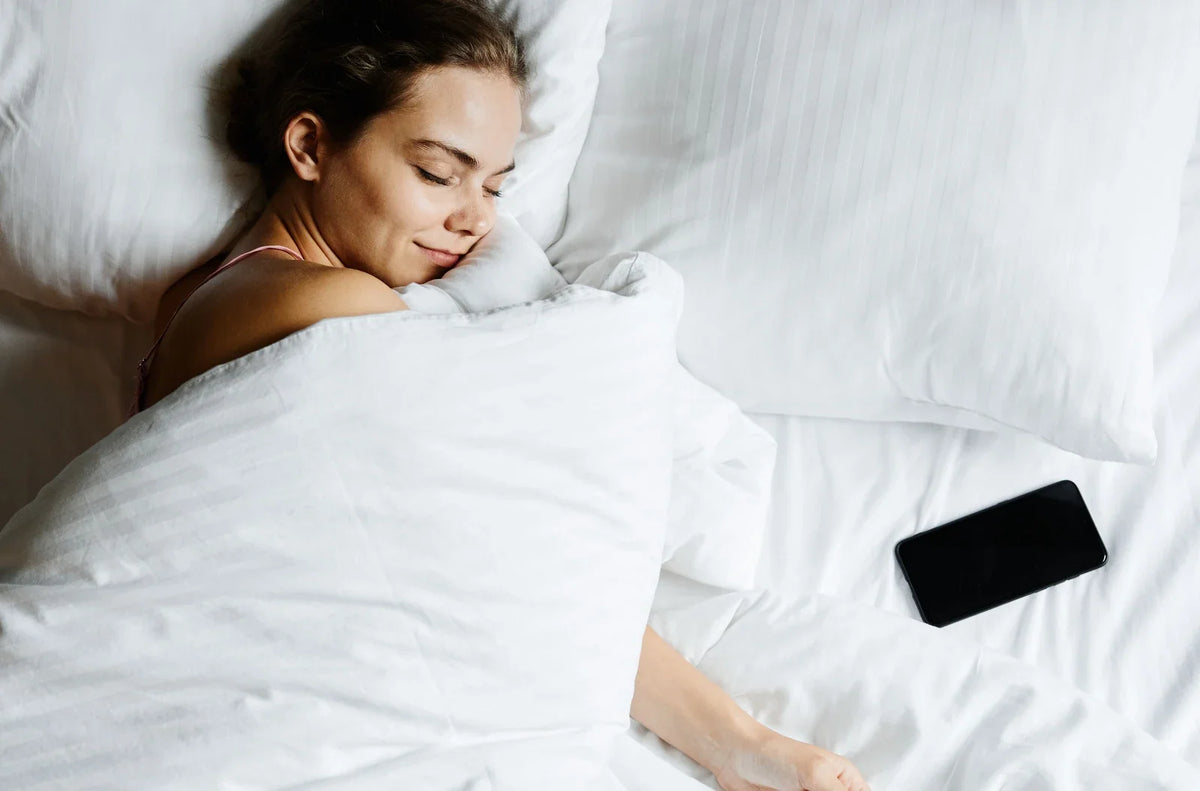
Sleepmaxxing is the social media trend of treating sleep as an optimization project: timed bedtime routines, blackout curtains, wearable trackers, white noise machines, and a long list of viral hacks. Some of it is solid sleep wisdom in new clothes. Some of it is hype, and a few popular hacks are worth skipping.
What does "sleepmaxxing" actually mean?
The word borrows its shape from gym slang, where "maxxing" means pushing something to its limit. Sleepmaxxing applies that mindset to rest. Scroll through the trend and you will find nighttime routine videos filmed under red lamps, shelves of magnesium products, sleep scores screenshot from smartwatches, and creators stacking one bedtime ritual on top of another in pursuit of a flawless night.
Underneath the packaging, the trend is really three things at once. First, it is a set of old, well-supported habits: a consistent schedule, a dark and quiet room, and a real wind-down before bed. Second, it is a wave of products: trackers, sprays, earplugs, eye masks, blackout curtains, and supplements that promise to polish each step of the night. Third, it is a performance. When sleep becomes content, the routine itself starts to look like the point, and that is where the trouble begins.
The trend did not come from nowhere. Wearable technology made personal sleep data widely available, and sleep influencers gave people a language for talking about rest as a skill. That part is genuinely positive. A decade ago, most people treated sleep as whatever happened between late night and the alarm. Today, millions of people at least know that the hours before bed shape the hours after it. The question is what to do with that knowledge, and where to stop.
Most of it is old wisdom in new clothes
Strip away the branding and most sleepmaxxing checklists describe what sleep researchers have recommended for years. Go to bed and get up at roughly the same time. Make the bedroom dark, quiet, and cool. Give yourself a buffer between screens and sleep. Get some daylight in the morning. None of this needed a new name, and none of it requires a shopping cart.
That is not a criticism. Old wisdom survives because it works, and a trend that gets people to take bedtime seriously is doing something right. If you are new to all this, the classic advice is still the best starting point, not the most exotic hack on your feed. A person who sleeps at consistent times in a dark, quiet room will outperform a person with a twelve-step routine and a chaotic schedule almost every time.
The honest version of sleepmaxxing, then, is not about collecting more tricks. It is about picking the few levers that matter most and repeating them. That framing also makes it easier to see which viral additions are genuinely useful and which ones just add noise.
The parts worth keeping
Start with consistency. Going to bed and waking up at similar times, even on weekends, steadies the body clock more than any gadget can. It is the least photogenic habit in the trend and also the most powerful. If your schedule swings by two or three hours between weekdays and weekends, fixing that gap will do more for your sleep than anything else on this list.
Next, make the room dark. Light is the strongest signal your body uses to set its internal clock, and even modest nighttime light can make sleep lighter and more broken. Blackout curtains or a well-fitting sleep mask both do the job; the right choice depends on your room and your habits. People who are sensitive to light often do best with both, since curtains handle the window and a mask handles whatever leaks through. If streetlights, hallway glow, or a partner's reading lamp keep finding your eyes, a dark-room strategy for light-sensitive sleepers is worth reading.
Then, make the room quiet, or at least predictable. Sudden sounds wake people more than steady ones, which is why a snoring partner, traffic, or thin walls cause so much trouble. Soft foam or silicone earplugs take the edge off the sharp noises, and how well they fit matters as much as what they are made of. A white noise machine does the opposite job, covering irregular sounds with a constant one. Either approach works; the goal is fewer surprises for your brain overnight.
Cool the room down a little. The body needs to drop its core temperature to fall asleep, and a warm bedroom fights that process. Most people sleep best somewhere cool rather than toasty, with bedding they can adjust. You do not need a smart mattress for this. An open window, a lighter blanket, or a cooler room setting gets you most of the way there.
Get morning light. This one rarely makes it into the aesthetic routine videos, but it may be the most underrated habit in the whole trend. Bright light in the first hour or two after waking tells your body clock what time it is, which makes it easier to feel sleepy at the right time that night. A short walk or breakfast near a window counts.
Finally, wind down on purpose. The last hour before bed is a transition, and your brain needs a signal that the day is over. Reading, stretching, a warm shower, or simply putting the phone in another room all work. The specific ritual matters less than the fact that it repeats. If scrolling keeps pulling you back in, a phone-free wind-down routine can help you build the habit.
Where the trend goes too far
The problems start when optimization becomes the hobby instead of the helper. Sleep doctors have a word for one version of this: orthosomnia, an unhealthy fixation on achieving perfect sleep, often driven by tracker data. People show up at clinics convinced something is wrong with them because their watch gave the night a low score, even when they feel fine. As one sleep medicine consultant put it, sleep simply does not respond well to attempts to perfect it. The more you chase the number, the more anxious bedtime becomes, and anxiety is the enemy of the thing you are chasing.
A good rule: let the tracker be a diary, not a judge. Glancing at patterns over weeks can be interesting. Arguing with last night's score at 7 a.m. is not helping anyone sleep.
Mouth taping is the trend's most-shared and most questionable hack. Videos present it as a simple fix for snoring and dry mouth, but taping the mouth shut during sleep can be risky, especially for anyone with nasal congestion, sleep apnea, or breathing difficulties. Health professionals have raised concerns about the practice, and several parenting and medical commentators have warned that it can lead to dangerous outcomes when breathing is already compromised. If you snore heavily, wake up gasping, or suspect a breathing issue, that is a conversation for a doctor, not a roll of tape.
Then there is the supplement shelf. Magnesium sprays, capsules, and sleep gummies appear in nearly every routine video, often with the confidence of a prescription. Magnesium does play a role in the body, but most of the glowing claims outrun the evidence, and "natural" does not mean risk-free, especially in combination with medications. A trending product is not a tested treatment. If you are considering any supplement for sleep, check with a pharmacist or clinician first, particularly if you take other medications.
The quieter problem is stacking. One hack is a habit; twelve hacks are a second job. Long, rigid routines can turn bedtime into a performance with too many ways to fail, and the stress of getting the routine exactly right keeps the mind buzzing precisely when it should be powering down. If your wind-down needs a checklist and a timer, it has probably stopped being relaxing. The people who sleep best tend to have short, boring routines they barely think about.
A calmer way to "sleepmaxx"
You do not need to reject the trend to benefit from it. You just need a smaller version of it, one built around your actual life instead of someone else's video. Here is what that can look like.
Pick a wake time you can keep seven days a week, and let bedtime follow from it. Most adults do well with seven to nine hours in bed, so count backward and treat that as a soft target rather than a curfew. Consistency matters more than the exact hour.
Shrink the wind-down to three steps you will actually repeat. For example: phone goes on the charger outside the bedroom, twenty minutes of reading or stretching, lights out. If your mind tends to race once the room goes quiet, a few ways to quiet a busy mind before sleep can make those twenty minutes do more work. And if you regularly wake at 3 a.m. with your thoughts already running, it helps to have a plan for falling back asleep instead of improvising one at 3 a.m.
Fix the room before buying anything. Tape over the standby lights, close the door on the hallway glow, and try the cheapest fixes first. If light still gets in, a sleep mask is the simplest upgrade, and it travels with you. Some people find that gentle pressure around the eyes helps them settle, which is where a weighted sleep mask earns its place in a wind-down: not as a gadget, but as a consistent sensory cue that the day is done. If noise is the bigger problem, soft earplugs in flexible silicone can take the edge off everyday noise, by up to about 27 dB, depending on fit.
Finally, give the new routine two weeks before judging it. Sleep habits compound quietly. The people posting thirty-day transformations are selling a story; the real version is a slow drift toward easier nights, noticed only in hindsight. That is less exciting, and it is also the version that lasts.
Sleepmaxxing questions, answered
What is sleepmaxxing?
Sleepmaxxing is a social media trend focused on maximizing sleep quality through optimized routines, bedroom setups, wearable trackers, and assorted wellness products. At its best it repackages solid sleep habits; at its worst it turns rest into an anxious performance.
Is sleepmaxxing actually helpful?
The core habits behind it are: consistent sleep times, a dark, quiet, cool room, morning light, and a real wind-down. Those help. The extra layers, like obsessing over sleep scores or stacking a dozen nightly hacks, can add stress that works against sleep.
What is orthosomnia?
Orthosomnia is an unhealthy preoccupation with achieving perfect sleep, often fueled by sleep tracker data. People become anxious about their sleep scores and start treating normal, slightly imperfect nights as problems, which can make sleep worse.
Is mouth taping safe?
Mouth taping is one of the trend's most controversial hacks, and health professionals have raised concerns about it, particularly for people with nasal congestion, sleep apnea, or other breathing difficulties. It is not a fix for snoring, and persistent snoring or gasping deserves a doctor's visit, not tape.
Do I need a lot of products to sleep better?
No. The highest-impact changes are free: regular hours, darkness, quiet, and a wind-down. A sleep mask or a pair of earplugs can help if light or noise is your specific problem, but they support the basics rather than replacing them.
Can trying too hard to sleep backfire?
Yes. When bedtime becomes a project with scores to beat and steps to complete, the pressure keeps the mind alert, which is the opposite of what sleep needs. The tracker-driven version of this is called orthosomnia. The fix is counterintuitive: care a little less. Keep the routine short, put the numbers away, and let sleep be something that happens rather than something you achieve.
The trend will move on to a new name eventually. The habits underneath it were here long before the hashtag, and they will still be here after it. Sleep was never really something to maximize. It is something to make room for, night after night, in the calmest way you can manage.



Share:
Sleep Inertia: Why You Feel Groggy After Waking Up (and How Long It Lasts)
Can You Go to Bed Angry? How to Pause an Argument