

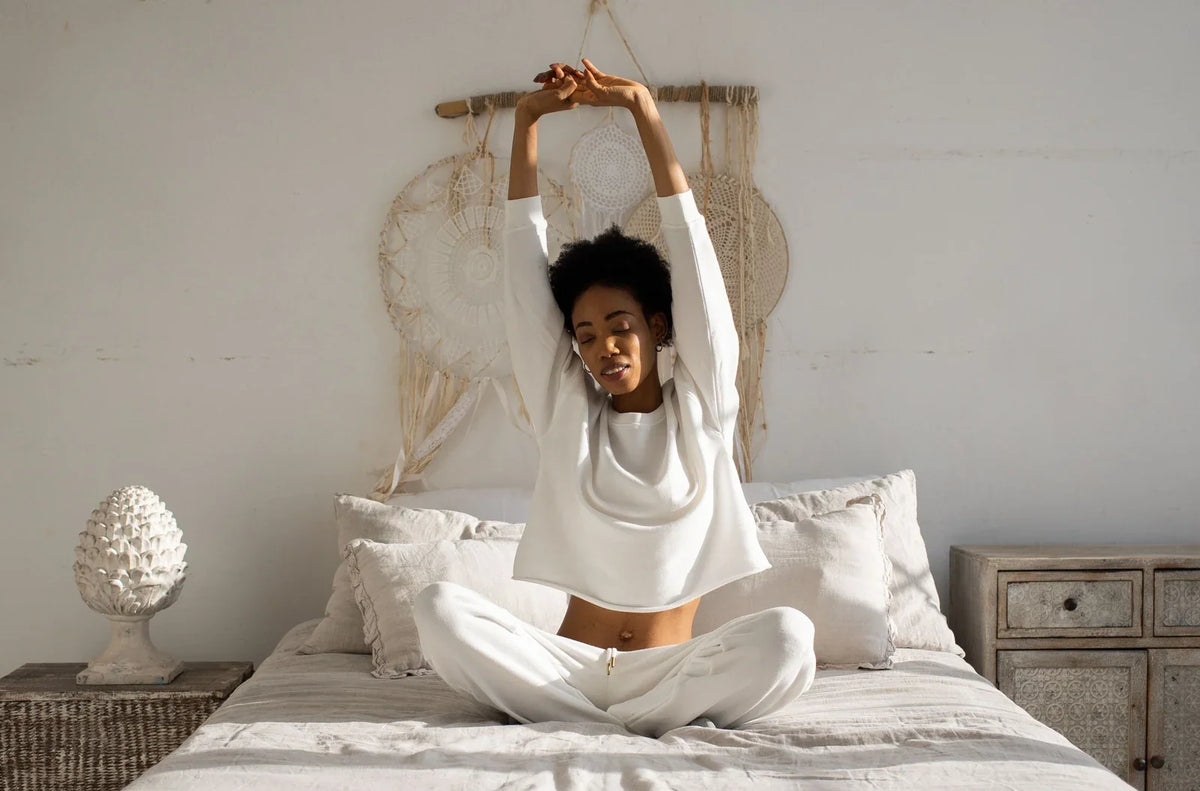
Is hitting snooze bad for you? A short snooze is not automatically harmful, but it is not a substitute for enough sleep. Small experiments have produced mixed findings: some habitual snoozers performed better on certain tests after snoozing, while another study found a slower recovery on some measures. If repeated alarms shorten your night, make you late or wake your partner, changing the routine makes sense.
The alarm rings. You could get up, or you could have one more small pocket of warmth before the day starts. The difficult part is knowing whether that extra pause helps you wake up or just leaves you negotiating with the clock.
There is no need to turn the button into a character test. The useful question is what happens between your first alarm and the moment you actually leave bed.
What the snooze studies actually tested
In a study first published online in 2023, researchers compared two mornings in 31 habitual snoozers. One involved repeated alarms during the last 30 minutes before getting up; the other allowed uninterrupted sleep until the same final wake time.
Snoozing cost about six minutes of sleep on average. Some thinking-test scores were better after snoozing; other measures did not clearly improve. These were selected, generally healthy habitual snoozers, not a representative sample of everyone who struggles to wake. The experiment did not establish long-term health benefits or an ideal snooze duration.
A different experiment published in 2022 involved ten Japanese university students. Alarms interrupted the final 20 minutes at five-minute intervals. Sleep became more fragmented near waking, and some measures suggested slower recovery after snoozing. The small sample and different protocol limit any broad verdict.
Together, these findings justify a cautious answer. They do not support a rule that every snooze ruins a morning, or a recommendation that everyone should start snoozing.
A large study of snoozing does not prove it is good or bad
A 2025 study of 21,222 sleep-app users examined more than three million logged nights. Snoozing occurred in 55.6% of sessions; on sessions with snoozing, users spent about 11 minutes doing it on average.
Those numbers describe a habit. The study did not randomly assign people to use or avoid snooze, and its sleep-duration measure did not precisely capture actual sleep. It cannot tell you that pressing the button caused poor health, or that eleven minutes is the right amount for you. A common behaviour is not necessarily helpful or harmful just because many people do it.
Two alarm routines that look similar but cost different things
Imagine you genuinely need to be out of bed at 7:00. Setting an alarm for 6:30 and silencing it repeatedly interrupts time that you could otherwise have spent asleep. Setting one alarm for 7:00 leaves that time undisturbed, provided you can reliably get up then.
Now imagine that the alarm already rings at 7:00 and you keep postponing it until 7:30. You have moved your actual start time. That may mean missing breakfast, rushing for a train or borrowing time from someone who was counting on you.
These examples are schedule comparisons, not predictions about how much sleep you personally lose. They show why the first alarm alone is a poor way to judge the routine. Write down both times: first ring and feet on the floor.
If you are considering a later first alarm, choose a time that still leaves room to wash, dress, eat and travel without rushing. The last possible minute before a meeting is not necessarily a workable wake time.
Start with your night, not a more demanding alarm
When the evening runs late, changing an alarm sound does not create a longer night. Before trying to eliminate snoozing, look at what leaves enough room for sleep: finishing a task earlier, moving tomorrow's clothes out of the wardrobe tonight or ending a scrolling session before it eats into bedtime.
The NHLBI's sleep-habit guidance emphasises making enough time for sleep, keeping a consistent schedule and using a quiet, cool, dark bedroom. These basics offer a better starting point than arranging a row of alarms before you need to wake.
If light is one of your bedtime distractions, Mellooa's gently weighted wraparound sleep mask is an optional part of that setup. It does not replace sleep time or tell you when to get up.
Morning fog also has a name: sleep inertia. Our guide explains the broader process. Here, the decision is narrower: whether your particular alarm routine is making the transition manageable or drawing it out.
Try a simpler routine without making mornings a contest
Choose ordinary mornings when a small adjustment will not risk an important journey or responsibility. Keep your final get-up time realistic. If you want to compare one alarm with your usual routine, make the change the evening before, while you can think clearly.
- Name the actual problem. Is it repeated ringing, lateness, a disrupted partner or feeling sleepy well into the day? Each calls for a different response.
- Choose one change. You might remove unnecessary early alarms, prepare the morning's essentials or agree on a final get-up time. Changing everything together makes it harder to tell what helped.
- Make leaving bed specific. Decide the first small action: put on the clothes you laid out, go to the bathroom or start breakfast. A concrete next step is easier to follow than an instruction to become a morning person.
- Notice the practical result. Did you get up when planned? Were you less rushed? Did the other person sleep undisturbed? You do not need a perfect score from a device.
This is a way to organise your morning, not a clinical experiment. If one alarm repeatedly fails to wake you, do not remove safeguards before work, caregiving or travel just to prove that you can. Revisit your sleep opportunity and seek help if the difficulty persists.
You can also keep a short note of bedtime, first alarm and actual rising time. Add whether the morning was unusually demanding. A rough pattern across ordinary days is more useful for planning than treating one excellent or terrible morning as the final answer.
If your snooze wakes someone else
Your pause may be another person's unwanted wake-up. Talk about that outside the morning rush: “I need to be up at seven. Which part of my alarm routine keeps waking you?” Agree on the problem before choosing a solution.
Possible adjustments include reducing repeat alarms, preparing clothes outside the bedroom or using a personal vibration alarm if it reliably wakes you. Test reliability on a low-stakes morning first. Do not assume a vibration setting will work simply because it seems quieter.
When schedules remain incompatible, our guide to sleeping apart as a couple offers a wider conversation about sharing rest. The immediate goal can be modest: fewer unwanted rings and a morning both people can live with.
When the button is not the main issue
If you regularly fall asleep during the day or sleepiness affects your life, the NHS recommends speaking with a doctor. Tell them about difficulty waking, your schedule and any medicines you take. Trouble getting out of bed does not by itself diagnose a sleep disorder.
Our article on still feeling tired after eight hours covers the broader question. Persistent daytime sleepiness deserves more attention than a new alarm strategy. If you are sleepy, do not drive; a morning test result in a research paper does not establish your fitness to drive.
Questions about hitting snooze
Should I stop snoozing completely?
You do not need to make that a universal rule. Try changing the routine if it disrupts sleep, relationships or punctuality. Keep reliable wake-up arrangements when others depend on you.
Is nine minutes the best snooze interval?
The research described here does not establish a best interval. An alarm's preset is a device setting, not a personal prescription.
Can snoozing make up for a short night?
Do not plan on it. Make room for a full night rather than using repeated alarms as your main recovery strategy.
What if I like waking slowly?
Leave room for an unhurried morning without setting unnecessary early alarms. A slower start can mean time to sit up, dress and eat; it does not have to mean a longer series of rings.



Share:
What to Say to Someone Who Can't Sleep
Weighted Sleep Masks: The Complete Guide