

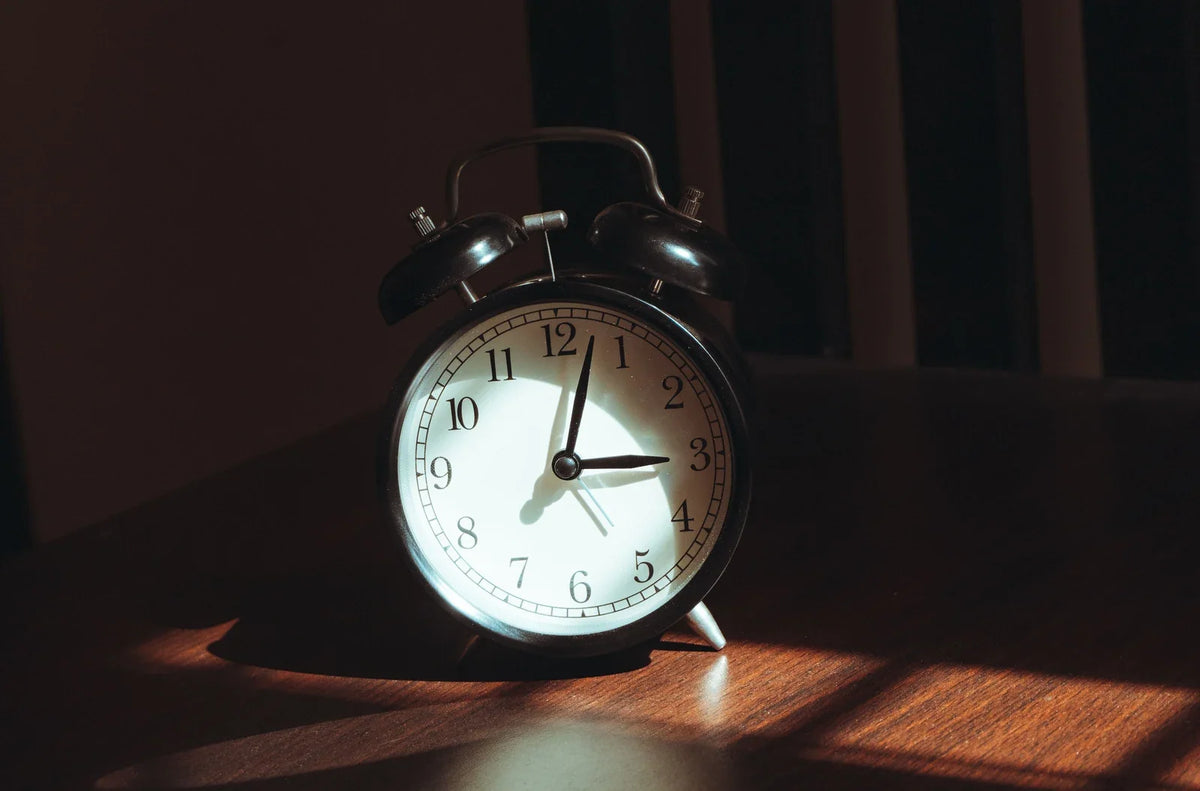
A sunrise alarm clock gradually brightens your bedroom before your alarm goes off. It may make waking feel less abrupt, and small studies suggest it can reduce morning grogginess for some people. But the evidence does not show that every wake-up light reliably improves alertness, fixes your body clock, or makes up for too little sleep.
The useful question is not whether a lamp can imitate the sun perfectly. It is whether a gradual light cue makes your own mornings easier without disturbing the sleep you still need.
What a sunrise alarm actually does
Unlike an ordinary bedside lamp, a sunrise alarm increases its light output before a chosen wake time. Some models also add a sound at the end. You are introducing light during the transition from sleep to waking, rather than switching on a bright ceiling light after the alarm rings.
That distinction matters. Feeling less groggy, performing better on a task, and shifting the timing of your internal clock are three different outcomes. A device might help with one without reliably changing the others.
The heavy, slow-thinking feeling after waking is called sleep inertia. A more pleasant wake-up is worthwhile, but it is not proof that sleep inertia has disappeared.
What the research can reasonably tell us
Some early results are encouraging. In a 2014 study, eight people who reported difficulty waking tried a simulated dawn beginning 30 minutes before wake time. Compared with the control condition, they reported greater alertness and performed better on addition and reaction-time tasks. Eight participants, however, cannot tell us how well every commercial clock will work in a different bedroom.
A 2010 home study also found reduced complaints of sleep inertia with dawn simulation. Importantly, the researchers did not find a significant shift in dim-light melatonin onset, a marker of body-clock timing, in the 50- or 250-lux conditions compared with the control condition. Feeling better on waking did not mean the participants' internal clocks had measurably moved.
The newer evidence is not uniformly positive. A 2024 laboratory study tested a bedroom system combining gradual lighting, sound, and temperature changes. It found little overall benefit for sleep inertia, with no overall difference in vigilance performance or subjective sleepiness. Because several features changed together, this was not a clean test of a sunrise lamp alone.
Taken together, these studies support a modest conclusion: gradual pre-wake light may help some people feel better in the morning. They do not justify a promise of sharper thinking, a corrected sleep schedule, or a particular result from a particular device.
When it may be worth trying
A wake-up light is a reasonable comfort experiment if the worst part of your morning is the sudden jump from darkness to a loud alarm. That may be especially relevant when you must get up before daylight or sleep behind blackout curtains.
It is less useful to expect a lamp to solve a schedule that leaves too little time for sleep. If you regularly go to bed late and need an early start, changing the wake-up cue does not create more hours in bed.
Shared bedrooms need a separate decision. The same light that feels gentle to you may wake your partner earlier than they want. Before buying, discuss the wake times you each need and whether the light will reach both sides of the bed. A comfortable solution for one sleeper should not become the other person's unwanted alarm.
Check the setup, not just the feature list
You do not need the most elaborate clock. Look for controls you can actually use when sleepy:
- An adjustable ramp: being able to change when the light begins and how bright it becomes lets you test a comfortable setting.
- A separate sound alarm: keep a reliable backup while finding out whether light wakes you consistently.
- A dark overnight display: a morning cue should not require a glowing clock face all night.
- A workable bedside position: follow the manufacturer's placement guidance, and check whether your pillow, furniture, or sleeping position blocks the light.
- A return option you understand: benefits vary, so the ability to test it in your own room matters more than a dramatic promise on the box.
Do not treat a brightness number on a product page as directly interchangeable with a research result. Distance and placement change how much light reaches you. The studies also used particular schedules and settings, not every lamp sold under the same label.
Give it a fair, low-pressure trial
Start with the manufacturer's setup instructions and keep your usual backup alarm. Make the light comfortable rather than immediately choosing the brightest setting.
For a week or two, note roughly when you went to bed, when you woke, whether the light woke you earlier than intended, and how you felt shortly after getting up. Try to keep the sleep schedule reasonably consistent. This is a practical comparison, not a diagnostic test or a guaranteed time frame for a benefit.
Change one setting at a time. If the lamp wakes you too early, shorten the ramp or reduce the brightness. If it bothers your partner, reconsider the arrangement instead of assuming they will get used to it. If your mornings do not improve, you do not need to keep escalating the light.
Keep the overnight environment separate from the wake-up experiment. Our guide to sleeping with the lights on explains why lighting during sleep deserves its own attention. A gradual light near wake time is not the same as leaving the room lit all night.
When a different next step matters more
A gentler alarm is not a treatment for persistent excessive sleepiness. The NHS recommends speaking to a doctor if you often fall asleep during the day or sleepiness is affecting your life. Do not let a new gadget delay that conversation.
For an otherwise manageable morning, the decision can be simpler: does the light make getting out of bed feel less harsh, without waking you or someone else too soon? If it does, that is a useful benefit. It does not have to be a body-clock breakthrough to earn its place on the bedside table.



Share:
Can You Learn While You Sleep? What Science Actually Says
Doomscrolling in Bed: Why What You Read Matters More Than the Screen Light