

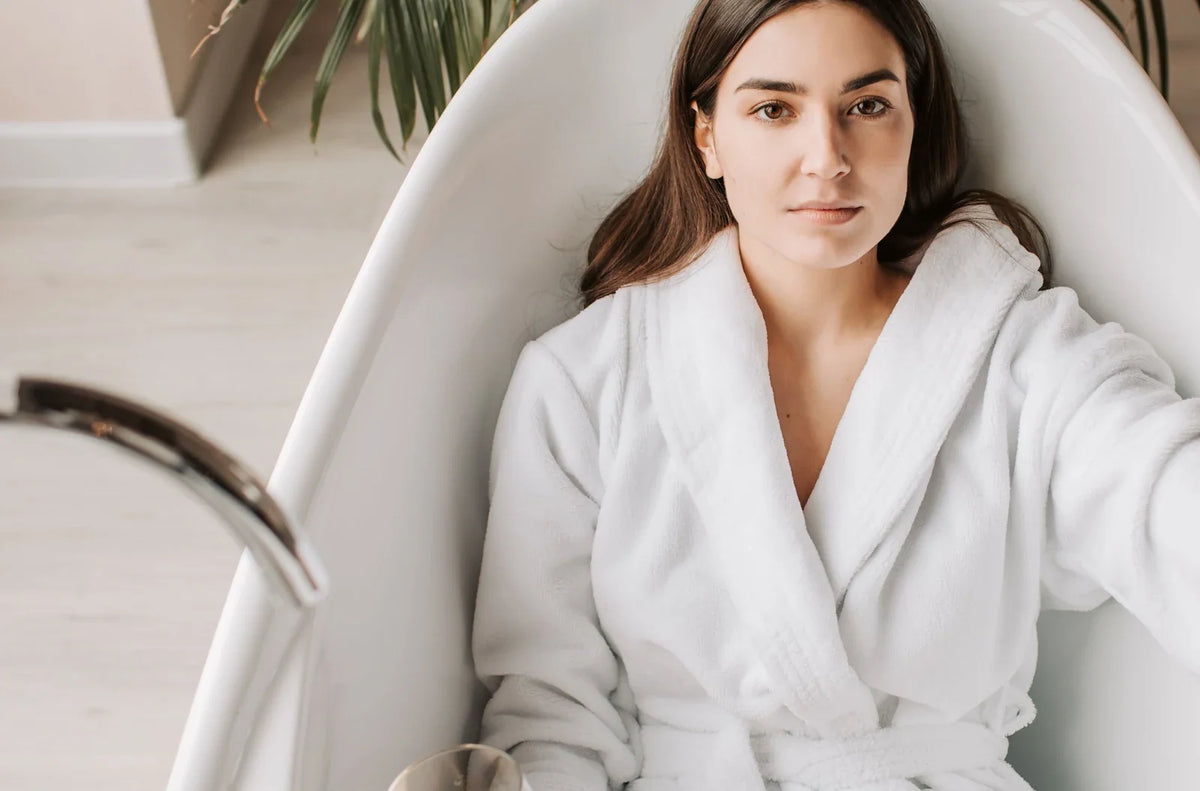
Yes, a warm bath or shower before bed can help you fall asleep faster. Warm water sends blood toward your skin, and as that heat escapes, your core body temperature falls. That drop is one of the signals your body uses to start sleep. Aim for comfortably hot water, at least 10 minutes, about 90 minutes before bed.
Why warming up helps you cool down
It sounds backwards. You want to sleep, and sleep needs you cool, so why get into hot water? Because the bath is not doing the cooling. Your body is doing it afterward.
To fall asleep, your core body temperature needs to drop by roughly 2 to 3 degrees Fahrenheit from its daytime high. That decline starts in the evening, driven by your internal clock, and it continues into the night. A warm bath speeds the process along. The heat widens the blood vessels near your skin, especially in your hands and feet, which act as radiators. Blood moves outward, carrying heat from your core to the surface, where it escapes into the air. Once you step out of the water, your core temperature falls with it.
The bath works because of the cooling that follows it, not because of the warmth itself. That single idea explains almost every practical detail in this article: the timing, the temperature, and the mistakes people make.
What the research actually found
The clearest evidence comes from a systematic review and meta-analysis published in 2019 in the journal Sleep Medicine Reviews. Researchers at the University of Texas at Austin screened more than 5,000 studies on water-based body heating and sleep, then pooled the results of 13 studies that had complete data.
Their findings were consistent and modest, which is exactly what makes them believable. Bathing or showering in water of about 104 to 109 degrees Fahrenheit (40 to 42.5 degrees Celsius), one to two hours before bedtime, was linked to better subjective sleep quality. In the studies that measured it, people fell asleep about 10 minutes faster on average than they did without the bath. Sleep efficiency, the share of time in bed actually spent asleep, also improved.
What the review did not find matters just as much. It did not show a clear increase in total sleep time. It did not show that baths cure insomnia or replace other sleep habits. Ten minutes faster to sleep and a better night overall is a real payoff from something you were probably going to do anyway, but it is not a transformation.
The timing that matters most
If you remember one number from this article, make it 90 minutes. The review pointed to about 90 minutes before bed as the sweet spot: long enough for the cooling to happen, close enough to bedtime that the sleepiness arrives on schedule.
Here is how the timing plays out in practice. Say you plan to be asleep by 11 p.m. Start your bath or shower around 9:30. Spend at least 10 minutes in the water. Then get out, dry off, and spend the next hour doing calm, low-light things. By the time you get into bed, your core temperature is falling and your body is ready.
Too early, and the effect fades before bedtime. Too late, and you go to bed still warm, which is the opposite of what you want. The window of one to two hours before bed is forgiving, so you do not need to watch the clock to the minute. But the gap itself is not optional. It is where the benefit lives.
Timing also interacts with the rest of your evening. A bath taken 90 minutes before bed works best when the hour after it is genuinely calm. Bright overhead lights or a fast-paced game on your phone can push your alertness back up after the bath has done its quiet work. Our guide to winding down after scrolling covers the screen side of that hour. The bath handles temperature. The rest of the evening should not undo it.
Bath, shower, or foot bath?
A full bath is the most complete version. You are immersed, your muscles loosen, and the heat reaches a large area of skin at once. If you have a tub and the time, it is a good choice. The ritual of it, the quiet, the still water, the closed door, is part of the point.
A shower is nearly as good, according to the review, and for many people it is the realistic option. The water hits your skin continuously, which warms it well, and you can control the temperature easily. Stand under comfortably hot water for at least 10 minutes rather than rushing through a two-minute rinse. The duration matters because your skin needs time to warm through.
A foot bath is the surprise third option. A few of the studies in the review used warm foot baths instead of full baths, and they still found sleep benefits. The feet are powerful radiators, so warming them and then letting them cool can nudge the same system. If you do not have a tub, or if you simply do not want a full wash late at night, a basin of warm water and 10 quiet minutes can do real work.
None of these options requires special products. Bath additives, scented oils, and mineral salts are pleasant if you enjoy them, but the evidence behind the bath itself is about temperature and timing, not additives.
How hot, and how long
The research points to water around 104 to 109 degrees Fahrenheit (40 to 42.5 degrees Celsius). In plain terms, that is comfortably hot: clearly warmer than body temperature, warm enough that your skin flushes a little, but not so hot that you feel uncomfortable. Most people do not keep a thermometer by the tub. You do not need one. If the water feels hot and pleasant, and you can stay in it without fidgeting, you are in the right range.
Duration matters more than precision. The studies found benefits from soaks as short as about 10 minutes. Less than that may not warm your skin enough to set the cooling in motion. Much longer is not better. A very long soak in very hot water can leave you overheated, lightheaded, or with dried-out skin. Ten to 20 minutes is a sensible range for most people.
There are two mistakes to avoid on temperature. The first is lukewarm water. A quick rinse that never really warms your skin will not trigger much of a cooling response afterward. The second is scalding water. Water that is painful, that leaves your skin red and irritated, or that makes you dizzy is too hot, full stop.
If you have a condition that affects circulation, blood pressure, or skin sensitivity, or if you are pregnant, check with your clinician before making very hot baths a habit. The same goes for anyone who feels faint or unwell in hot water.
What about cold showers?
Cold showers have their fans, and a cold shower in the morning can feel bracing and wakeful. That is precisely the problem at night. Cold water tends to raise alertness. It can leave you feeling wired rather than drowsy, which is the opposite of the signal you want before bed. The studies behind the warm-bath finding tested warm water, and the evidence for cold showers as a sleep aid is far thinner.
If you enjoy ending a shower with a short burst of cooler water, you do not have to give it up entirely. Keep the warm part long, keep the cool finish short, and finish early enough that the 90-minute window still holds. But if your goal is sleep, warm is the better bet. Save the cold shower for the morning, when alertness is what you actually want.
Turn the wash into a wind-down
A warm bath helps most when it is part of a wind-down, not a task squeezed between other tasks. The water does the temperature work. The ritual does the rest. Your brain learns associations quickly. If the bath is reliably followed by dim light, quiet, and bed, it becomes a cue: the day is over, sleep is next.
Keep the lights low after the bath. A bright bathroom mirror with all the lights on tells your brain it is midday. A dim lamp keeps the evening signal intact. Leave the phone outside the bathroom or face down on the counter. The hour after the bath is not the time to catch up on messages or headlines.
Some people take this further and shower in near-darkness, with only a small nightlight for safety. The idea is the same: reduce sensory input so the nervous system can settle. It is optional, and safety comes first. A dark, wet bathroom is a fall risk, so never trade a calm ritual for an unsafe one. A dim bathroom is enough.
Pair the bath with whatever already calms you. A few pages of a paperback book. Slow stretching. A short meditation. A five-minute bedtime meditation fits neatly into the hour after the bath, while your temperature is falling and your mind is already slowing.
When a warm bath is not the fix
A warm bath is a sleep habit, not a treatment. It helps healthy sleepers fall asleep a little faster and sleep a little better. It does not fix sleep apnea, chronic insomnia, restless legs, or night waking that has a medical cause. If you snore loudly, gasp in your sleep, or regularly wake up unrefreshed despite a full night in bed, that is a conversation for a clinician, not a bath.
The same honesty applies to short-term sleep trouble. A bath can soften an ordinary restless evening: a long day, a late coffee, a mind still buzzing from work. It will not cancel out a night of heavy drinking, a room that is too hot, or a schedule that changes every few days.
There are also nights when a bath is simply the wrong tool. If you are overheated from exercise or a hot evening, a warm bath adds heat you do not need. Cool the room first. Our piece on why a cool room helps you sleep explains the other half of the temperature story.
And never fall asleep in the bath. A drowsy person in warm water is a drowning risk. If you feel yourself drifting off in the tub, get out, dry off, and finish the job in bed, where it belongs.
A simple 90-minute wind-down
Here is the whole routine in one timeline. Adjust the clock to your own bedtime; the gaps are what matter.
90 minutes before bed: Start a warm bath or shower. Water comfortably hot, at least 10 minutes. Leave the phone outside.
60 minutes before bed: Out of the water, dried off, in comfortable sleepwear. Dim the lights. Keep the bedroom cool. Do something calm: read, stretch, or sit quietly.
30 minutes before bed: Screens off. If your mind is still busy, a short meditation or a few pages of a book can help. Let the day end.
Bedtime: Get into bed in a dark, cool room. If your room has stray light from a hallway or a streetlamp, a gently weighted wraparound mask can keep the darkness steady while your temperature finishes its drop. If you are new to sleeping with a mask, start with a few nights and see how it feels.
That is all it is. No gadgets, no purchases, no complicated protocol. Warm water, an hour of calm, a cool dark room, and a consistent bedtime. The bath is one piece of a quiet evening, and quiet evenings are what good sleep is built from.
Frequently asked questions
How long before bed should I take a warm bath?
About 90 minutes before bed is the best-supported timing. The research window is one to two hours. Closer than an hour, and you may still be too warm when you get into bed. Much earlier, and the cooling effect may fade before sleep.
How hot should the water be?
Comfortably hot, around 104 to 109 degrees Fahrenheit (40 to 42.5 degrees Celsius). It should feel clearly warm and pleasant, not lukewarm and not painful. If your skin turns red or you feel dizzy, the water is too hot.
Is a shower as good as a bath?
For sleep, yes, roughly. The review found similar effects from warm baths and warm showers. Spend at least 10 minutes under the water, and keep the same 90-minute gap before bed.
Does a warm bath help you stay asleep, or just fall asleep?
The strongest evidence is for falling asleep faster, about 10 minutes faster on average, and for better sleep quality overall. The evidence for staying asleep all night is weaker. A bath is a sleep-onset tool. A cool, dark, quiet room does more of the work for staying asleep.
Can a warm bath help if I am a hot sleeper?
It can, but the timing matters even more. Hot sleepers should keep the bath warm rather than very hot, keep the gap before bed, and make sure the bedroom is cool afterward. If you already feel overheated, skip the hot soak and use a lukewarm shower plus a cool room instead.



Share:
Why Can't I Remember My Dreams?
Do Weighted Sleep Masks Work? What They Can and Can't Do