

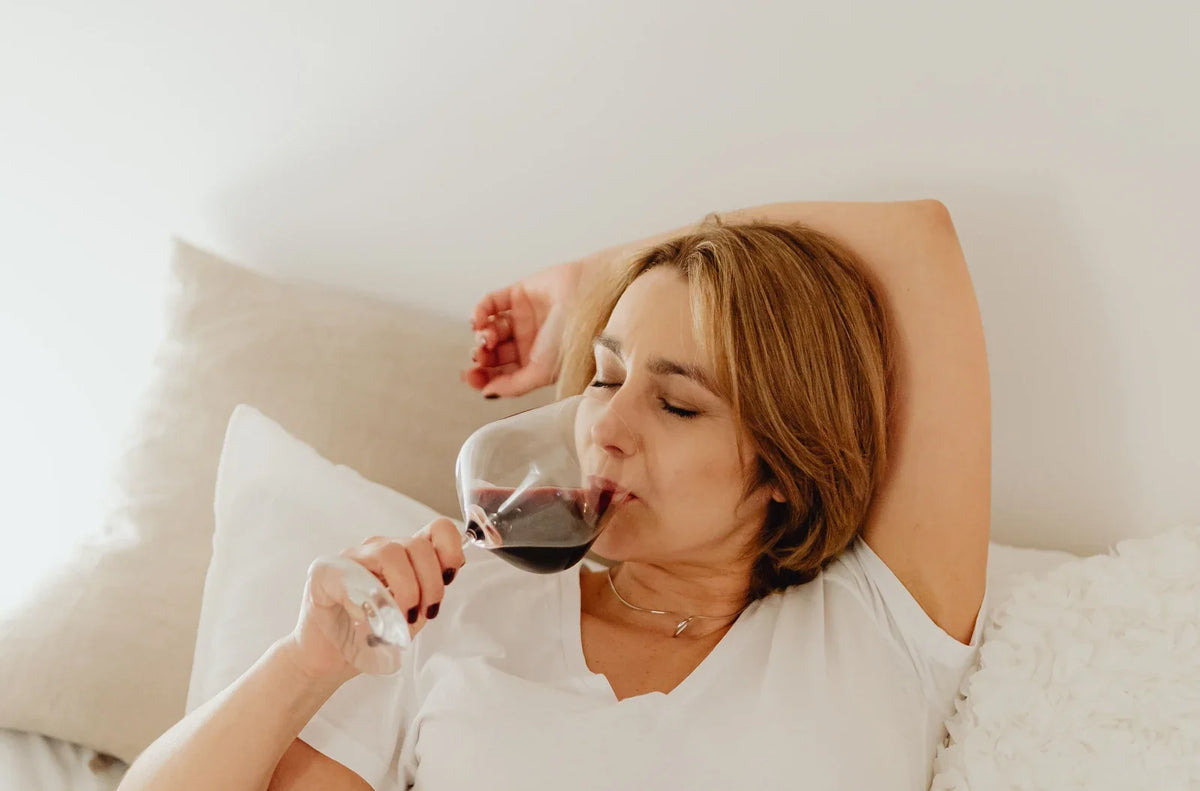
Alcohol helps you fall asleep faster, then quietly takes the rest of the night apart. As your body clears it, roughly a drink an hour, sleep turns light and broken, dream sleep shrinks, and you surface around 3 a.m. feeling wired. The fix is mostly timing: the earlier the last drink, the more of your night survives.
Why a Nightcap Feels Like It Works
The feeling is real, which is why the habit survives. Alcohol is a sedative. Within a drink or two, it slows brain activity, loosens the shoulders, and quiets the mental chatter that usually keeps you staring at the ceiling. Sleep researchers confirm the first part of the story: drinking before bed does reduce the time it takes to fall asleep, at least at first.
The chemistry underneath is straightforward. Alcohol boosts the brain's calming signals and dampens the alerting ones, which is why drowsiness arrives so reliably. But sedation is not sleep. It looks like sleep from the outside, eyes closed, breathing slow, but the brain is not running its normal program. It is running a chemically altered one, and the difference shows up a few hours later, when the chemical starts to wear off.
This is the part most advice skips. The question was never whether a drink knocks you out. It does. The question is what kind of night follows, and whether you would trade a fast start for a broken finish if you could see the whole thing in advance.
The Night, in Two Halves
Normal sleep moves in cycles of about 90 to 120 minutes, passing through three stages of non-dream sleep and then dream sleep, called REM. The first half of the night is heavy on deep sleep, the physically restorative kind. The second half shifts toward more REM, the stage tied to memory and emotional processing. Every stage matters, and the order matters too.
Alcohol rearranges this schedule. In the first half of the night, with alcohol still in your system, you get more deep sleep than usual and noticeably less REM. That sounds fine until the second half arrives. As your body metabolizes the alcohol, roughly a drink per hour for most people, the architecture flips: sleep becomes dominated by the lightest stage, the kind you can be pulled out of by a floorboard creak. You drift in and out, wake more often, and spend the small hours in a shallow doze that does not restore much of anything.
So the night splits in two. The first half is artificially heavy. The second half is artificially thin. Neither half is normal sleep, and the total is less restful than the hours in bed suggest. This is also why the damage is easy to miss: you remember falling asleep quickly, and you remember being awake at 3 a.m., but the hours in between feel like a blur you assume were fine. They were not. They were fragmented.
Why 3 A.M.
The 3 a.m. wake-up after drinking is so consistent it has become a cultural joke, and the mechanism behind it is well understood. Your body treats alcohol as something to clear, and it clears it at a steady pace. Once blood alcohol levels start dropping in the second half of the night, the brain rebounds from the sedation. The drowsiness that alcohol imposed lifts, and the system overshoots in the other direction.
That overshoot is physical, not psychological. Heart rate rises as the body metabolizes alcohol through the night, driven by the sympathetic nervous system, the same branch that handles stress responses. Many people wake with a pounding heart and a restless mind and assume they are anxious about something. Often there is nothing to be anxious about. The body is simply running hot while it finishes processing the drink, and a hot, alert body is the opposite of what sleep requires.
Dreams get strange in this window too. Because alcohol suppressed REM in the first half of the night, the brain tries to catch up later with intense, fragmented bursts of it. That is why the dreams after drinking tend to be vivid, odd, or stressful, and why you are more likely to wake up in the middle of one and remember it. If you ever wake at 3 a.m. from a dream that felt too real, this is usually why. For what to do in that exact moment, rather than why it happens, our guide on waking at 3 a.m. and falling back asleep covers the practical side.
What You Lose When Dream Sleep Shrinks
It is tempting to think of dream sleep as the decorative part of the night, the part that produces entertainment while the deep sleep does the real work. Sleep science disagrees. REM sleep is when the brain consolidates memories, processes the emotional residue of the day, and prepares you to think clearly tomorrow. Researchers sometimes describe it as overnight emotional maintenance.
When alcohol compresses REM into a smaller, later, more broken window, that maintenance gets shortchanged. The result is the particular fog of a post-drinking morning: you may have been in bed for eight hours, but your focus is thin, your mood is edgy, and small frustrations land harder than they should. It feels like a hangover symptom, and it partly is, but it is also a sleep symptom. The hours were there. The quality was not.
This distinction, hours versus quality, is worth sitting with, because it explains a lot of confusing mornings. We wrote about it in detail in why eight hours can still leave you tired: time in bed is only the container. What fills it determines how you feel at 7 a.m.
The Snoring Question
There is one more effect worth knowing, especially if you share a bed. Alcohol relaxes muscles throughout the body, including the tongue and throat muscles that keep the airway open during sleep. When those muscles go slack, the airway narrows, and snoring gets louder and more frequent. For people with sleep apnea, a condition of repeated breathing pauses during sleep, alcohol makes the events more likely and longer, and harder to recover from, because a sedated brain is slower to trigger the micro-awakenings that restore breathing.
This is not a rare edge case. Snoring after drinking is one of the most commonly reported alcohol-and-sleep effects, and it is one of the reasons a partner often notices the problem before the drinker does. If you consistently snore heavily after drinking, or wake gasping, that is worth a conversation with a doctor, not just a sleep tip.
Both Timing and Amount Matter
Here is the genuinely useful part, because this article is not an argument for abstinence. It is an argument for timing.
Sleep experts generally suggest avoiding alcohol for at least three to four hours before bed, and longer if you had several drinks, drank on an empty stomach, or know you are sensitive to its effects. The logic follows directly from the metabolism rate: every hour between your last drink and sleep is an hour of clearing, which means less alcohol in your system during the fragile second half of the night.
In practice, this reframes the decision. A glass of wine with dinner at seven is a different sleep event from three cocktails at midnight, even though both involve alcohol. The earlier drink has hours to clear. The later one is still near full strength when you close your eyes, which means the rebound lands squarely in the middle of your night. Moving the drink earlier in the evening is the single highest-leverage change most people can make, and it requires no willpower at bedtime, when willpower is at its weakest.
A few honest caveats belong here. Food slows absorption but does not change the total work your body must do. "Just one more" late in the evening costs more than the same drink would have cost at dinner. And individual sensitivity varies widely: body size, food, medications, and plain genetics all change the math. If one glass reliably ruins your night, that is data, not a character flaw.
There is also the morning-after trap worth naming. After a fragmented night, the instinct is to reach for extra coffee to survive the day, but a late or heavy caffeine dose pushes the next bedtime later and restarts the cycle. Our caffeine curfew guide covers where to draw that line.
The Part of the Night You Can Control
You cannot negotiate with your liver. But the room is yours, and on nights when sleep is already fragile, the environment matters more, not less. A cool, dark, quiet bedroom gives your body fewer reasons to surface during those light, fragmented hours in the second half of the night.
Cool comes first for most people: your body needs to shed heat to stay asleep, and a cool room makes that easy. We covered the mechanism in detail in our guide to why a cool room helps you sleep, but the short version is that overheating is one of the most common reasons people wake in the small hours, with or without alcohol involved.
Dark is the second pillar. Light is the strongest signal telling your brain it is time to be awake, and a room that is truly dark removes one more trigger for those fragile awakenings. If your room cannot get truly dark, a gently weighted mask with full eye-to-ear coverage keeps your eyes gently covered, and our guide on sleeping when light bothers you walks through the options.
Quiet is the third. In light sleep, which is exactly what the second half of a post-drinking night is made of, small sounds become big ones: traffic, a neighbor, a partner's phone. This is the one night of the week when earplugs earn their place, and choosing them by comfort rather than maximum silence is what makes them wearable all night, as our earplug guide explains.
None of this fixes what alcohol does to sleep architecture. But it shrinks the damage. On a night when your sleep is going to be lighter than usual, removing every avoidable reason to wake up is the kindest thing you can do for the morning version of yourself.
Questions People Actually Ask
Does alcohol actually help you sleep?
It helps you fall asleep faster, which is not the same thing. The sedation shortens the time to fall asleep but disrupts the rest of the night: less dream sleep early, lighter and more fragmented sleep later, and more awakenings. Most people feel the trade-off by morning.
Why do I always wake up at 3 a.m. after drinking?
As your body clears alcohol through the night, the brain rebounds from the sedation. Heart rate rises, sleep lightens, and the system overshoots into alertness. At roughly one drink per hour, the timing depends on how much you had: the more drinks, the later into the night alcohol is still clearing, and the later that rebound tends to land.
How long before bed should I stop drinking?
Sleep experts suggest at least three to four hours, longer after several drinks or drinking on an empty stomach. The earlier the last drink, the less alcohol is still in your system during the second half of the night, which is where most of the damage happens.
Does one glass of wine with dinner really matter?
Less than the same glass at midnight. Timing and amount both count, and an early, small drink clears substantially before sleep. But sensitivity varies: if even one early glass reliably fragments your night, treat that as information about your own body.
What if I feel like I need a drink to fall asleep?
That is worth taking seriously, not as a failure but as a signal. Using alcohol as a sleep aid tends to make sleep worse over time, which makes the habit harder to break. If falling asleep without it feels difficult, or poor sleep persists whether or not you drink, a doctor or sleep specialist can help you sort out what is actually going on. Occasional rough nights after drinking are common; a persistent pattern deserves professional attention.



Share:
Why Do You Feel Sleepier in Winter?
Should You Let Your Dog Sleep in Your Bed?