

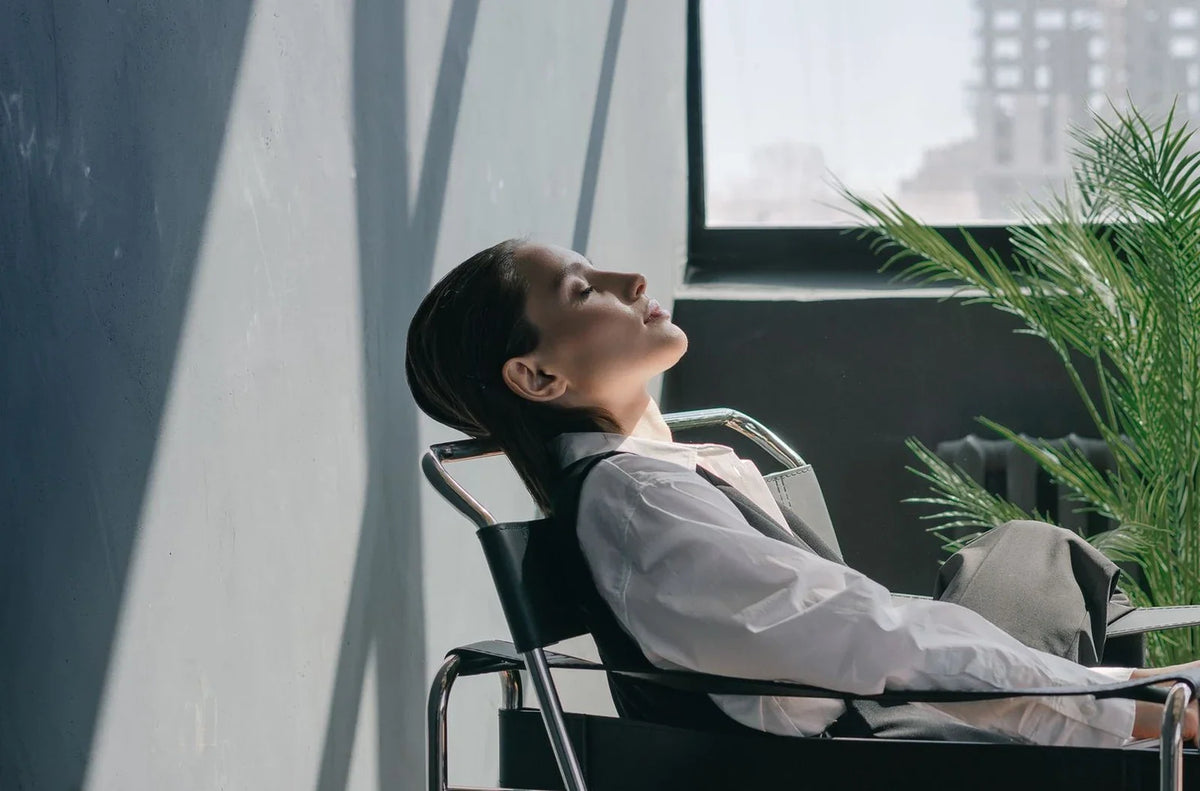
Short answer: you can rest without sleeping by giving yourself 10 to 20 minutes of lying or sitting still with your eyes closed, in a dim, quiet spot, with nothing to do and no goal of falling asleep. It is not a replacement for a night's sleep, but it is a real break: your body slows down, your attention gets a pause, and you skip the grogginess a long nap can leave behind.
Maybe you slept badly, the afternoon is dragging, and a nap is out of the question. Maybe you lie down to nap and your brain refuses. Either way, "just rest your eyes" sounds like advice that should work, and it often does, as long as you set it up properly. If you want the background on whether closed-eye rest counts as sleep, we covered that in does resting with your eyes closed count as sleep. This piece is the practical side: how to actually do it.
Is resting with your eyes closed better than nothing?
Yes. It does not give you what a full night of sleep does, and it will not pay back a short night. But lying still with your eyes closed gives your brain a break from a lot of what keeps it busy during the day. Closing your eyes in a dim room cuts out much of what you take in by sight. Plenty of people get up from a quiet 15 minutes calmer and a little clearer, even without drifting off.
It also takes the pressure off. If the goal is rest rather than sleep, there is nothing to fail at, and some people find that makes dozing off easier.
How to rest without sleeping: a 15-minute break
1. Pick the spot and the time
A bed, a sofa, a reclined car seat on a lunch break, even a chair you can lean back in. Early to mid afternoon is when a lot of people hit a slump, so that is a natural slot. Avoid the last few hours before bedtime if you tend to find it hard to fall asleep at night. Set an alarm for 15 to 20 minutes so you are not checking the time.
2. Make it dark
Daytime light comes through closed eyelids more than you might think, and it can keep nudging you awake. Close the blinds, turn away from the window, or wear a sleep mask. Our Weighted Sleep Mask is a gently weighted wraparound mask that blocks out light, which makes a bright room easier to rest in. If you want help choosing a mask for daytime use, see sleep masks for naps.
3. Turn the sound down
Silence your phone and put it out of reach. If the office or the house is loud, earplugs help. QuietFit Earplugs reduce everyday noise by up to about 27 dB, depending on fit. Keep the alarm loud enough to hear.
4. Let your body go heavy
Lie on your back or your side, let your jaw unclench and your shoulders drop. Breathe out a little longer than you breathe in for a few rounds. If you like a structure, try 4-7-8 breathing, or simply count ten slow breaths and start again.
5. Give your mind something small
Thoughts will come. Don't fight them. Notice one, let it go, and go back to the breath or the feel of the weight on your face. If you start planning dinner, that is fine. Come back when you notice.
6. Get up gently
When the alarm goes, open your eyes, sit up slowly and take a minute before you stand. Drink some water and step into daylight if you can. That helps you feel properly awake again.
How long should you rest with your eyes closed?
For a daytime break, 10 to 20 minutes is a good range. It is long enough to settle and short enough that if you do fall asleep, you are unlikely to drop into deep sleep and wake up groggy. Longer stretches push you toward a full nap, with the trade-offs we cover in how long should a nap be and sleep inertia.
What if you can't stop thinking, or you fall asleep?
If your mind will not settle, that is still rest. Lying still in the dark with your eyes closed gives you a break even while thoughts drift through. If it feels like a struggle, shorten it to 10 minutes rather than giving up.
If you do fall asleep, that's fine. The alarm keeps it short. If you notice you cannot sleep at night after daytime breaks, move them earlier or shorten them. Our guide to not being able to sleep after a nap walks through what to change.
Can you rest your eyes at work?
Often, yes. A parked car, an empty meeting room or a quiet corner with your head back can work for 10 minutes. A mask and earplugs make a shared space feel a lot more private. If you work from home, a short closed-eye break can also mark the line between work and the rest of the day; see how to switch off after work when you work from home. And if taking a break makes you feel lazy, how to rest without feeling guilty may help.
When to talk to a doctor
Needing a break on a tired afternoon is normal. If you feel very sleepy most days even after enough time in bed, nod off without meaning to, or have ongoing sleeplessness at night, talk to a doctor rather than relying on daytime breaks.
FAQ
Does closing your eyes without sleeping rest you?
It gives you a real break, though not the same one sleep does. Many people get up from 10 to 20 quiet minutes feeling calmer, even if they never fell asleep.
Is lying in bed awake as good as sleeping?
No. It is restful, but it does not replace sleep. During the day it is a useful pause. At night, if you have been lying awake for a long time, getting up for a while and coming back when you feel sleepy usually works better.
Should I use a sleep mask to rest during the day?
It helps if your room is bright. A wraparound mask that blocks out light makes it easier to switch off when blinds and curtains leave light coming in.
How often can I take an eyes-closed break?
Once or twice a day is plenty for most people. Keep breaks short and away from bedtime so they do not make it harder to fall asleep at night.



Share:
Why Do I Wake Up With Puffy Eyes? Causes and What Helps
Can Decaf Coffee Keep You Awake?