

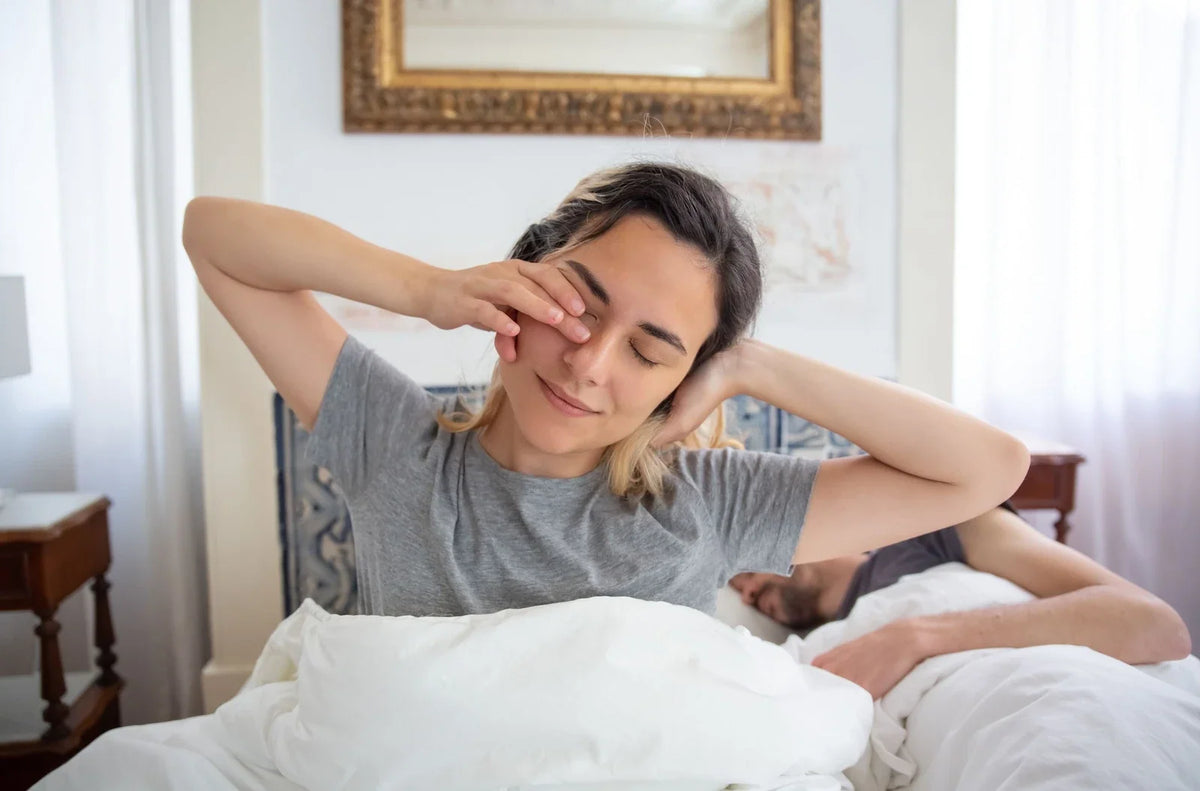
Most morning puffiness is temporary fluid that collects around your eyes overnight, not a sign that something is seriously wrong. Lying flat, salty food or alcohol the night before, poor sleep, and allergies all make it more likely, and it usually softens within a few hours of waking.
You look in the mirror before you are properly awake, and the face looking back is not quite the one you went to bed with. The skin under your eyes looks swollen, soft, and a little unfamiliar. It is a common way to start the day, and it is also one of the most misunderstood. People tend to blame one bad night, or one late dinner, when the real answer is usually a combination of small overnight effects adding up in the thinnest skin on your body.
Why the morning is the worst time for your eyes
The skin around your eyes is thinner than anywhere else on your face, and it has very little fat underneath to hide changes. That means even a small amount of extra fluid shows up quickly, and it shows up first thing in the morning for a simple mechanical reason. When you lie flat for seven or eight hours, gravity stops pulling fluid downward the way it does while you stand and move. Fluid settles where it can, and the loose tissue around your eyes is an easy place for it to gather.
Once you are up, the process reverses. You blink thousands of times, you move around, and your lymphatic system, the slow drainage network that clears fluid from tissues, gets going again. That is why morning puffiness so often fades on its own by late morning, even when you do nothing special about it. The pattern itself is a useful clue. Puffiness that appears overnight and softens during the day behaves like fluid. Puffiness that stays the same all day, or gets worse over days, behaves like something else, and that distinction matters more than any single remedy.
Sleep itself plays a part, though not in the way people usually assume. A short or restless night does not directly pump fluid into your eyelids. What it does is change the balance of salt and water in your body, and it leaves you with less time for overnight drainage to do its work. Stress has a similar effect. When you are stressed, your body holds on to more salt and water, and the eyes, with their thin skin, are where you notice it first. So a hard week can show up in the mirror even if you slept a normal number of hours.
Sleep position: the flat night problem
How you sleep matters more than how long you sleep, at least for this one symptom. Sleeping flat on your back lets fluid pool evenly around both eyes. Sleeping face down, or with your face pressed into a pillow, can leave one side puffier than the other, because fluid and pressure have been sitting on that side all night. Side sleepers often notice that the eye on the pillow side looks worse, and that it improves once they have been upright for a while.
This is one place where a small change is worth trying. Sleeping with your head slightly raised, with the head of the bed raised a little rather than a stack of pillows that bends your neck, gives gravity something to work with overnight. It will not transform your face, but for people whose puffiness is clearly worse on flat nights, it is the cheapest experiment available. Our guide to sleeping positions covers the trade offs of back, side, and stomach sleeping in more detail, because the position that helps your eyes is not always the position that helps your back.
Salt, alcohol, and the night before
If you can predict your puffy mornings, look at the evening before first. A salty meal, takeaway food, cured meats, sauces, and salty snacks, makes your body hold on to water. That extra water has to go somewhere, and overnight it often shows up around the eyes. The effect is not subtle for many people. A salty dinner can be the difference between a normal morning and a mirror that surprises you.
Alcohol works in a similar way, and it often arrives with salty food, which makes the combination worse. Alcohol changes how your body handles fluid, and it also tends to fragment your sleep, so you get both effects at once: more fluid to clear, and a worse night in which to clear it. This is also why a drink the night before a big day is such a reliable way to look tired in the morning photos, even if you went to bed at a reasonable hour. Our honest look at alcohol and sleep explains the sleep side of that trade in full.
None of this means you have to give up salty food or an evening drink forever. It means the pattern is worth noticing. If puffiness follows salty or drinking nights and not other nights, you already have your answer, and you do not need a new cream or a new routine to explain it. The morning after is just the receipt for the night before.
Allergies, congestion, and the bedroom
Allergies are the second big driver, and they are easy to miss because they do not always feel like allergies. You may not sneeze. You may not have a runny nose. But dust mites in bedding, pet dander on the pillow, pollen that came in through an open window, or a strong scent from a new detergent can all irritate the tissues around your eyes overnight. The body answers irritation with fluid, and the eyes swell.
Congestion makes the same problem worse from the other direction. When your nose is blocked, fluid drains less well from the face, and pressure builds up around the eyes and sinuses. That is why a cold, or a bout of seasonal allergies, so often comes with puffy eyes, and why puffy eyes and a stuffy nose in the morning so often arrive together. Treating the nose, with saline before bed, or by dealing with the bedroom trigger, often helps the eyes more than anything applied directly to the eyes.
The bedroom clues are worth checking one at a time. Did the puffiness start when the heating came on, or when you changed detergent, or when a pet started sleeping on the bed? Does it happen in one room and not another? Does it follow the pollen season? Change one thing at a time, bedding washed hot, pets off the pillow for a week, strong scents put away, and give each change several nights. Changing everything at once tells you nothing about which change worked.
Other everyday causes are smaller but real. Crying the night before leaves eyes puffy in the morning, because tears change the salt balance in the tissues around the eyes. Rubbing itchy eyes makes it worse, and makeup or face products left on overnight can irritate the same thin skin. Washing your face before bed removes a cause that people often overlook.
When puffiness is not just fluid
Not all morning puffiness fades by lunch. As you get older, the tissues that hold the eyelids in place weaken, and the fat that normally sits behind the eye can move forward. That creates a fuller look under the eyes that does not disappear during the day, and no amount of sleep, salt reduction, or cool compresses will remove it. Genetics plays a similar role. Some families simply have fuller lower eyelids, and the trait shows up early and stays.
This is the point where honesty matters more than optimism. Temporary puffiness responds to sleep, position, and evening habits. Structural fullness does not, and pretending otherwise just sells false hope. If your under eye fullness looks the same at 8 a.m. and at 8 p.m., and it has looked that way for months, it is probably structural, not fluid.
Puffiness that is new, sudden, or one sided, or that comes with pain, redness, discharge, fever, or a change in vision, is not ordinary morning puffiness. Neither is swelling that spreads to the whole face, or that does not improve at all over several days.
What actually helps in the morning
Start with the simplest tools, and give them time to work. A cool compress, a clean cloth dampened with cold water, a spoon kept in the fridge, or a gel eye mask kept cold, constricts blood vessels and helps fluid move on. Ten minutes is enough. Do it while you make breakfast, not as a separate ritual you will abandon by Thursday. Gentle movement helps too. Blinking, walking around, and simply being upright for an hour does more than most people credit, because it restarts the drainage that sleep paused.
A light touch can help, if it is genuinely light. With clean hands, gentle pressure from the inner corner of the eye outward, along the bone under the eye, can encourage fluid to drain toward the ears. Pressing hard, pulling the skin, or rubbing in circles does the opposite, irritating the tissue and bringing more fluid in. If it hurts, or if the skin reddens, stop. The goal is drainage, not massage as a workout.
Drinking water in the morning helps in an indirect way. It does not flush puffiness out directly, but steady hydration through the day supports the salt and water balance that keeps fluid from pooling in the first place. If you wake up thirsty, with a dry mouth as well as puffy eyes, dry air and low fluid intake are both suspects worth checking. Bedroom humidity matters here too, because dry air irritates eyes and noses alike overnight.
What not to expect: a sleep mask will not reduce puffiness. A gently weighted wraparound mask handles light, and darkness can help you sleep better, which in turn can help the fluid balance over time. But a mask does not drain fluid, does not cool the eyes, and does not treat allergies. If puffy eyes are the problem, the lever is the evening before and the morning after, not the mask. A mask earns its place by keeping the room dark while you sort the rest out.
What to change tonight
The most useful changes are boring, which is why they work. Eat the saltiest meal at lunch rather than dinner when you can. Keep evening drinks modest, especially before a morning when you need to look rested. Clear a blocked nose before bed with saline. Wash bedding hot if dust mites are a suspect, and keep pets off the pillow for a trial week. Raise the head of the bed slightly if flat nights are clearly worse. Wash your face before bed, and keep eye products simple at night.
Then track the pattern for two weeks, not two days. Write down, in one line each morning, how puffy your eyes look, and what changed the day before: a salty meal, a drink, a bad night, a new detergent, a pet on the pillow. Most people find the pattern within a week, and that pattern is worth more than any single remedy, because it tells you which remedy to try first. If nothing changes after two weeks of the obvious experiments, that is information too. It points away from fluid and toward structure, or toward an allergy or condition that needs a proper look.
Sleep quality sits underneath all of this. If your puffiness arrived alongside worse sleep in general, the sleep problem is the main problem, and the eyes are just where you see it. Our look at whether beauty sleep is real covers what sleep actually does for skin, and where the popular claims go too far.
When to get it checked
Most morning puffiness is harmless and fades on its own. Get prompt medical advice if swelling comes on suddenly, is painful, affects only one eye, or comes with redness, discharge, fever, vision changes, or a feeling of pressure behind the eye. Get it checked sooner rather than later if swelling lasts more than two days without improving, keeps returning for weeks, spreads to the rest of the face, or arrives after an injury, an insect sting, or starting a new medicine. Swelling with trouble breathing, or with lips or tongue swelling, needs urgent care.
This article describes common patterns. It does not diagnose you, and a persistent or worrying symptom deserves a real examination, not another article. If you are unsure whether what you have fits the ordinary fluid pattern, the timeline is your best evidence: ordinary puffiness appears overnight and softens during the day, while anything that breaks that pattern is worth showing to a clinician.
FAQ
Why are my eyes puffier in the morning than later in the day?
Because lying flat overnight lets fluid collect around your eyes, and the skin there is thin enough to show it. Once you are upright, blinking and moving, drainage restarts and the fluid clears, usually within a few hours. Puffiness that does not fade during the day is less likely to be simple fluid.
Does sleeping on my side cause puffy eyes?
It can make one side worse. The eye on the pillow side can look puffier in the morning, because fluid and pressure have sat on that side all night. Sleeping with your head slightly raised, or alternating sides, often evens it out. If both eyes are equally puffy every morning, position is probably not the main cause.
Can salty food really make my eyes puffy the next morning?
Yes, for many people it is the most reliable trigger. Salt makes your body hold on to water, and the thin skin around the eyes shows that extra water first. The test is simple: compare mornings after salty dinners with mornings after lighter ones, and the pattern usually speaks for itself.
Do cool compresses actually help, or is that a myth?
They help with temporary fluid puffiness, modestly and quickly. Cold constricts blood vessels and encourages fluid to move on, so ten minutes with a cool cloth often visibly softens morning puffiness. They do not help structural fullness that stays all day, which is a different problem.
How long should morning puffiness last before I worry?
Ordinary morning puffiness should soften within a few hours of waking and clear within a day. If it lasts more than two days, keeps returning for weeks, is painful, one sided, or comes with vision changes, redness, or discharge, get it checked rather than waiting it out.



Share:
Is It Bad to Sleep With Contact Lenses In?
How to Rest Without Sleeping: A 15-Minute Eyes-Closed Break