

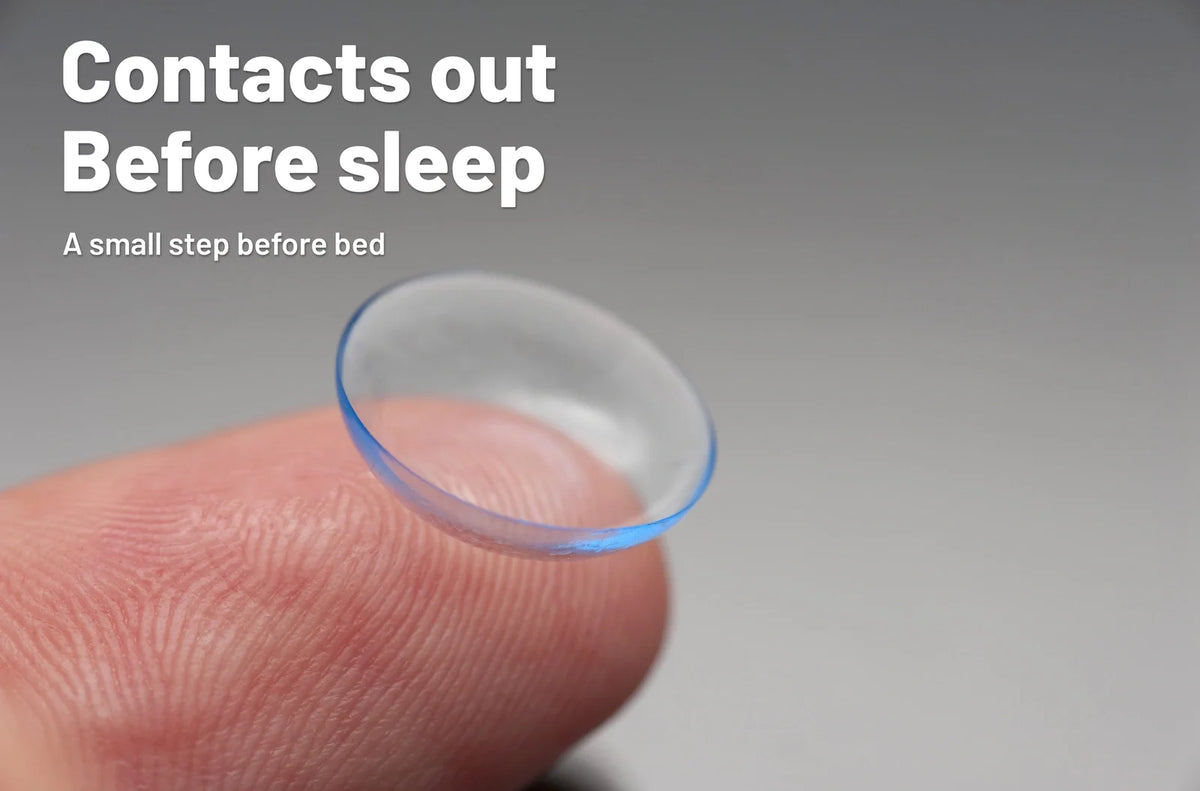
Sleeping with contact lenses in is not a harmless shortcut to bedtime. Unless your eye care professional has specifically prescribed an overnight-wear schedule for your lenses and your eyes, take them out before sleeping—including a nap. “I only meant to close my eyes for a moment” does not change the care instructions.
If you have already fallen asleep in your contacts, the useful next step is not to blame yourself. Stop wearing them, follow your lens-removal instructions, and pay attention to how your eyes feel. Pain, redness or a change in vision needs prompt professional attention, not another night of waiting.
Why sleeping in contacts matters
Contact lenses are medical devices. A CDC report on infections associated with sleeping in lenses cites a six- to eightfold increase in the risk of contact lens–related eye infections. That is a comparison of risk, not a prediction that one accidental nap will cause an infection.
The report describes six serious cases, some involving lasting damage or surgery. Those cases illustrate what can happen; they do not tell us the chance of harm from your particular evening. The practical lesson is to avoid the risk where you can, rather than to decide that previous uneventful nights make the habit safe.
“Monthly” does not mean “leave them in for a month”
Two different schedules can appear on a contact lens prescription: how long you may wear a lens before taking it out, and when the lens must be replaced. They are not interchangeable.
The CDC distinguishes daily wear, extended wear and replacement schedules. Daily-wear lenses come out for sleep. Some extended-wear lenses are designed for overnight use, but the permitted schedule depends on the lens and an eye care professional's assessment. Overnight wear still carries an infection risk.
If the box says “monthly,” do not treat that word as permission to sleep in the lenses. If you are unsure what your prescription allows, ask the professional who fitted them. This is not a decision to make from a friend's experience or from how comfortable the lenses feel.
A short nap still counts
The FDA's contact lens care advice specifically says to remove daily-wear lenses for both sleep and naps. There is no useful reason to negotiate with a ten-minute timer when the instruction is to take them out.
That is easy to remember before a planned nap and easier to forget on the couch. If you regularly drift off during the last episode of a show, move lens removal earlier in the evening. Our guide to falling asleep on the couch but feeling awake in bed looks at the wider transition; taking out your lenses need not wait until that transition is almost over.
If you accidentally slept in them
Wash and thoroughly dry your hands before handling the lenses. Remove them using the method your eye care professional taught you. If a lens will not come out normally, do not keep pulling at it or improvise with tools; contact your eye care provider for help.
Switch to your prescription glasses rather than carrying on with another stretch of contact lens wear. Follow the instructions for your particular lenses and care products. Do not use tap water or saliva to rinse a lens, and do not substitute a household product for lens solution.
Get urgent eye-care advice if you have eye pain, redness, unusual light sensitivity, sudden blurred vision, discharge or unusually watery eyes. The CDC advises removing lenses and calling an eye doctor immediately for symptoms of a possible contact lens–related infection. Tell them you slept in the lenses. If you cannot reach your usual provider, seek an urgent eye-care service rather than waiting for your next routine appointment.
A blog cannot tell irritation from an infection. If your eyes are irritated or you have any of the symptoms above, do not put the lenses back in until your eye care provider advises you to. If you have symptoms, the FDA recommends keeping the removed lenses in their case to take to your eye care professional; they may help identify the cause. Do not use leftover prescription drops to treat the problem yourself.
Make removal part of getting comfortable
The easiest routine is one you can follow while tired. Keep your glasses accessible, replace empty supplies before bedtime, and deal with your lenses before settling down for the part of the evening when you tend to doze.
The CDC's prevention guidance recommends clean, dry hands, the recommended disinfecting solution, and fresh solution rather than mixing old and new. Carrying backup glasses is part of the plan, not a sign that your lenses have failed.
Travel deserves the same preparation. If you hope to sleep on a flight or overnight journey, pack glasses and the supplies your lens-care routine requires where you can reach them. Our red-eye flight guide covers planning the rest of the sleep window. Lens care comes before getting settled—not after you have started nodding off.
You do not need a more elaborate bedtime routine. You need a clear stopping point for contact lens wear, and a backup you can comfortably use when your eyes need a break.
This article provides general information, not a diagnosis or a replacement for instructions from your eye care professional.
Cover photo: Stephen Gibson / ScienceStockPhotos, licensed under CC BY 4.0. Cropped, resized, and overlaid with text.



Share:
Why Do I Wake Up With a Sore Throat? Causes and What Helps
Why Do I Wake Up With Puffy Eyes? Causes and What Helps