
Why Weighted Blankets May Help You Sleep—and Where Eye Masks Fit In
Written by the Mellooa Editorial Team
Notes on rest, ritual, and the small signals that help the day grow quiet.
Before weighted blankets became sleep products, the feeling behind them was already familiar. A firm hug. A blanket tucked closely around your shoulders. A hand resting there long enough for you to stop bracing. None of these sensations removes the problems of the day. Yet sometimes the body becomes quieter before the mind has found a reason to.
That is the question at the center of weighted sleep: not whether weight can “knock you out,” but whether a steady physical signal can make the nervous system feel there is less to monitor.
It is a smaller question than many product claims suggest, and a more interesting one. Sleep rarely arrives because we have argued ourselves into it. It arrives when the room, the body, and eventually the mind stop asking for quite so much attention.
The body quiets before the mind does
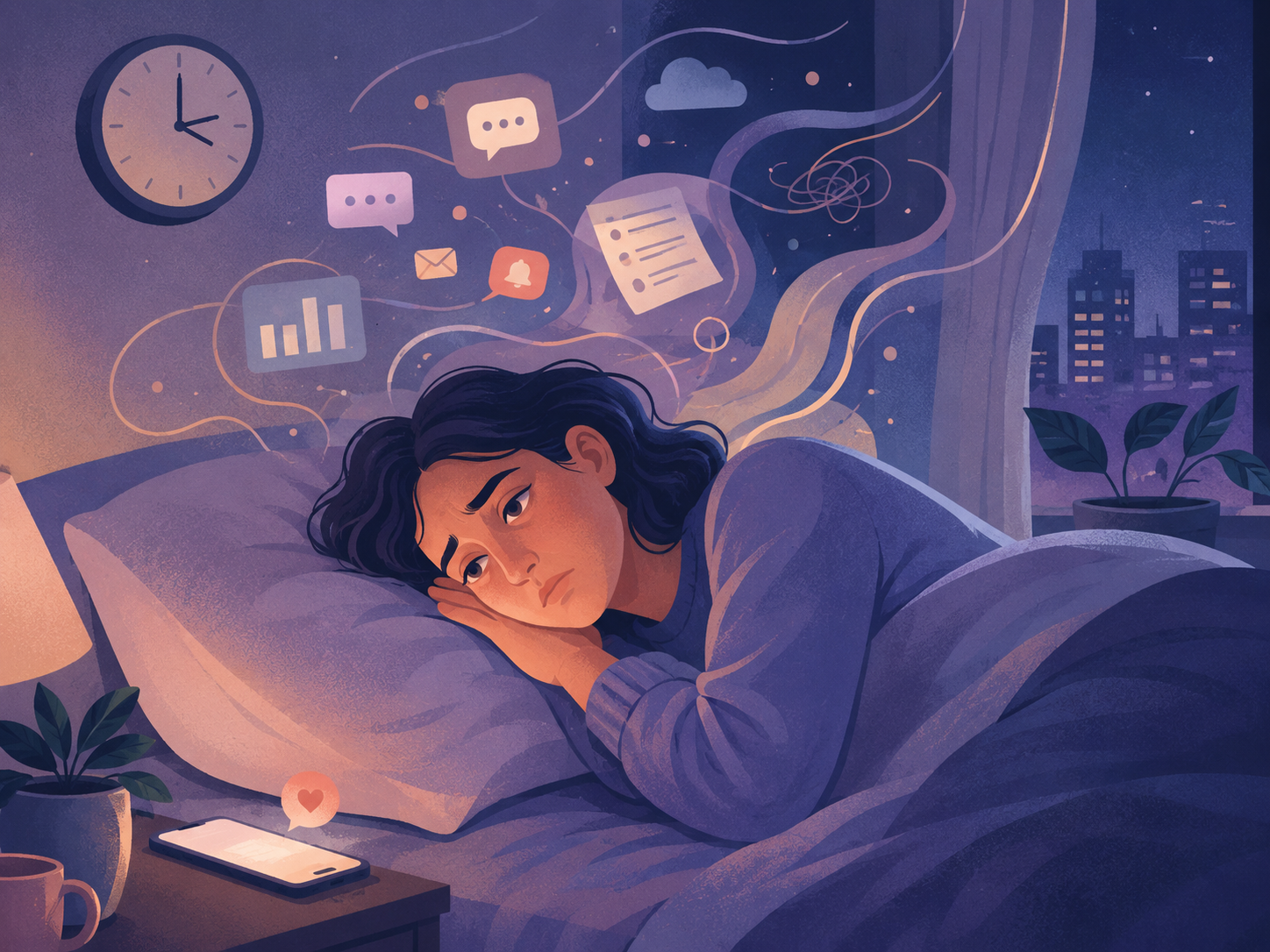
Modern evenings are full of small changes. A phone vibrates. The room becomes warmer. A car passes outside. A muscle twitches. A thought that seemed finished at dinner returns as soon as the light goes out. Each change asks the brain a tiny question: Does this need my attention?
Steady pressure is different because it contains very little new information. Once the sensation feels comfortable and predictable, it may no longer require repeated checking. For people who enjoy firm touch, that consistency can create a stronger sense of where the body begins and ends—a feeling often described as being held, grounded, or contained.
This is the intuitive idea behind deep pressure stimulation, a term used for broad, sustained tactile input created by hugging, massage, compression, or weighted products. Weighted blankets apply that input across a large area of the body. The pressure does not switch consciousness off. It simply gives the body one steady sensation instead of many scattered ones.
There is an emotional dimension too. A hug is not calming only because of force measured against the skin. It is responsive, social, and connected to another person. A blanket cannot reproduce that relationship, but it can echo one part of the experience: the quieting predictability of contact that stays.
Pressure is not sedation
The internet often explains weighted products through a neat biological chain: pressure activates the parasympathetic nervous system, releases serotonin or oxytocin, reduces cortisol, and produces sleep. Parts of that story are plausible. Some physiological studies have observed changes consistent with lower arousal. But sleep research has not established one simple pressure switch that works the same way in every body.
A more careful explanation leaves room for several things to be true at once. Predictable touch may reduce the amount of sensory change the brain needs to process. A feeling of physical containment may reduce restlessness. Expectation may matter. Ritual may matter. If the same object appears every night just before sleep, the brain may learn what comes next.
That last effect is easy to underestimate. We tend to think a sleep product must change a hormone or a brain wave to be useful. But a familiar cue can be valuable without behaving like medicine. Dimming a lamp, closing a curtain, putting a book face down, or pulling on an eye mask all help define the edge of the day. Their power can come partly from repetition.
Pressure, then, is not necessarily a force that creates sleep. It may be a way of reducing physical “noise” for a person whose body responds well to it.
What the research can—and cannot—tell us
Research on weighted blankets offers encouraging signals, especially in selected adult groups, but it is still a developing field. In a randomized study of 120 adults with insomnia and psychiatric diagnoses, people assigned to weighted blankets reported a larger improvement in insomnia severity than those given light blankets. The result was meaningful, but it did not make weighted blankets a universal treatment. The participants had specific diagnoses, and some objective sleep measures did not change as much as the self-reported experience.
A later laboratory study looked at 26 healthy young adults. Researchers found that the rise in salivary melatonin during the hour before lights out was about 32% greater under a weighted blanket than under a light one. It is an intriguing finding. It is also a useful lesson in restraint: the study did not find significant differences in subjective sleepiness or total sleep duration. A biological signal may help scientists form a better question without yet giving shoppers a final answer.
Reviews of the wider evidence reach a similar place. Adult results appear more promising than results in children, but the studies vary in blanket type, weight, population, duration, and measurement. Many outcomes are subjective. That does not make them meaningless—feeling calmer is a real experience—but it does mean we should distinguish comfort from proven treatment.
The evidence for eye masks follows a different path. Ordinary light-blocking masks have improved some measures of sleep in hospital studies, which supports darkness as a practical part of the sleep environment. Those trials were not testing added weight. Direct peer-reviewed research on weighted eye masks remains limited, so the findings from full-body blankets cannot simply be resized and transferred to the face.
The honest conclusion is modest: weighted blankets may help some adults feel calmer and sleep better, particularly when restlessness or sensory sensitivity is part of the problem. We still do not know exactly which mechanism matters most, who is most likely to benefit, or whether a localized weighted mask produces comparable effects.
From a blanket over the body to a mask around the eyes
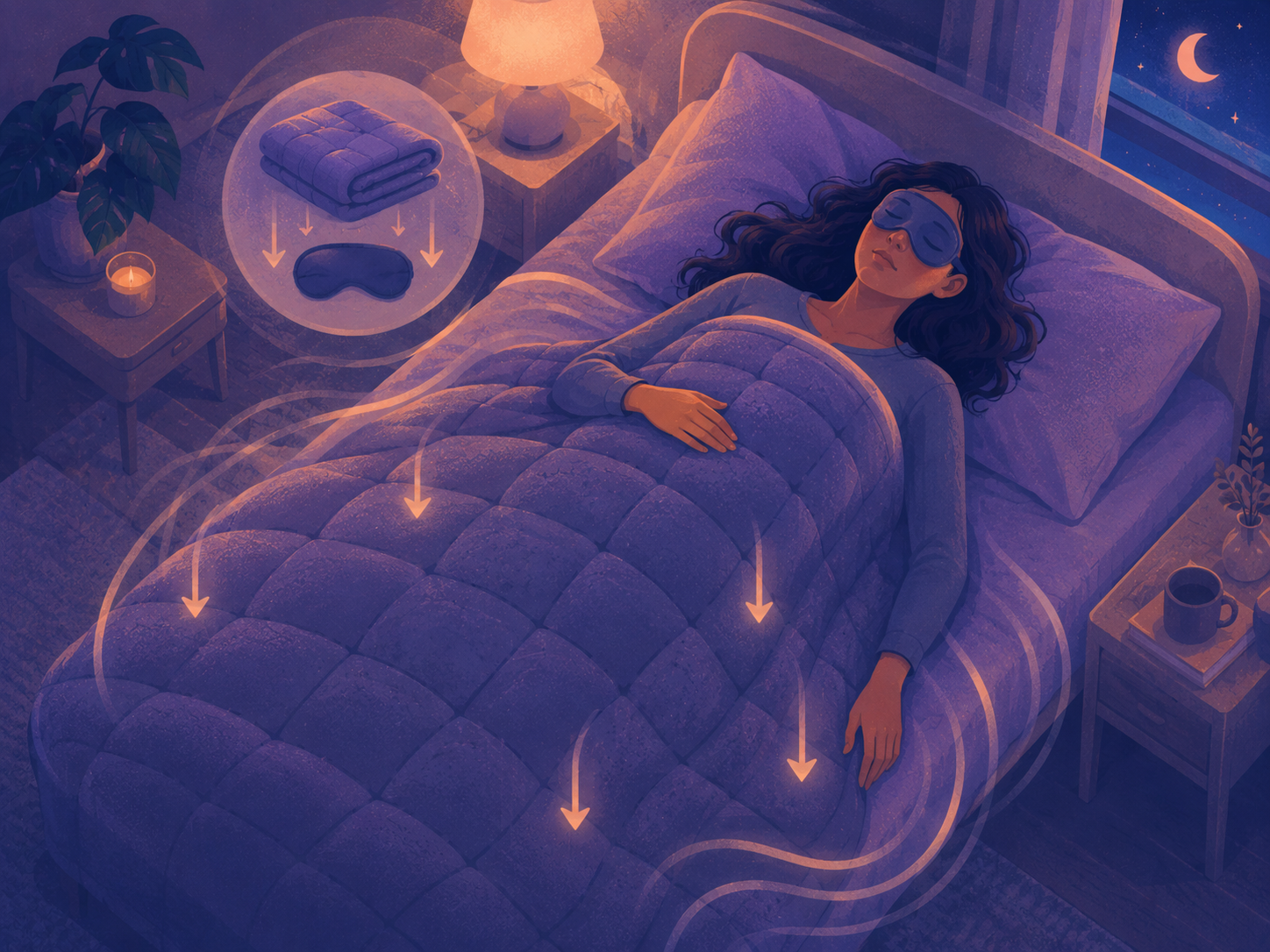
A weighted blanket creates a large sensory field. Its pressure can feel enveloping, almost architectural, as if the bed has clearer walls. For someone who likes full-body containment, that may be precisely the appeal.
But the same coverage brings trade-offs. A heavy blanket can trap heat. Turning over may require more effort. Some sleepers feel held; others feel restricted. One person’s calm is another person’s signal to push the blanket away.
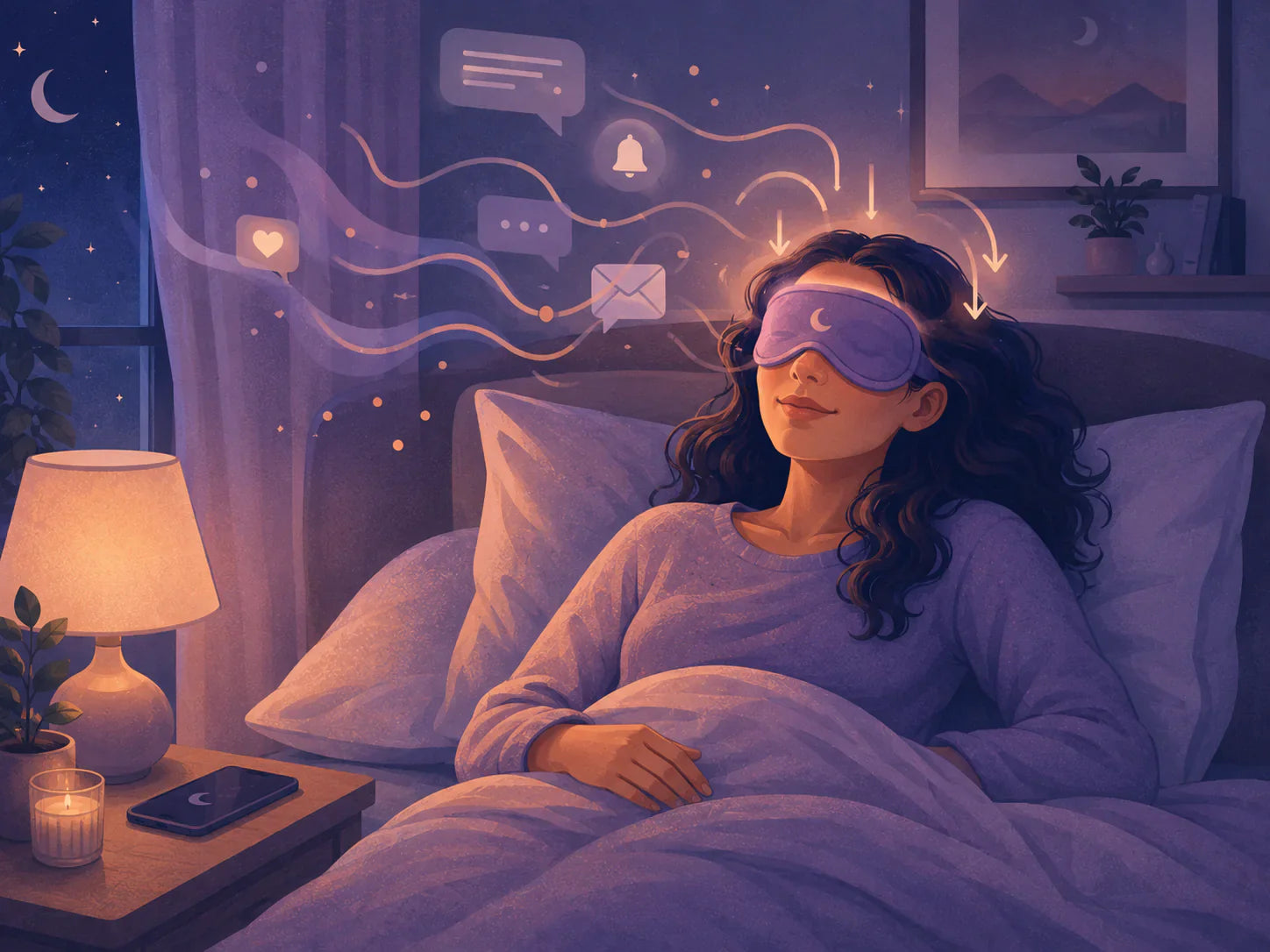
A weighted eye mask changes the scale of the idea. The body remains uncovered and free to move. The tactile cue is concentrated around the brow, temples, and eye area, while the mask removes visual changes from the environment. It is less about full-body containment and more about creating a small, repeatable boundary around rest.
This makes the mask especially different in warm rooms, during travel, or for people who find a full blanket excessive. Darkness is doing part of the work. The gentle weight adds a second cue: something familiar has settled into place, and there is nothing more to look at.
It is important not to blur comfort into pressure on the eyes themselves. A weighted mask should rest around the eye area without pain or visual disturbance. Anyone with glaucoma, recent eye surgery, an eye injury, unexplained eye pain, or changes in vision should ask an eye-care professional before using one. The same principle applies to blankets: the user must be able to remove the product independently, and weight should never interfere with breathing, circulation, movement, or temperature regulation. Infants should never use weighted blankets.
More weight is not more effective. Helpful pressure should feel like less to manage, not more.
Weight that holds, never presses
Mellooa began with that distinction. The goal was never to make an eye mask feel heavy. It was to let fine weighted beads settle softly around the eye area—not directly onto the eyes—so the sensation feels distributed rather than concentrated.
The wraparound shape creates darkness. The gentle weight creates presence. Together, they form a smaller ritual for people who run warm, travel often, or simply do not want a blanket covering their whole body.
It is not a miniature therapeutic blanket, and it should not be sold as one. It is a different object that borrows one design principle—steady, predictable weight—and pairs it with a more established environmental principle: reducing light.
That combination is the idea behind the Mellooa weighted sleep mask: darkness first, soft pressure second. Not enough weight to dominate the body. Just enough presence to become a familiar signal that there is nothing more to watch, solve, or monitor tonight.
A familiar signal at the end of the day
The most believable explanation for weighted comfort is not that pressure contains a hidden sedative effect. It is that some nervous systems prefer one stable sensation to many changing ones.
A weighted blanket expresses that preference across the body. A weighted eye mask expresses it locally and adds darkness. One may feel deeply calming; the other may feel lighter and easier to live with. For some people, neither will help—and that is part of the science too.
Sleep cannot be forced by adding more weight. It becomes more possible when the body has fewer signals to interpret. Sometimes the last signal it needs is a familiar one: the day has ended, the room has disappeared, and nothing is asking to be watched.
Sources
- Ekholm B, et al. A randomized controlled study of weighted chain blankets for insomnia in psychiatric disorders. Journal of Clinical Sleep Medicine. 2020.
- Dawson S, et al. Weighted Blankets as a Sleep Intervention: A Scoping Review. American Journal of Occupational Therapy. 2024.
- Meth EMS, et al. A weighted blanket increases pre-sleep salivary concentrations of melatonin in young, healthy adults. Journal of Sleep Research. 2023.
- Zhao Y, et al. Safety and effectiveness of weighted blankets for symptom management in patients with mental disorders: A systematic review and meta-analysis. 2024.
- Khoddam H, et al. The effects of earplugs and eye masks on sleep quality of patients admitted to coronary care units. Journal of Sleep Research. 2022.
- Review of external ocular compression and sleep-related eye pressure considerations.
Medical disclaimer: This article is for general education only and is not medical advice, diagnosis, or treatment. Weighted sleep products can support a comfortable sleep environment but do not treat insomnia, anxiety, or other medical conditions.