

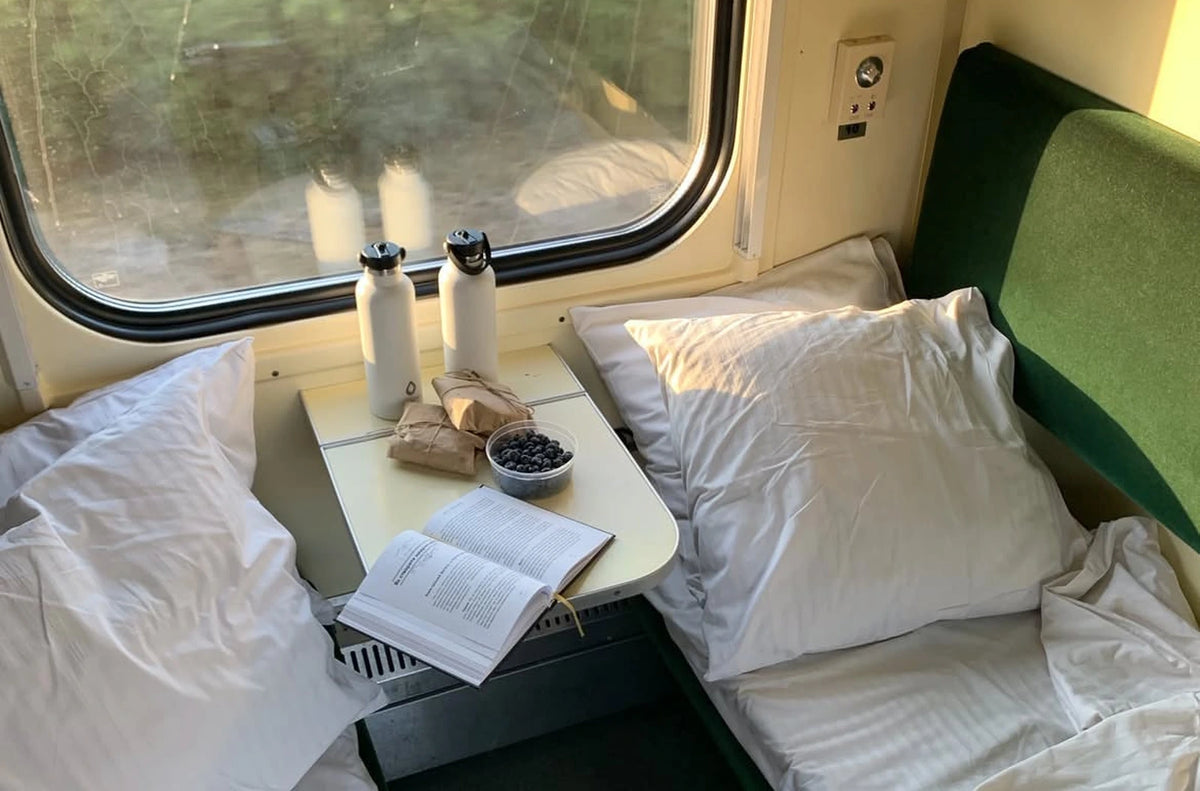
If you want to know how to sleep on a train, here's the short version: choose a quiet spot, cut down light and noise, support your neck, and set a wake-up plan you trust. Train sleep is rarely perfect, but a little planning goes a long way, whether you're in a coach seat or a sleeper cabin.
Quick answer
You'll usually rest easier on a train if you handle four things before settling in:
- Position: a window seat or lower berth, away from doors, restrooms, and the café car.
- Light: an eye mask for station lights, aisle lighting, and nearby screens.
- Sound: earplugs to soften announcements, rattles, and conversations.
- Waking up: a vibrating alarm set a little before your stop, plus a backup.
Pick the right seat or berth
If you're in a seat, a window position gives you something to lean against and keeps you out of the path of people walking down the aisle. Seats in the middle of a car tend to have less foot traffic than seats next to doors, restrooms, or luggage racks. If the train has a quiet car, it's usually worth asking for.
In a sleeper, many people find the lower berth easier to get in and out of during the night. If you're sharing a compartment, agree on lights-out early so nobody is surprised.
Make your space darker
Trains rarely stay dark. Platforms are bright, corridor lights stay on, and the person across the aisle may be watching a show. Lowering the blind helps in a cabin, but in a seat an eye mask does most of the work.
A wraparound mask that sits comfortably while you lean your head sideways is easier to keep on than a thin, flat one. Our Weighted Sleep Mask is gently weighted, with a wraparound shape made to create a quieter space for rest, even on the move. If you're choosing one for travel, our guide on how to choose a sleep mask for travel covers fit and packing.
Turn the noise down
A moving train makes a steady hum, which some people actually find soothing. What tends to wake people is the irregular noise: brakes, announcements, doors, a neighbor's phone call, or something rattling in the luggage rack.
Earplugs help soften those sounds. QuietFit Earplugs take the edge off everyday noise, up to about 27 dB, depending on fit. You'll still hear some sound, which matters when you need to hear your stop or an announcement. If you're unsure which material suits you, see foam vs. silicone earplugs for sleeping.
Get comfortable in a seat
- Recline as far as is polite, and use the footrest if there is one.
- Use a neck pillow or a rolled jacket so your head doesn't drop forward.
- Wear loose layers. Train cars can swing from warm to chilly overnight.
- Keep water and a small snack within reach so you don't have to climb over anyone.
- Take a short walk and stretch before you try to sleep.
Sleeper cabin tips
Before you lie down, stop anything that might rattle: hangers, bottles, loose bags. Keep your phone, charger, and valuables somewhere you can reach without getting up. A thin layer you can add or remove helps if the cabin temperature changes.
Don't expect to sleep straight through. The first night somewhere new often feels lighter, which we explain in why the first night in a new place feels different. Lying still with your eyes closed can still feel restful, even if you wake a few times.
Waking up for your stop
Worrying about missing your station can keep you awake on its own. Give yourself a plan you trust:
- Set a vibrating alarm on your phone or watch for 20–30 minutes before arrival.
- Add a second alarm a few minutes later as a backup.
- In a sleeper, ask the attendant whether they offer wake-up calls.
- Check that your alarm is loud enough to reach you with earplugs in before you fall asleep. Our post on whether you can hear your alarm with earplugs has a quick test.
What to pack
- Eye mask
- Earplugs and a small case
- Neck pillow or soft scarf
- A warm layer and comfortable socks
- Water and a light snack
- Phone charger or power bank
For a ready-made kit, see our sleep mask and earplugs travel guide. Flying instead? Try our tips for sleeping on a red-eye flight.
FAQ
Is it easier to sleep on a train than on a plane?
Many people find it easier because there's usually more legroom, you can walk around, and the motion is steadier. It still depends on the seat, the route, and how light a sleeper you are.
Is it safe to sleep with earplugs on a train?
Earplugs turn sound down rather than off, so you may still hear announcements and alarms. Test your alarm with them in before you rely on it, and keep valuables close.
How do I sleep sitting up on a train?
Lean against the window with a neck pillow or folded jacket for support, recline the seat, keep your feet supported, and use an eye mask and earplugs to cut down on light and noise.
Should I book a sleeper cabin?
If the trip runs overnight and good rest matters for the next day, a berth gives you room to lie flat. For shorter trips, a seat with the right setup can be enough.



Share:
Does ASMR Help You Sleep? What Research Actually Says
Can a Bedtime To-Do List Help You Fall Asleep?