

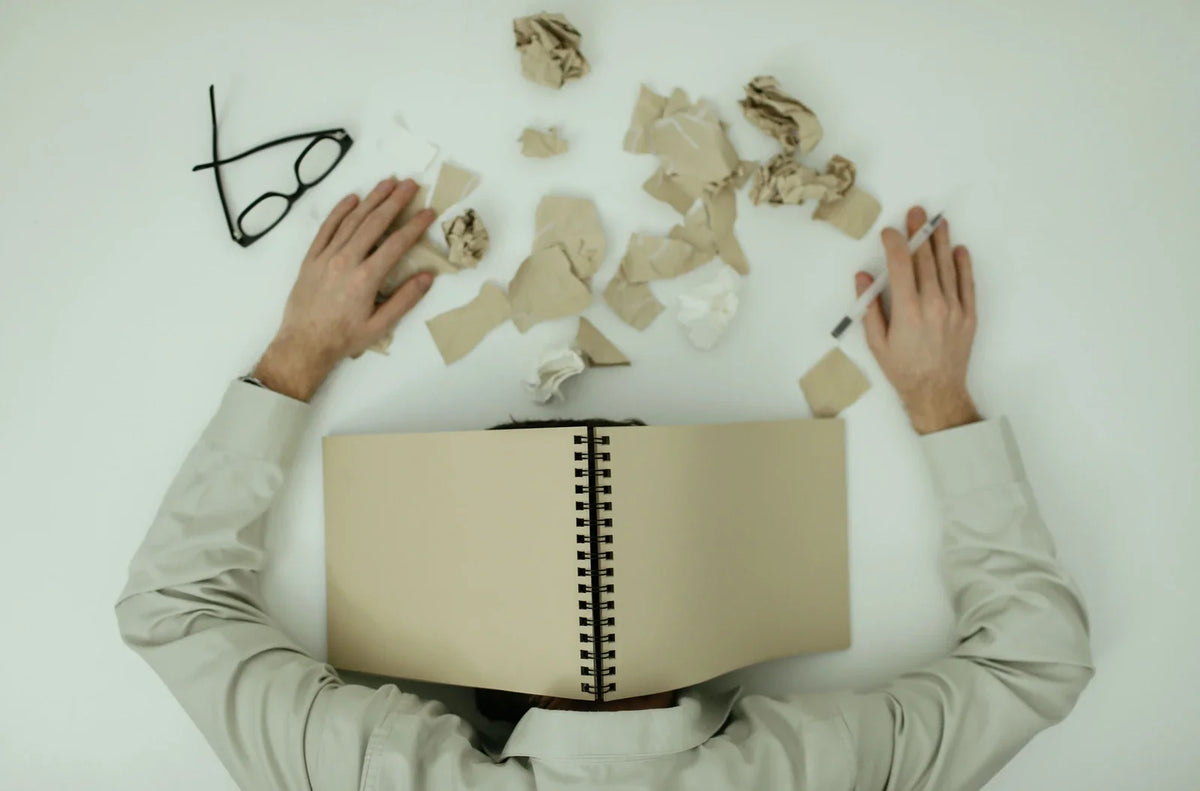
Can a nap help you think more creatively? Small experiments suggest that sleep can help with certain kinds of insight and idea generation. They do not show that every nap produces a breakthrough, or that there is one perfect sleep stage for creativity.
Perhaps you have been rewriting the same paragraph or looking at the same design until every option feels wrong. Taking a break is reasonable. Turning that break into another performance test is not necessary.
A promising result is not a universal formula
In a 2021 experiment, participants worked on a mathematical task with a hidden shortcut, then had a 20-minute break. Of those who had not already discovered the rule, 20 of 24 people who briefly reached N1, the first sleep stage, later found it. That compared with 15 of 49 who stayed awake and two of 14 who reached N2.
Those are striking differences, but they describe solving one particular task. The participants were grouped by how they actually slept, not randomly assigned to achieve a sleep stage. “Three times more likely to spot this shortcut” is not the same claim as “three times more creative.”
Nor can you reliably recreate the result by setting an alarm for a magic number of seconds. Time in bed and time in a particular sleep stage are different things.
Newer research complicates the idea of a sweet spot
A 2025 study used a different hidden-rule task, this time involving visual decisions, and another 20-minute nap opportunity. Its post-nap sleep-group analysis included 68 people.
Here, 24 of 28 people who reached N2 discovered the rule, compared with 14 of 22 who reached only N1 and 10 of 18 who stayed awake. The N2 group differed significantly from the awake group. The N1 group did not differ significantly from either of the other groups.
N2 is a non-REM stage beyond the initial drift into sleep; it is not the N3 stage commonly called deep sleep. The finding does not establish that everyone should nap longer. Again, sleep stages were observed rather than assigned. Together, these experiments suggest that the task and conditions matter, not that one sleep stage holds the answer to every creative problem.
What about dreaming up new ideas?
Finding a hidden rule is one kind of insight. Generating an unusual story or a new use for an object is a different kind of creative task.
In a 2023 experiment with 49 participants in the analysis, researchers compared sleep and wakefulness, with and without prompts about trees. The group that slept with the tree prompts performed best on related creative tasks afterward.
This was not an ordinary uninterrupted nap. The 45-minute procedure involved repeated sleep-onset awakenings and reports of what participants had been experiencing. It provides an interesting clue about dream content and later ideas, not proof that playing prompts during a normal nap improves your work.
It is also a different question from remembering something you studied. Our guide to sleep and memory explains why learning and later recall should not be treated as interchangeable with creativity.
A low-pressure way to take a break
You do not need to turn your afternoon into a sleep experiment. If a short nap already suits you, you could try the following as a practical routine, not a scientifically validated recipe for inspiration:
- Leave yourself a clear question. Write one sentence about where you are stuck. “How could this opening feel more welcoming?” is easier to return to than an entire unfinished project.
- Put the work down. Choose a comfortable, safe place where you can stop looking at the screen. Set an alarm if you intend to nap.
- Let the break be a break. You do not have to fall asleep or produce an idea. If napping is not for you, an eyes-closed rest is another way to step away, without claiming it has the same effects as sleep.
- Return gently, then evaluate. Jot down anything that occurs to you, but check it when you feel fully alert. A fresh-sounding idea still needs to work.
The National Heart, Lung, and Blood Institute advises adults to keep naps to no more than 20 minutes. If falling asleep at night is difficult, it advises limiting naps or taking them earlier. That is general sleep guidance, not an established ideal nap length for creativity. Read its healthy-sleep advice.
If stray light makes a daytime rest uncomfortable, Mellooa's Weighted Sleep Mask has a gently weighted wraparound shape that blocks light. It is an optional comfort item, not a creativity aid, and none of these experiments establishes a benefit from this product.
Do not trade a good night for a possible idea
If you wake up groggy, allow time before driving or doing demanding work. Our explanation of sleep inertia covers that transition. Feeling drowsy is not evidence that a creative process is working.
Keep your usual opportunity for a full night's sleep. Deliberately cutting sleep or repeatedly waking yourself is not a sensible shortcut to better ideas. If you have persistent or unexpected daytime sleepiness, seek medical advice rather than simply adding more naps.
A nap may leave you with a useful thought. It may leave you with nothing more than a welcome pause. You do not have to make rest earn its place by producing something.



Share:
Why Do I Feel Sleepy in the Afternoon? The Afternoon Slump, Explained
Why Are My Feet So Cold at Night? Causes and What Helps